Every story stays here. Filter by topic, search older headlines, and save favorites to your member record. Educational notes only — not medical advice.
Study (exploratory crossover RCT). Mohamed Nashrudin bin Naharudin and University of Malaya colleagues report in Frontiers in Physiology that 23 moderately trained men in their early-to-mid 20s, fasted ≥10 hours, completed more leg-extension repetitions after 30-second exposures to chocolate odor before and between sets than after a water control, without a higher rating of perceived exertion. 90% dark-chocolate odor added about 18 repetitions versus water and reduced hunger; 60% milk-chocolate odor added about nine repetitions without the same appetite shift. Small, men-only, fasted lab sessions — not a nutrition protocol and not a reason to eat chocolate for performance. Educational exercise notes.
Study (exploratory randomized trial). Tatsuki Nishimura, Yukihiro Hishida, and colleagues report in Aging (29 May 2026; doi 10.18632/aging.206386; release 25 June 2026) on 48 overweight Japanese men aged 50 or older. For 12 weeks the program added walking or stepper guidance, counseling to eat less, and a daily yogurt with Bifidobacterium longum BB536. Controls kept usual habits. DunedinPACE, a pace-of-aging clock, slowed by about 2.2% in the program group, with little change in controls. Most other epigenetic clocks did not stay significant after correction for multiple comparisons. The clock change was not explained by weight loss alone. Every author is employed by Morinaga Milk Industry, which funded the trial and supplied the yogurt. Small, short, and limited to one group of men. Not a general anti-aging product claim. Educational notes, not medical advice.
Commentary (narrative review). Chris Macdonald (Lucy Cavendish College, University of Cambridge) writes in Frontiers in Nutrition that many public protein and activity targets were built to prevent deficiency in sedentary adults, not to maximise strength, independence, and healthspan. The paper points to evidence that active people, older adults, and pregnant women may benefit from intakes above the classic 0.8 g/kg RDA, with muscle and strength gains in trained adults often discussed near ~1.6 g/kg/day. This is a viewpoint review, not a feeding trial. Educational nutrition notes; not a prescription to “protein-max.” Peter Attia’s 17 September 2026 public roundtable on protein and training cites the same 1.6 g/kg plateau literature — farmed here from the Cambridge/Frontiers paper, not from the paywalled show.
Study (phase 2a RCT). Hussein N. Yassine and Keck Medicine of USC colleagues report in eBioMedicine (NCT03613844) on 365 adults aged 55–80 without dementia (mean age 66.4; 58% female; 47% APOE ε4; low dietary DHA) randomised to 2 g/day DHA or placebo for 24 months. CSF DHA/AA rose at six months (about 17% higher CSF DHA) and the red-cell omega-3 index rose from 4.9% to 11%, showing the fatty acid reached the brain independent of APOE ε4. Over 24 months there were no treatment differences in cognition (RBANS) or hippocampal volume; dropout was 38%, mainly COVID-related. Null result: high-dose fish-oil DHA is not shown here as Alzheimer’s prevention. Food-first omega-3 remains a dietary pattern question. Educational supplement notes, not a prescription to start or stop fish oil, and not a dementia diagnosis.
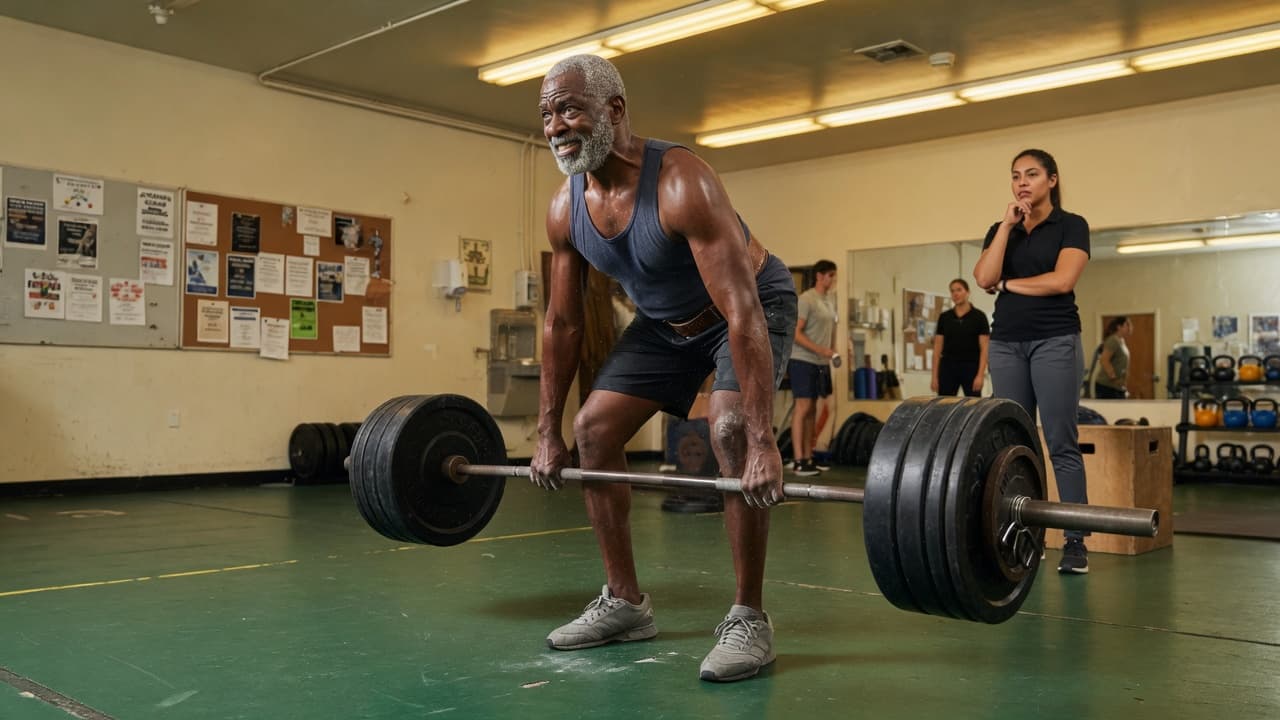
Study (observational). Zhang, Giovannucci and colleagues in the British Journal of Sports Medicine followed 147,374 U.S. adults for up to 30 years. Self-reported 90–119 minutes of weekly resistance training tracked with 13% lower all-cause mortality, 19% lower cardiovascular death, and 27% lower neurological death after adjustment; more than 120 minutes added little. Combining cardio with 60–119 minutes of strength showed larger drops. Association is not proof. Habits were self-reported. Strength work plus walking remains a habit, not a disease treatment.
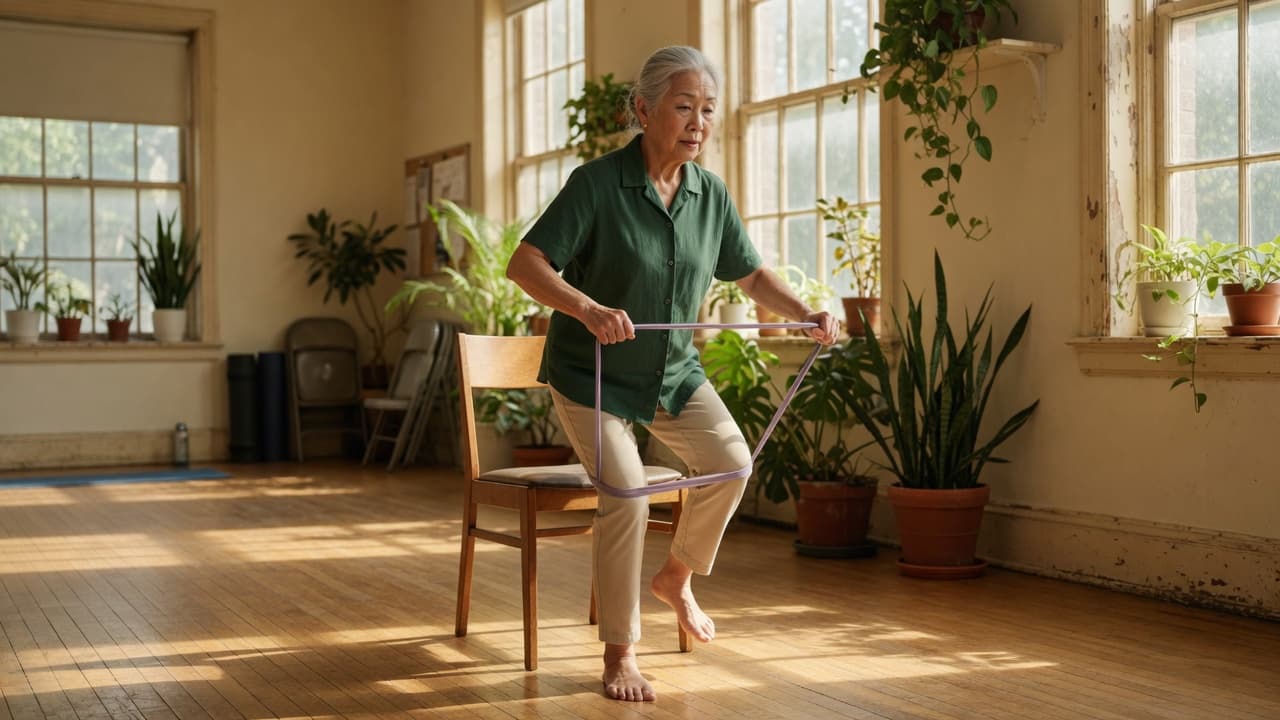
Study (randomized). Penn State College of Medicine researchers (Sciamanna and colleagues) report in PLOS One that 97 adults (mean age 74) were assigned to 12 weeks of a four-minute daily FAST-2 circuit—push-ups, chair stands, two-arm rows, and stair stepping, 30 seconds each with 30-second rests—or no extra program. Baseline activity averaged about 18 minutes a week. The circuit group gained 4.2 more 30-second chair-stand repetitions, 3.6 more seconds of one-legged stand, and 2.3 seconds faster sit-to-stand. This is functional training, not a supplement protocol and not a diagnosis. Educational movement notes.
Commentary (systematic evidence map). Adiv A. Johnson and David A. Sinclair review in Frontiers in Genetics (doi 10.3389/fgene.2026.1836446) 41 human studies of interventions on next-generation epigenetic aging clocks. Signals of clock decrease were reported for exercise, a plant-rich diet, caloric restriction, omega-3 fatty acids, a multivitamin-multimineral, the GLP-1 receptor agonist semaglutide, and the statin pitavastatin, among others. Nicotinamide riboside, rapamycin, and senolytics showed no detectable clock effect in the mapped studies; plasmapheresis and some other therapeutics were associated with clock acceleration. Clock change is not proof of age reversal or a disease outcome. Semaglutide is a prescription medicine, not a supplement. This is not a reason to start, stop, or replace any prescribed drug. Educational aging-biomarker notes, not medical advice. Educational supplement parallel (not a replacement): When headlines discuss GLP-1 medicines and aging, people often research food-first fiber or bitter-botanical “pathway support” formulas. Those are not semaglutide, not compounded GLP-1, and not a substitute for a prescribed GLP-1 drug. Mouse or marketing claims are hype until human outcome data exist. Weakly evidenced. Store: /store/glp1-pathway-support. Not medical advice. Not a substitute for a prescribed medicine. Off-label prescription use is clinician-only. VitaLonga does not diagnose, treat, or cure disease. Never start, stop, or replace a prescription with a supplement on the basis of a headline.
Study (RCT secondary). Mark Espeland and Wake Forest colleagues report from U.S. POINTER (>2,100 adults aged 60–79 at raised cognitive-decline risk) that a two-year structured program of coached diet, exercise, cognitive and social activity improved frailty more than a self-guided lifestyle group. Both groups improved. Cognitive-risk cohort, not a dementia-drug trial. Educational aging notes.
Study (evidence review). A BMJ review released 20 May 2026, and recirculated in September coverage, found little to no clinically meaningful effect on any fracture from calcium alone (moderate certainty; 11 trials, 9,067 people), vitamin D alone (high certainty; 36 trials, 92,045), or both together (high certainty; 15 trials, 51,126). Hip fractures and falls looked similar on mostly moderate to high certainty evidence. The pattern held after checks for age, sex, prior fractures and falls, and usual dietary calcium. The authors say this does not support routine calcium or vitamin D pills to prevent fractures and falls in most older people, and it may not apply to specific bone disorders or to people already on osteoporosis drugs. Not a reason to stop a clinician-prescribed product. Educational notes, not medical advice.
Study (systematic review and meta-analysis). Seven RCTs (608 postmenopausal women, mean age ~62; 12–104 weeks) found creatine plus resistance training raised lean mass by 0.37 kg and leg-press 1RM by 7.5 kg versus placebo. Benefits appeared at ≥5 g/day with training; ≤3 g/day without training showed no effect. Bone density was unchanged. Adverse events mild and similar to placebo. Educational supplement notes, not a bone-drug substitute.
Study (systematic review and meta-analysis). Gu, Li, Xiao and Zhang pooled 37 randomized trials in healthy men aged 18–30 (Frontiers in Nutrition 13:1800546, doi 10.3389/fnut.2026.1800546). With resistance training, creatine raised fat-free mass about 3.39 kg and lean body mass about 2.70 kg; those composition gains were not significant without resistance training. Wingate anaerobic power improved in both training contexts. Catch-up farm of a 2026 meta not previously in the archive. Educational supplement notes, not a substitute for training.
Study (RCT). The CONCRET-MENOPA trial randomized 36 peri- and postmenopausal women (mean age 50.1) to 750 or 1,500 mg/day creatine hydrochloride, a mixed creatine ester, or placebo for 8 weeks. Medium-dose HCl beat placebo on reaction time, frontal-brain creatine (MRS), and some lipids. Small, short trial; not a menopause drug. Educational supplement notes, not medical advice.
VitaLonga is an educational longevity resource, not a pharmacy, clinic, or doctor. Content is not medical advice and is not intended to diagnose, treat, cure, or prevent any disease (DSHEA). Supplements can interact with medications and are not appropriate in every pregnancy or health condition. Consult a licensed clinician, especially if you take medications, are pregnant or nursing, or have a diagnosed condition.