Every story stays here. Filter by topic, search older headlines, and save favorites to your member record. Educational notes only — not medical advice.
The WHO-India donor agreement is part of a US$ 250 million investment from India in support of the establishment of the WHO Global Centre of Traditional Medicine in 2022, which includes financial support for the workplan of the Centre, interim premises and a new building. This support will scale up WHO’s capacities on traditional medicine across technical divisions and regions in the spirit of global collaboration an
The Director-General of the World Health Organization, Dr Tedros Adhanom Ghebreyesus, today concluded the first day of his two-day State visit to the Hashemite Kingdom of Jordan, underscoring the strong partnership between WHO and Jordan across the areas of universal health coverage (UHC), mental health and humanitarian health action.
Children taking GLP-1 medications (such as Victoza, Saxenda, Trulicity, and Ozempic) for weight loss, prediabetes, or type 2 diabetes may face an overlooked risk: nutritional deficiencies. A new study found that nearly 1 in 6 young patients developed a diagnosed deficiency within a year of starting treatment, with vitamin D deficiency affecting about 12%. Educational supplement parallel (not a replacement): When headlines discuss GLP-1 medicines and aging, people often research food-first fiber or bitter-botanical “pathway support” formulas. Those are not semaglutide, not compounded GLP-1, and not a substitute for a prescribed GLP-1 drug. Mouse or marketing claims are hype until human outcome data exist. Weakly evidenced. Store: /store/glp1-pathway-support. Not medical advice. Not a substitute for a prescribed medicine. Off-label prescription use is clinician-only. VitaLonga does not diagnose, treat, or cure disease. Never start, stop, or replace a prescription with a supplement on the basis of a headline.
A major Swedish study of 3.7 million people has found that rare TORCH infections passed from a pregnant woman to the fetus are linked to much higher risks of autism and intellectual disability later in life. Children with a congenital TORCH infection were about three times more likely to be diagnosed with autism, more than seven times more likely to have an intellectual disability, and up to 30 times more likely to h
A topical drug that removes aging, damaged cells helped older mice heal skin wounds significantly faster. The treatment appeared to reactivate repair pathways involved in inflammation, collagen production, and new blood vessel growth.
The World Health Organization (WHO) has certified Timor-Leste as malaria-free, a remarkable achievement for a country that prioritized the disease and embarked on a concerted, nation-wide response shortly after gaining independence in 2002. “WHO congratulates the people and government of Timor-Leste on this significant milestone,” said Dr Tedros Adhanom Ghebreyesus, WHO Director-General. “Timor-Lest
Study (longitudinal cohort). Maria Westerståhl and colleagues at Karolinska Institutet report in the Journal of Cachexia, Sarcopenia and Muscle (2025; 16(6); DOI 10.1002/jcsm.70134). ScienceDaily recirculated the paper on 14 Oct 2026. The Swedish Physical Activity and Fitness study followed 427 men and women born in 1958, with tests from age 16 through 63. Aerobic fitness and muscular endurance were highest between ages 26 and 36. Performance began to decline around the mid-30s, and explosive muscle power peaked earlier. By age 63, average performance was about 30 to 48 percent below peak. The pattern was similar in men and women. People who became active in adulthood gained about 5 to 10 percent in physical capacity. Activity slowed the drop and did not stop it. A 2026 follow-up in Scientific Reports (DOI 10.1038/s41598-026-52389-8) found that better aerobic fitness at ages 34 and 52 lined up with less arterial stiffness at 63, after accounting for obesity, smoking, and blood pressure. That link is not proof that fitness prevented stiff arteries. Not medical advice.
Study (longitudinal, self-selected training). Peter Herbert, Nicholas F. Sculthorpe, Nilihan E.M. Sanal-Hayes, and Lawrence D. Hayes report in The American Journal of Medicine (2026; 139(7):931; DOI 10.1016/j.amjmed.2026.02.032). A public account of the paper, carried in a 14 Oct 2026 ScienceDaily brief, says 49 men ages 60 to 82 who had not done structured training were followed for four years. Men who did weekly multi-joint resistance work improved upper- and lower-body strength. Men who added aerobic work also improved aerobic fitness. The programs were chosen by the participants, and the group is small. This is not a training plan for someone who needs a clinician's clearance. Not medical advice.
Study (longitudinal). Amir S. Fathi, Stephen D. R. Harridge, and colleagues report in GeroScience (2026; DOI 10.1007/s11357-026-02483-6). The public summary attached to a 14 Oct 2026 ScienceDaily brief says 82 older adults who kept cycling were followed for nine years. Peak aerobic capacity fell 19.7 percent on average. Among those who finished the exercise test, nearly all scored at or above the 90th percentile for their age. The summary does not give the sex split or the exact ages. Regular cycling did not freeze aerobic capacity. Not medical advice.
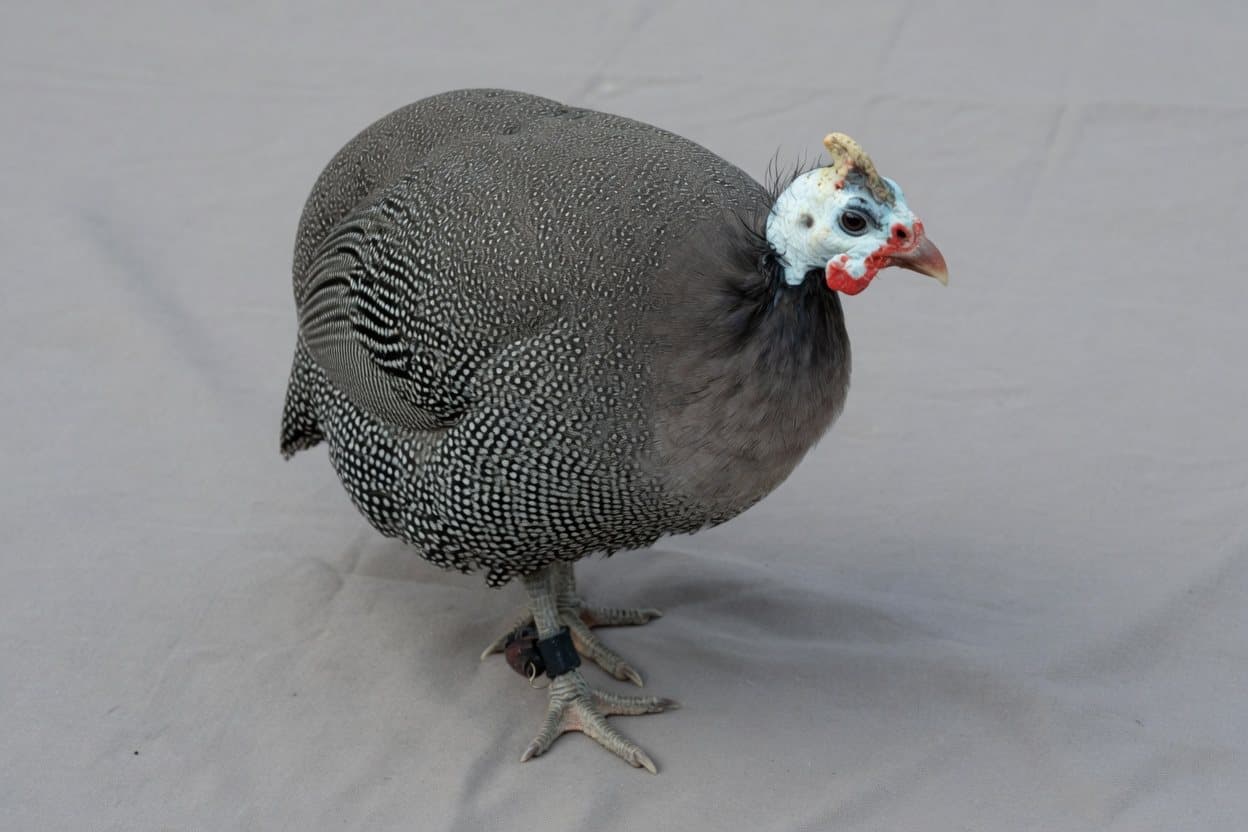
Study (guinea fowl, not people). Talayah A. Johnson, Kavya Katugam-Dechene, Jonas Rubenson, and colleagues at Penn State report in Proceedings of the Royal Society B (2026; 293(2074); DOI 10.1098/rspb.2026.0199). ScienceDaily ran it on 14 Oct 2026. Twelve birds were followed from 2 weeks to 16 weeks. Six wore a lead band on one leg equal to 4 percent of body weight. Six did not. At 16 weeks, birds that had never worn the band used 23 percent more energy walking with the load than without it. Birds that grew up with the band used no extra energy to carry it, and on average used no more energy with the band than the untrained birds used walking unloaded. Standing energy did not differ. This is not evidence that a weighted childhood makes human exercise easy. Not medical advice.
Conference report (observational, not yet a journal paper). Leopold Fezeu of Université Sorbonne Paris Nord presented preliminary NutriNet-Santé results at the European Association for the Study of Diabetes meeting in Milan. ScienceDaily carried the briefing on 18 Oct 2026. The team estimated intake of N-glycolylneuraminic acid (Neu5Gc), a sugar in beef and lamb that humans do not make, in 89,953 adults, mean age 42, 79 percent women, free of type 2 diabetes and cancer at entry. Over a median 7.2 years, 966 people developed type 2 diabetes. Versus the lowest fifth of meat-derived Neu5Gc, the highest fifth had a hazard ratio of 1.63 (95 percent CI 1.29 to 2.06), and the next fifth 1.41 (1.11 to 1.77), after age, sex, activity, diet quality, smoking, and illness. The link weakened and was no longer significant after also adjusting for how much red meat people ate. Dairy Neu5Gc was not tied to higher risk. Obesity was estimated to explain about 13 percent of the meat-Neu5Gc association. The authors say the figures could change. This does not show that the sugar itself causes diabetes. Not medical advice.
VitaLonga is an educational longevity resource, not a pharmacy, clinic, or doctor. Content is not medical advice and is not intended to diagnose, treat, cure, or prevent any disease (DSHEA). Supplements can interact with medications and are not appropriate in every pregnancy or health condition. Consult a licensed clinician, especially if you take medications, are pregnant or nursing, or have a diagnosed condition.