Every story stays here. Filter by topic, search older headlines, and save favorites to your member record. Educational notes only — not medical advice.
Commentary (personal view). A Lancet Healthy Longevity essay argues that age-related strength loss is not only shrinking muscle tissue. Trials of anabolic drugs or protein that raised lean mass often yielded modest function gains, while resistance training can improve strength and performance even when mass barely changes—because it also loads neural circuits, coordination, and blood flow. The piece favors progressive resistance work, balance, and motor-learning tasks over mass-only targets. Educational context, not a clinic protocol and not a claim that any supplement treats sarcopenia.
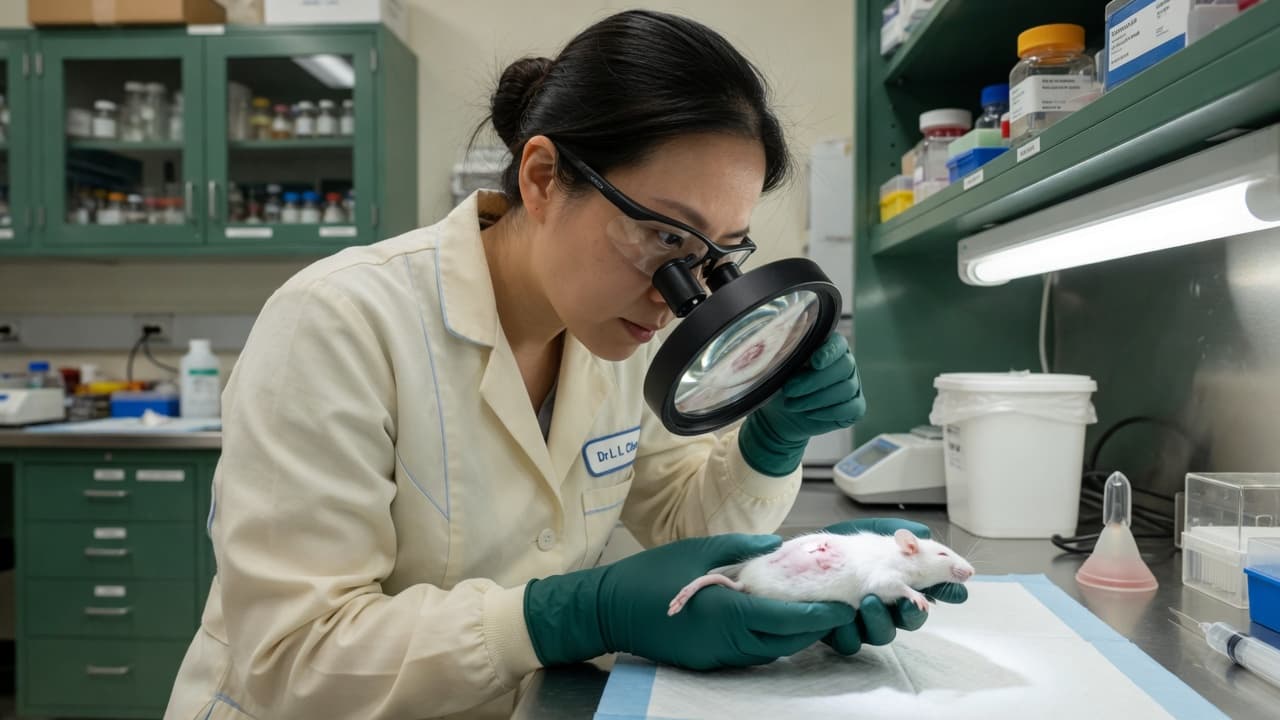
Study (mice). Liu, Yao, Ng Shyh-Chang and colleagues report in Nature Aging that about 6 million matured autologous myocytes injected under the skin formed vascularized “myografts” that flexed on their own for at least 81 days. In aged and obese mice the grafts tracked with more lean mass, grip, running endurance, bone density, lower inflammation, and better maze scores. This is preclinical cell therapy, not a gym replacement and not a supplement. Human safety is unproven.
Study (observational). Florida Atlantic University’s Charles Hennekens, Hunter Scott and colleagues analysed NHANES 2003–2023 diet recalls from 17,024 U.S. men (NOVA ultra-processed share of calories). Versus the lowest UPF group (<~20% of calories), higher-intake groups had about 29–30% higher subsequent prostate-cancer risk; after age, race/ethnicity, smoking, and poverty adjustment the range was 24–31%. Highest single group (~34%) was not statistically significant. Association is not proof that dropping packaged snacks prevents cancer. Educational diet notes, not a prescription.
Study. Yale School of Medicine researchers writing in Nature Aging analyzed plasma from 42 people in the NIH CALERIE trial who cut calories by about 11–14% for two years. Complement component 3 (C3) fell after restriction; fat-tissue macrophages appeared to be a source as C3 rose with age in mice. Blocking C3 activation reduced age-related inflammation in mice. Weight-loss amount did not track with the C3 drop, so the authors argue some calorie-restriction biology may be separable from losing pounds. Human trial data here are protein changes, not proven extra years of life. Experimental C3 blockers are research tools, not a diet-free longevity pill.
Study. Under the X-Age Project, researchers profiled 172 routine clinical measures from more than 100,000 adults aged 18–98 in the Multicentric Chinese Aging Study and built sex-specific clinical aging clocks (Nature Aging, 25 Aug 2026; EurekAlert summary 31 Aug 2026). Men showed a metabolic shift around 35–45 years (BMI, triglycerides, cholesterol); women showed a later transition around 55–65 years near menopause. Differences narrowed later in life. Metabolic factors and some tumor-related markers accumulated with age and tracked faster physiological aging. This is a research clock from checkup data, not a diagnostic test VitaLonga can order and not a treatment.
Study. Lu, Ping, Han and colleagues (Nature Aging, 25 Aug 2026; EurekAlert 31 Aug) built a microbiome aging clock (MicroAge) and found Bifidobacterium pseudocatenulatum depleted with age across Chinese cohorts. In naturally aged mice, oral B. pseudocatenulatum improved gut homeostasis, eased multi-organ inflammaging, and helped cognitive-motor scores. They credit a metabolite, 5-aminovaleric acid betaine (5-AVAB), which also declines with age in people. Mouse healthspan is not a human probiotic prescription. Commercial anti-aging probiotic claims remain weakly evidenced until human outcome trials exist.
Study. Dutch and Spanish researchers writing in Gut linked Roseburia inulinivorans to muscle strength. Among older adults, those with detectable R. inulinivorans had about 29% higher handgrip strength than those without. In mice, the same species raised forelimb grip by about 30% after 4–8 weeks and shifted calf muscle toward larger, fast-twitch type II fibers; other Roseburia species did not. Abundance was lower in older than young adults. This is not a human sarcopenia trial. A commercial probiotic for this claim is weakly evidenced. Food-first fiber remains educational; not a diagnosis or a treatment.
VitaLonga is an educational longevity resource, not a pharmacy, clinic, or doctor. Content is not medical advice and is not intended to diagnose, treat, cure, or prevent any disease (DSHEA). Supplements can interact with medications and are not appropriate in every pregnancy or health condition. Consult a licensed clinician, especially if you take medications, are pregnant or nursing, or have a diagnosed condition.