Every story stays here. Filter by topic, search older headlines, and save favorites to your member record. Educational notes only — not medical advice.
Study (observational). Health Professionals Follow-Up Study investigators report in JAMA Network Open (2 September 2026) on 4,884 men with nonmetastatic prostate cancer (mean age 69.5) followed a mean ~13 years. Highest post-diagnosis saturated-fat intake tracked 24% higher all-cause death versus lowest, driven by cardiovascular and other-cancer deaths (each ~42% higher); no fat type tracked prostate-cancer death. Swapping 10% of calories from animal fat to plant fat tracked 16% lower death; 5% of calories from saturated to monounsaturated fat tracked 20% lower death. Association, not a cancer diet. Educational nutrition notes, not a substitute for oncology care.
Study (human plus mouse). Moesgaard and colleagues report in Nature Communications that 8 weeks of resistance training remodeled the skeletal-muscle proteome in a sex- and fiber-type-specific way. Type II fibers adapted more in both sexes; women showed more intermediate-filament remodeling. Overexpressing CSRP3, a type-II-upregulated protein, increased muscle mass in mice. Mechanistic, not a training RCT outcome. Educational research notes.
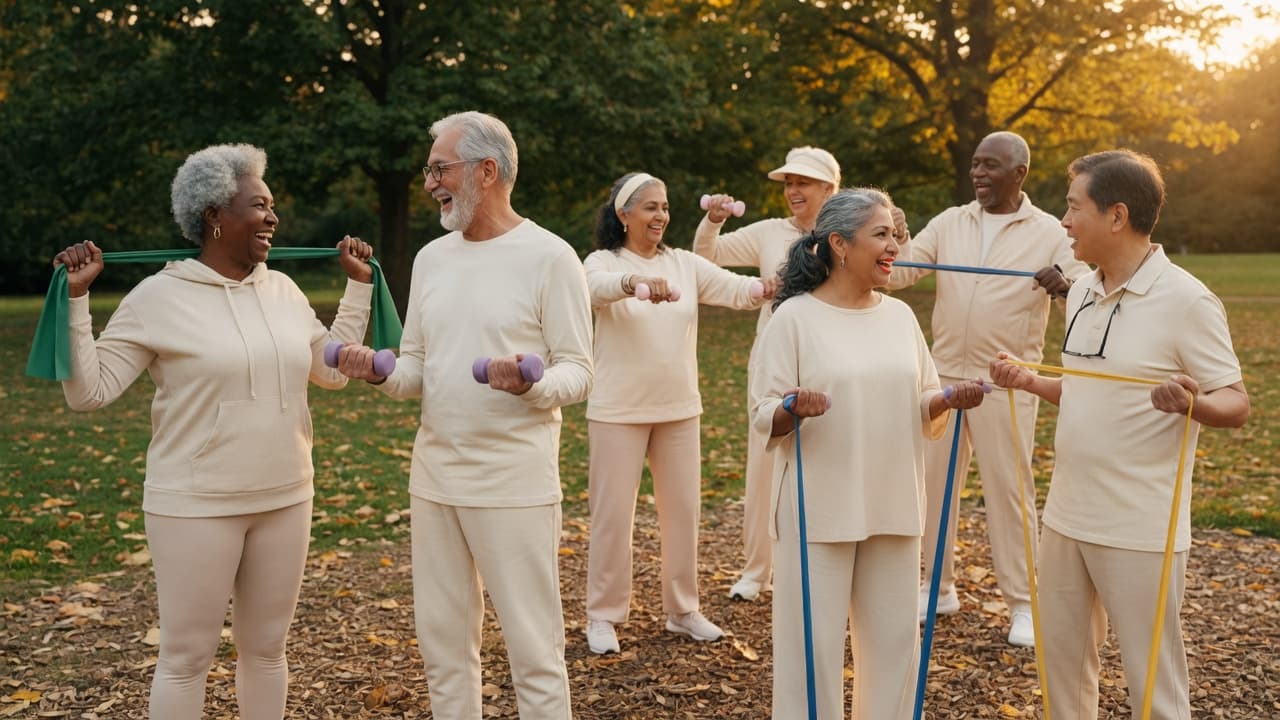
Commentary (expert survey). U.S. News’s 2026 Healthy Aging Survey of 63 clinicians, dietitians, and researchers (July–August 2026) ranked consistent physical activity (89%) and a nutrient-dense diet (89%) as the top factors for healthy aging, with restorative sleep third (30%). Fifty-nine percent named social isolation the most underappreciated accelerator of biological aging. Seventy-six percent warned that accelerated muscle loss is a serious threat for people using GLP-1 medicines. This is expert opinion, not a clinical trial and not a product protocol. Strength, aerobic, balance, and mobility work plus food-first nutrition remain the basics; supplements are not a substitute for those habits. Educational supplement parallel (not a replacement): When headlines discuss GLP-1 medicines and aging, people often research food-first fiber or bitter-botanical “pathway support” formulas. Those are not semaglutide, not compounded GLP-1, and not a substitute for a prescribed GLP-1 drug. Mouse or marketing claims are hype until human outcome data exist. Weakly evidenced. Store: /store/glp1-pathway-support. Not medical advice. Not a substitute for a prescribed medicine. Off-label prescription use is clinician-only. VitaLonga does not diagnose, treat, or cure disease. Never start, stop, or replace a prescription with a supplement on the basis of a headline.
Study. A University of Birmingham–led team reports in EMBO Reports that helper T cells (CD4+ lymphocytes) can keep DNA-methylation marks linked to past obesity for an estimated 5–10 years after weight loss. The 10-year project sampled blood and fat from people after weight-loss injections, a genetic early-onset obesity condition, a 10-week exercise program, and joint-replacement surgery, plus high-fat-diet mice. Authors suggest autophagy and immune senescence pathways may stay altered, which could help explain leftover disease risk after weight returns toward normal. This is mechanistic human and mouse work, not a claim that any supplement erases “obesity memory.” Weight-management decisions belong with a clinician.
Study. Open-access analysis of the SPRINTT lifestyle trial: a multicomponent program aimed at mobility disability in frail older adults. Benefits were not uniform; people with psychiatric or unspecific multimorbidity patterns saw more consistent gains. Exercise and lifestyle remain clinician-guided when frailty or several diagnoses are present.
Study. Yadav et al. introduce PathStAR, which scores structural aging from histology without being trained to guess chronological age. Across 40 tissues, organs aged on different curves (vascular earlier; uterus/vagina later). A research map of tissue structure — not a diagnostic test you can order from VitaLonga.
Study (randomized). Rutgers researchers led by Sharon Sanz Simon report in the Journal of Alzheimer’s Disease that 93 healthy women ages 20–67 (43% postmenopausal), starting below-average fitness and not regular exercisers, were assigned to six months of aerobic training or stretching-and-toning. Post-menopausal women in the aerobic arm improved executive function (task-switching speed and error management) more than the stretch group and more than pre-menopausal women on the same aerobic program. Gains appeared by three months and continued to six. Memory and processing speed did not show the same change. About 8 in 10 completed three months and 7 in 10 the full six. This is educational movement, not a dementia treatment or a supplement protocol.
VitaLonga is an educational longevity resource, not a pharmacy, clinic, or doctor. Content is not medical advice and is not intended to diagnose, treat, cure, or prevent any disease (DSHEA). Supplements can interact with medications and are not appropriate in every pregnancy or health condition. Consult a licensed clinician, especially if you take medications, are pregnant or nursing, or have a diagnosed condition.