Every story stays here. Filter by topic, search older headlines, and save favorites to your member record. Educational notes only — not medical advice.
Study (observational). A Menopause Society report on a retrospective clinic cohort of 260 women, published in Menopause, found that systemic hormone therapy started for FDA-approved indications was followed by fewer psychological and sleep symptoms. The share with severe mood symptoms fell from 62.3% to 24.6%, with the largest change among those who started with more severe symptoms; response did not differ by psychiatric history, age, menopause stage, or antidepressant use. Association is not a prescription. Hormone therapy is clinician-only. Not medical advice and not a substitute for mental-health care.
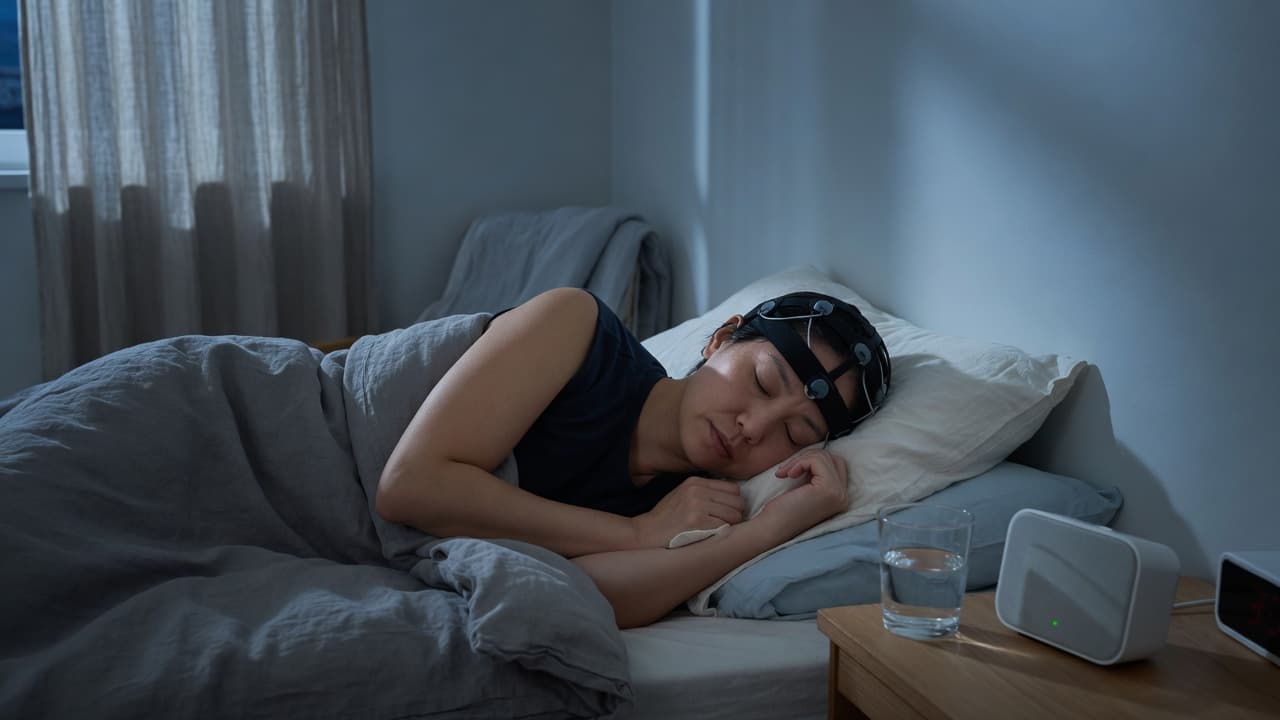
Study. MIT’s Laura Lewis and Joshua Levitt report in Science Translational Medicine that 50-millisecond pink-noise bursts timed to slow-wave peaks during sleep increased slow-wave and cerebrospinal-fluid flow amplitude in 14 healthy volunteers, using EEG plus fMRI. Slow waves also tracked blood-vessel pumping of CSF. The work does not show that a consumer sound machine clears amyloid or treats Alzheimer’s. Educational sleep-physiology notes, not a device recommendation and not medical advice.
Study (observational, real-world records). Imperial College London’s Chloe Bloom and Bohee Lee, presented at the European Respiratory Society Congress, compared UK electronic records of about 20,000–22,000 people starting a GLP-1 medicine versus a sulfonylurea. Semaglutide use was associated with nearly 40% fewer asthma attacks and about 20% fewer COPD flare-ups. This is not a trial of GLP-1 drugs as asthma therapy and not a reason to start, stop, or replace a prescribed medicine. Off-label longevity use is clinician-only. Not medical advice. Educational supplement parallel (not a replacement): When headlines discuss GLP-1 medicines and aging, people often research food-first fiber or bitter-botanical “pathway support” formulas. Those are not semaglutide, not compounded GLP-1, and not a substitute for a prescribed GLP-1 drug. Mouse or marketing claims are hype until human outcome data exist. Weakly evidenced. Store: /store/glp1-pathway-support. Not medical advice. Not a substitute for a prescribed medicine. Off-label prescription use is clinician-only. VitaLonga does not diagnose, treat, or cure disease. Never start, stop, or replace a prescription with a supplement on the basis of a headline.
Study (mouse). Gilad Evrony and NYU Langone colleagues report in Cell (9 September 2026) that mice fed 30% fewer calories than free-fed controls accumulated fewer DNA mutations across multiple tissues, using high-accuracy sequencing. Authors note calorie restriction of this depth is not a practical human diet and that mutation rate is one aging-linked process, not a human longevity outcome. Educational aging-biology notes, not a fasting prescription.
Study (hierarchical network meta-analysis of randomized trials). The BMJ (9 September 2026) pooled 124 trials and 18,429 adults aged 40 and older. Low to moderate certainty evidence showed that brisk walking or jogging, and combined aerobic plus resistance exercise, probably raise lumbar-spine bone mineral density versus control by about 0.013 g/cm2. In fracture analyses (26 trials, 11,132 people), mixed aerobic exercise (odds ratio 0.29) and mind-body exercise (0.58) may lower fracture risk, both low certainty; other modalities looked neutral. The bone-density signal clustered near 600 MET-minutes a week, about 2 to 3 hours of brisk walking or jogging. Educational exercise notes, not a training prescription.
Study (observational). Griffith University researchers analyzing Swedish nationwide data on nearly 15,000 people with bipolar disorder who were prescribed GLP-1 medicines over 15 years report in Acta Psychiatrica Scandinavica that periods on semaglutide tracked with a 21% lower risk of psychiatric hospitalization. Liraglutide and dulaglutide did not show the same association. This is not a randomized trial and not a mood-disorder treatment claim. Semaglutide remains a prescription medicine for approved uses. Off-label psychiatric or longevity use is clinician-only. This is not medical advice and not a reason to start, stop, or replace any drug. Educational supplement parallel (not a replacement): When headlines discuss GLP-1 medicines and aging, people often research food-first fiber or bitter-botanical “pathway support” formulas. Those are not semaglutide, not compounded GLP-1, and not a substitute for a prescribed GLP-1 drug. Mouse or marketing claims are hype until human outcome data exist. Weakly evidenced. Store: /store/glp1-pathway-support. Not medical advice. Not a substitute for a prescribed medicine. Off-label prescription use is clinician-only. VitaLonga does not diagnose, treat, or cure disease. Never start, stop, or replace a prescription with a supplement on the basis of a headline.
Study (observational). Using Danish registers of 132,585 people newly diagnosed with type 2 diabetes (2006–2019), Ternhamar and colleagues reported at ESC Congress 2026 and in The Lancet Regional Health – Europe that starting statins within a year of diagnosis associated with a 15% lower relative dementia risk over 10 years versus no statin; starting at 1–5 years associated with 10% lower risk. Median follow-up 7.1 years; 2.7% developed dementia. Clone-censor-weight methods emulate a trial but cannot prove causation. Statins are prescription cholesterol medicines, not a dementia cure or a supplement.
Study (observational). Emmanuel Stamatakis and colleagues, writing in the British Journal of Sports Medicine, analyzed UK Biobank wrist-accelerometer data (about 64,743 middle-aged adults followed ~8 years; 1,697 deaths from any cause and 502 from cardiovascular disease). Fewer than 5,000 daily steps at a faster peak 30-minute cadence (~80 steps/min) tracked with lower all-cause mortality risk similar to 5,000–7,500 steps at a slower pace (~60 steps/min). The lowest risk sat around 7,500–10,000 steps/day (~100 steps/min; hazard ratio about 0.57 vs the low-step, low-pace reference). Association is not proof. The 10,000-step slogan is marketing history, not a prescription. Walking is educational movement, not a treatment.
Study. UCLA Health researchers (Judith Carroll and colleagues) report in The Lancet Healthy Longevity a secondary analysis of a randomized trial: 92 older adults with insomnia (mean age about 69.5; 47 CBT-I, 45 sleep education). After eight weeks, CBT-I tracked with a nearly three-fold greater chance of full insomnia remission (34% vs 13%) and a slower DunedinPACE epigenetic aging pace (−0.02, 95% CI −0.04 to −0.01). Blood was drawn before treatment and across two years of follow-up. This is not a lifespan trial and not a sleep-drug substitute. Educational sleep-behavior notes, not medical advice.
Study (observational). Denmark’s COPANA team led by Margit Bistrup Fischer (Rigshospitalet) reports that infant girls whose mothers used paracetamol in pregnancy had, at three months, about 40% smaller ovarian volume, 13% smaller uterine volume, 23% fewer ovarian follicles, and lower anti-Müllerian hormone after early-pregnancy exposure. Mothers used relatively low doses; none exceeded the 4,000 mg daily maximum, mostly for headache or musculoskeletal pain. This is not a trial proving harm at every dose, and untreated pain also carries risks. Do not start or stop a medicine in pregnancy without a clinician. Educational maternal-health notes, not medical advice.
Study (observational). Virginia Commonwealth University and University of Pittsburgh researchers, using 20 years of SWAN data on women with vasomotor symptoms, report that hormone therapy started in peri- or early postmenopause was linked to about 22% fewer cardiovascular events versus no therapy. Initiation within 10 years of menopause onset was associated with about 27% lower risk; among Black women the estimate was about 49%. No clear reduction was seen when therapy started more than 10 years after menopause. Association is not a prescription. Hormone therapy is clinician-only. Not medical advice and not a substitute for other heart-risk care.
Study (fission yeast). Queen Mary University of London’s Charalampos Rallis and John-Patrick Alao report in Microbial Cell that caffeine appears to act through AMPK, an energy sensor, rather than directly on TOR, influencing growth, stress resistance, and DNA repair in Schizosaccharomyces pombe. AMPK is also a target discussed in metformin aging research. Yeast is not a human longevity trial, and the paper does not prove coffee extends human life. Educational cell-biology notes, not a caffeine protocol. Educational supplement parallel (not a replacement): When longevity headlines discuss metformin, people often also research berberine. That is an off-label / curiosity parallel, not a recommendation to take berberine instead of metformin. Human longevity outcome data for both are limited; disease-use of metformin is clinician-prescribed. Weakly evidenced as an anti-aging product. Store: /store/berberine. Not medical advice. Not a substitute for a prescribed medicine. Off-label prescription use is clinician-only. VitaLonga does not diagnose, treat, or cure disease. Never start, stop, or replace a prescription with a supplement on the basis of a headline.
VitaLonga is an educational longevity resource, not a pharmacy, clinic, or doctor. Content is not medical advice and is not intended to diagnose, treat, cure, or prevent any disease (DSHEA). Supplements can interact with medications and are not appropriate in every pregnancy or health condition. Consult a licensed clinician, especially if you take medications, are pregnant or nursing, or have a diagnosed condition.