Every story stays here. Filter by topic, search older headlines, and save favorites to your member record. Educational notes only — not medical advice.
Study (animal). Penn State researchers in the Drew Lab report in Proceedings of the National Academy of Sciences (news release 21 September 2026) that abdominal-muscle contraction, from movement, exercise, or even a cough, raises pressure in vessels that reach the brain through the spinal column. In mice that pressure produced ultrafast constriction of major brain veins, within about a tenth of a second, and a brief rise in blood flow. Arterial constriction is slower, on the order of a second or more. Preclinical physiology, not a human workout prescription and not a migraine treatment. Educational exercise notes.
Study (animal). Joseph Bass, Anneke Thorne, and colleagues report work headed for PNAS (doi 10.1073/pnas.2618845123; Northwestern note 21 September 2026). A short RNA strand silenced ZFP423, a brake on turning white fat into beige fat, and the lab says that raised thermogenesis. In mice, the RNA approach improved glucose tolerance and reduced body fat without lean-mass loss on its own. Combined with the GLP-1 drug semaglutide, mice lost more weight and fat than with semaglutide alone and kept more lean mass: about 5.5% lean-mass loss versus about 10%, and about 4 grams of body fat versus nearly 8 grams. Northwestern has filed a provisional patent; Bass and Thorne are listed as inventors. This is a mouse experiment, not a human product, and it is not a reason to start, stop, or swap a prescribed GLP-1 drug. Educational supplement parallel (not a replacement): When headlines discuss GLP-1 medicines and aging, people often research food-first fiber or bitter-botanical “pathway support” formulas. Those are not semaglutide, not compounded GLP-1, and not a substitute for a prescribed GLP-1 drug. Mouse or marketing claims are hype until human outcome data exist. Weakly evidenced. Store: /store/glp1-pathway-support. Not medical advice. Not a substitute for a prescribed medicine. Off-label prescription use is clinician-only. VitaLonga does not diagnose, treat, or cure disease. Never start, stop, or replace a prescription with a supplement on the basis of a headline.
Study (Cochrane review). Cynthia Swarnalatha, Lianne Wood, Sarah Lamb, and colleagues report in the Cochrane Database of Systematic Reviews (doi 10.1002/14651858.CD012221.pub3; Exeter note 21 September 2026) on multifactorial and multi-component programs meant to prevent falls in people over 65 living in the community. Tailored multifactorial programs probably made no difference to how often people fall, or to the risk of falling, compared with falls advice or education. Versus usual care, any reduction in rate or recurrence looked small. Versus exercise, it was unclear whether they reduced the rate or the risk of falling again. Multi-component programs that were not personalized showed little or no benefit versus usual care, exercise, or falls education. The release notes about one in three people over 65 fall at least once a year. Review of trials, not a new workout plan. Educational movement notes.
Study (cross-sectional). Grasso and colleagues report in Antioxidants (2026; 15(9):1181; doi 10.3390/antiox15091181) on 92 autonomous adults aged 65 or older at a memory clinic in Troina, Italy. People without mild cognitive impairment reported higher intakes of total polyphenols, flavonoids, and lignans than those with MCI. The highest-versus-lowest groups still differed after adjustment for energy, age, sex, education, and smoking, with flavones the strongest flavonoid signal. Total polyphenol intake was not significantly tied to MMSE or MoCA scores, and links to inflammatory markers were weak. Small dietary-recall study without correction for multiple comparisons. Exploratory association, not evidence that a polyphenol pill prevents dementia. Educational nutrition notes.
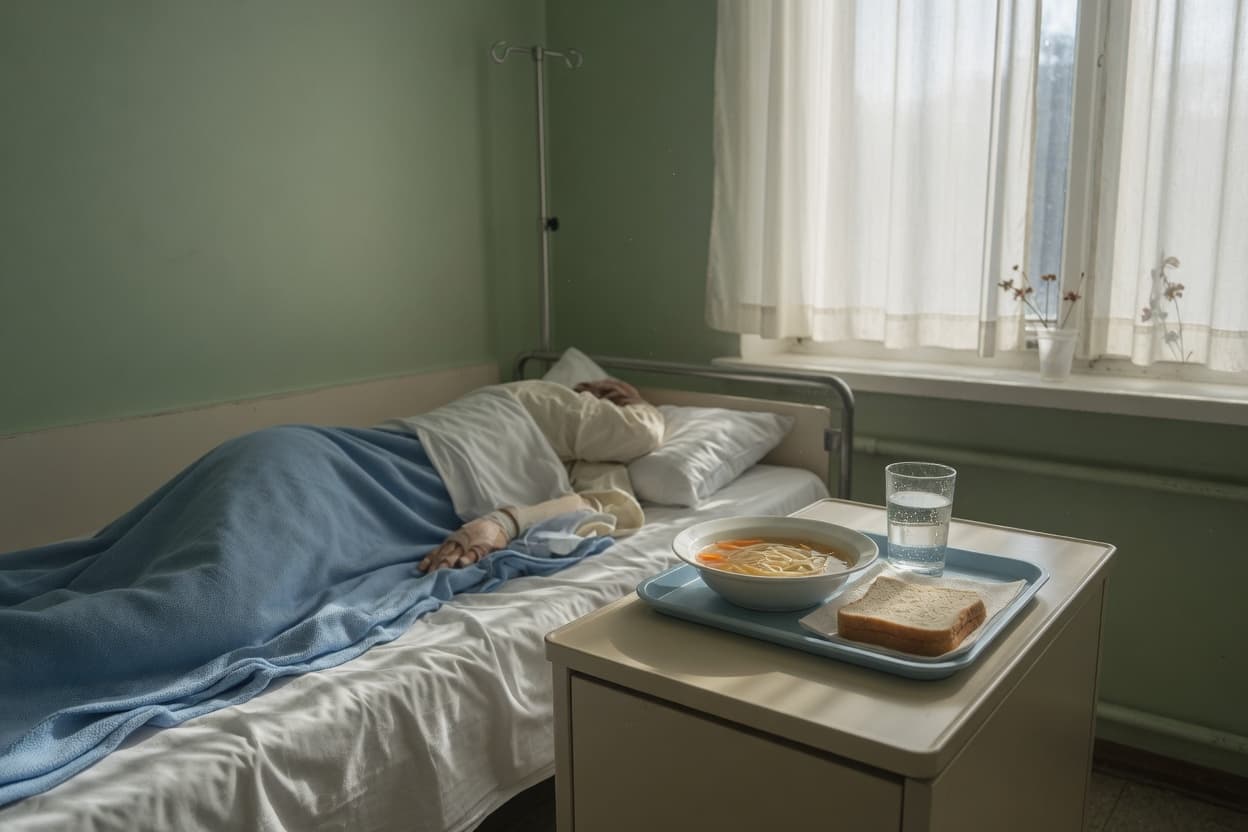
Commentary (guideline review). Chen Xin, Frances Lin, and colleagues at Flinders University and Capital Medical University appraised 17 hospital nutrition guidelines in Clinical Nutrition (doi 10.1016/j.clnu.2026.106755; EurekAlert 20 September 2026). They found extensive feeding guidance for people who are critically ill, and no guideline written for critical illness after major surgery. The review says feeding support, when it is safe, often starts in the first 24 to 48 hours, preferably through the gut, with amounts that change by injury. Severe burns may need a large protein supply very early. A badly injured bowel may need tube feeding or intravenous feeding until ordinary meals are possible. The authors argue that nutrition is part of recovery, not an extra, and that teams should look for malnutrition risk early and keep rechecking it. This is a synthesis of hospital guidelines, not a home meal plan and not a trial that assigned a diet. Educational notes for care teams and families.
Study (observational). Nicholas Koemel and Monash University colleagues report in the British Journal of Sports Medicine on 64,743 middle-aged adults followed about eight years (1,697 deaths; 502 cardiovascular). Among people logging fewer than 5,000 daily steps, a peak 30-minute cadence of about 80 steps per minute tracked 28% lower all-cause mortality versus a low-step, low-cadence group. Lowest overall risk sat around 7,500–10,000 steps with a peak cadence near 100. Association, not a step-count prescription. Educational exercise notes.
Study (small human plus animal/cell). A Journal of Neuroinflammation paper reports 26 men with major depression had lower serum testosterone and higher IL-1β, IL-18, NLRP3, and P2X7 than controls. In testosterone-deficient models, androgen-receptor downregulation tracked hippocampal NLRP3 inflammation; testosterone replacement eased those markers in animals and an LPS cell model. Tiny clinical sample; not a depression trial in the clinic. Educational research notes, not a prescription for testosterone therapy.
Commentary (perspective). An npj Aging paper (19 September 2026, doi 10.1038/s41514-026-00503-5) proposes the completion-gap framework: meal-completion drive and physiological energy demand are only partly coupled, so a persistent mismatch can raise weight until a new equilibrium. It is a testable model, not a trial. Educational aging notes, not a diet.
Study (cross-sectional). Anne Maass and colleagues report in npj Aging (doi 10.1038/s41514-026-00512-4) on 353 cognitively unimpaired adults aged 60–94. Objectively measured muscular capacity was associated with lower basal ganglia perivascular-space volume (enlarged PVS is linked to small-vessel disease); aerobic fitness showed a weaker, non-significant association after multiple-comparison correction. Fitness was not associated with baseline global cognition or episodic memory. Observational, not a training trial. Educational exercise notes, not a dementia treatment.
Study (observational). MRC Laboratory of Medical Sciences and Imperial College London researchers report on nearly 500,000 UK adults that chronic inflammation measured by glycoprotein acetyls (GlycA), tied to socioeconomic disadvantage and psychological distress as well as smoking and excess body fat, was linked to structural heart changes and later events. People in the top 20% of GlycA had a 43% higher risk of heart attack and stroke than the bottom 20%, including those without prior heart disease. Association, not a stress-cure. Educational research notes, not medical advice.
Study (observational; EASD 2026 presentation of a Diabetes, Obesity and Metabolism paper, doi 10.1111/dom.71214). Qiuyu Feng, Diana van Heemst and Leiden colleagues analyzed 87,975 UK Biobank adults without diabetes (mean age 63; 57% women) who wore a wrist accelerometer for seven days, then followed 7.7 years (2,140 new T2D cases). Lower MVPA (median 121 min/week) vs higher (409 min/week) tracked about twice the relative T2D risk; under age 63 the relative gap was more than twofold, versus 65% higher risk at 63+. Absolute case numbers rose more with age, especially in men. Later-day activity (1 pm–midnight) tracked 10% lower relative risk. Conference/cohort limits. Educational exercise notes, not a diabetes treatment.
Study (mouse atlas). Elvan Böke and CRG Barcelona colleagues report in Nature Aging (doi 10.1038/s43587-026-01178-z) counting more than 85,000 oocytes across 100 mouse ovaries. About 14% of oocytes were activated at any given time across the reproductive lifespan, suggesting the ovary monitors its remaining reserve rather than passively leaking eggs. Individual mice still differed three- to four-fold in oocyte number before puberty. Mouse, not human; authors note humans start with ~1 million oocytes versus ~5,000 in mice. Educational research notes, not a fertility treatment.
VitaLonga is an educational longevity resource, not a pharmacy, clinic, or doctor. Content is not medical advice and is not intended to diagnose, treat, cure, or prevent any disease (DSHEA). Supplements can interact with medications and are not appropriate in every pregnancy or health condition. Consult a licensed clinician, especially if you take medications, are pregnant or nursing, or have a diagnosed condition.