VitaLonga

Desk

News archive

Every story stays here. Filter by topic, search older headlines, and save favorites to your member record. Educational notes only — not medical advice.

Saved (sign in)

465 stories

Texas A&M University / EurekAlert · 18 Sept 2026 · Supplements / medicine

In adults 45 to 65, daily creatine tracked more lean tissue even without a set exercise plan

Study (12-week human trial, with an important design limit). Richard Kreider and colleagues report in the Journal of the International Society of Sports Nutrition (doi 10.1080/15502783.2026.2716273; EurekAlert 18 September 2026). Sixty-four healthy adults ages 45 to 65 finished. People chose whether to join a structured exercise and diet program or stay in a non-exercise group, and were then randomized to 10 grams of creatine monohydrate a day or placebo. Among those not in the exercise program, creatine tracked about 2.4 pounds more lean tissue over 12 weeks, plus higher leg-press and bench-press strength. The exercise arm trained with resistance and aerobic work three times a week on a modest calorie deficit. In that arm, creatine tracked greater strength gains, longer time to exhaustion, nearly three pounds of lean tissue gained, and a larger drop in fat mass and body-fat percentage. The placebo exercise group showed little lean-tissue change. Aerobic capacity did not improve more with creatine. The exercise-versus-rest split was self-selected, so it is not a pure randomized test of exercise. Ten grams is the dose used in this study, not a serving suggestion. The release also cites a 2025 review by Kreider of 685 trials that found no significant difference in reported side-effect rates versus placebo; that is a separate safety summary, not this trial's outcome. Educational supplement notes. Not medical advice. Not a substitute for prescribed care.

Read at Texas A&M University / EurekAlert →♡ Save

  • 40–59
  • 60+
  • study
  • fitness
  • nutrition

Poznan University of Medical Sciences / EurekAlert · 18 Sept 2026 · Exercise

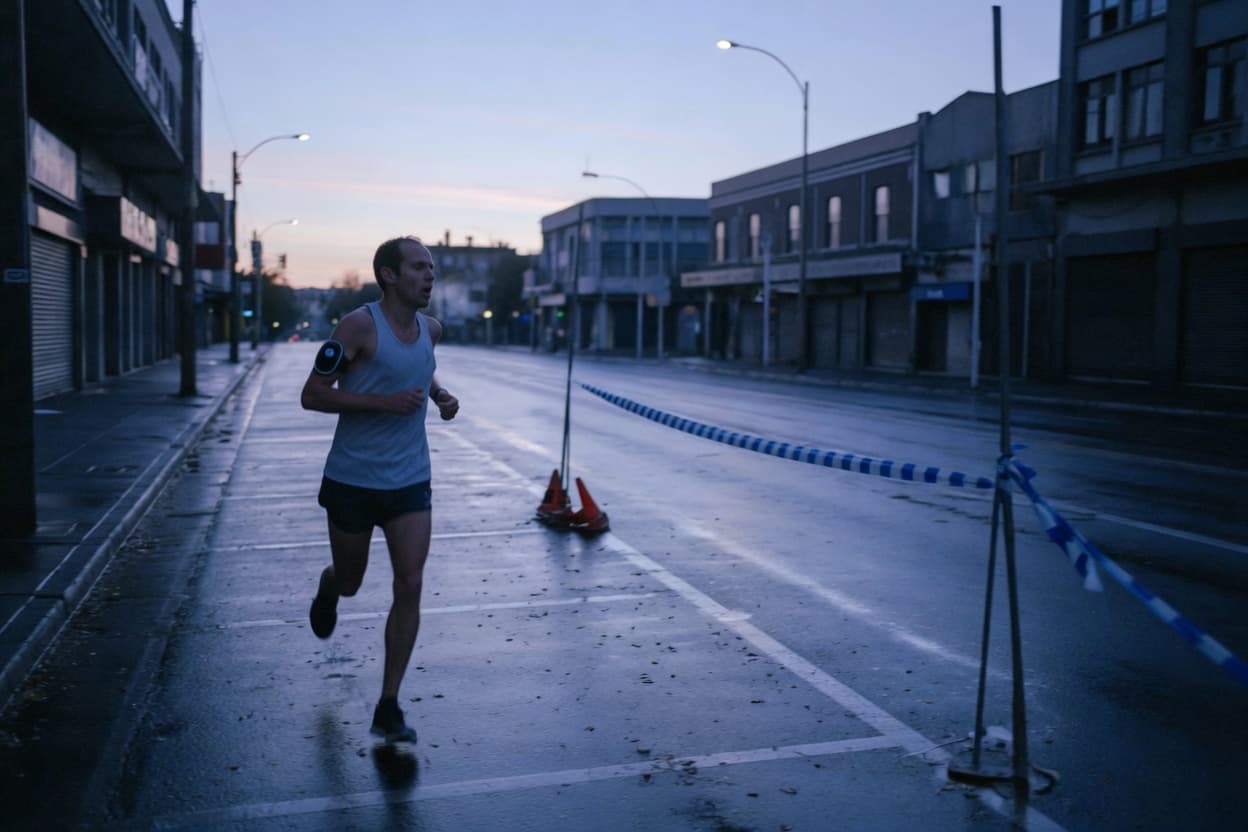
Ten runners with type 1 diabetes finished a marathon in a similar time to peers without diabetes

Study (observational, small). Michał Kulecki, Andrzej Gawrecki, and colleagues at Poznan University report a field study of the 2025 Poznań Marathon, released ahead of the EASD meeting in Milan (EurekAlert 18 September 2026). Twenty amateur runners took part: 10 with type 1 diabetes for at least a year and 10 without diabetes. Mean ages were 35.4 and 39.7 years. Each group had 8 men and 2 women. In the diabetes group, median duration was 16.5 years and HbA1c was 6.4%. Finish times did not differ meaningfully: 228 minutes with diabetes and 248 minutes in the comparison group. Runners with diabetes took in a median 53.5 g of carbohydrate per hour. Finger-stick glucose medians were 183.5 mg/dL at the start, 119.5 at 10 km, 142.5 at 19 km, 121.5 at 30 km, and 108.5 at the finish. Two low readings occurred in one runner, who still finished; that runner had started below 140 mg/dL. Sensors were less accurate on the course. They differed from the finger-stick by about 43% (scanned) and 37% (real-time) and read higher by 32.2 and 50.4 mg/dL. The authors say a finger-stick is worth using when a sensor does not match how a runner feels, and that any insulin plan belongs with a clinician before a race. One small race is not a training plan. Educational notes.

Read at Poznan University of Medical Sciences / EurekAlert →♡ Save

  • Women
  • Men
  • Under 40
  • Metabolic / glucose
  • study
  • fitness

npj Aging · 17 Sept 2026 · Exercise

Three months of midlife exercise lifted mood, not pattern-separation, in the NeuroFit RCT

Study (randomized controlled trial). Sahand Farmand and colleagues report in npj Aging (doi 10.1038/s41514-026-00439-w) on 52 previously inactive UK adults aged 45–65 (BMI 20–30). Twenty-seven did three weekly online classes (aerobic, resistance, combined) for 12 weeks versus 25 controls. The primary outcome, mnemonic pattern separation, did not change (β = 0.33, p = 0.26). Depressive symptoms on PHQ-9 fell (β = −1.18, adjusted p = 0.011) even in people without depression, and an in-vitro hippocampal-progenitor assay shifted. Small trial; mood change is not a dementia result. Educational exercise notes, not medical advice.

Read at npj Aging →♡ Save

  • 40–59
  • Cognitive / dementia research
  • study
  • fitness
  • cognition
  • aging

News-Medical · 17 Sept 2026 · Supplements / medicine

Twelve mouse “aging rate indicators” are proposed to speed tests of longevity drugs

Commentary (review of mouse evidence). Steven Austad, Richard Miller, Matt Kaeberlein and colleagues argue in Frontiers in Science (doi 10.3389/fsci.2026.1821393) that 12 candidate aging rate indicators — single measurements that mark a slow-aging state — could shorten mouse drug screens versus 3–4 year lifespan studies. They draw on the NIA Interventions Testing Program, which has found 14 agents or combinations that extend mouse life, eight by ≥12%, some even when started in late adulthood. Candidates are not validated in humans and are not a clinic test. Educational aging-biology notes, not an anti-aging drug protocol.

Read at News-Medical →♡ Save

  • commentary
  • aging
  • longevity

News-Medical · 17 Sept 2026 · Supplements / medicine

Time-restricted eating was safe and shifted HD markers in a 12-week pilot of 20 people

Study (uncontrolled 12-week pilot). Russell Wells, Amie Hiller and Oregon Health & Science University colleagues report in Nature Metabolism (doi 10.1038/s42255-026-01612-x) on 20 adults with early-stage Huntington’s disease who ate in a self-chosen 6–8 hour window. They kept weight and lean mass, followed the window more than five days a week, improved 0.5 points on the composite Unified Huntington’s Disease Rating Scale (which typically falls ~1 point per year in early disease), and saw a 13% drop in blood neurofilament light plus better mitochondrial activity in blood cells. No comparison arm; HD is not Alzheimer’s. Educational nutrition notes, not a disease treatment or a fasting prescription.

Read at News-Medical →♡ Save

  • 40–59
  • Cognitive / dementia research
  • study
  • nutrition
  • cognition
  • off-label-context

EurekAlert · 17 Sept 2026 · Supplements / medicine

More REM and deep sleep, not just hours in bed, tracked lower disease risk in 95,559 people

Study (observational). Shengzhi Sun of Capital Medical University and colleagues report in PLOS Medicine on 95,559 UK Biobank participants with wrist accelerometers, followed a median 8.9 years against more than 1,000 disease outcomes. Each interquartile extra 47.6 minutes of REM sleep tracked lower risk of 83 conditions, including heart failure (HR 0.74), dementia (HR 0.54), and Parkinson’s (HR 0.20). More deep sleep tracked lower risk of 7 conditions including type 2 diabetes. Total sleep under 5 hours tracked 37 conditions; lowest risk sat in a 6-to-8-hour window. Observational. Educational aging notes, not a sleep prescription.

Read at EurekAlert →♡ Save

  • 40–59
  • 60+
  • Cardiovascular / lipids
  • Metabolic / glucose
  • Cognitive / dementia research
  • study
  • sleep
  • cognition
  • aging
  • off-label-context

NutraIngredients · 17 Sept 2026 · Supplements / medicine

Adding 3 g HMB to 40 g whey further raised muscle protein synthesis in women 65–75, not men

Study (randomized double-blind crossover). K. Smith and colleagues report in Nutrients (2026;18(9):1449, doi 10.3390/nu18091449) on 24 healthy adults aged 65–75 who ingested 40 g whey protein alone or 40 g whey plus 3 g calcium HMB, then crossed over after four weeks. Both raised post-meal muscle protein synthesis; HMB added extra MPS in older women, not older men. HMB also kept muscle-protein breakdown lower in the late-fed period. Small, industry-funded (Abbott); not powered for sex differences. Educational supplement notes, not a sarcopenia treatment.

Read at NutraIngredients →♡ Save

  • Women
  • 60+
  • study
  • women

Sports Medicine · 17 Sept 2026 · Exercise

Resistance training produced small muscle-mass gains in children and teens across 23 trials

Study (meta-analysis). Komm and colleagues pooled 23 trials (1,443 children and adolescents). Versus passive controls, resistance training raised muscle mass a small amount (d=0.22); versus active controls the effect was larger (d=0.61), especially in postpubertal males. Hypertrophy was not limited to post-puberty. Youth, not adult. Educational exercise notes, not a kids’ bulk program.

Read at Sports Medicine →♡ Save

  • Under 40
  • study
  • fitness

News-Medical / Nature Medicine · 17 Sept 2026 · Aging

Sex-specific aging clocks read organs differently in women and in men

Study (multi-cohort clocks). The MULTI Consortium, Z. Song, D. Feng, and colleagues report in Nature Med. (doi 10.1038/s41591-026-04662-6; News-Medical 17 September 2026) on 38 sex-specific biological aging clocks across 15 organ systems, built from genetics, proteomics, metabolomics, MRI, and clinical follow-up in the UK Biobank and checked in ADNI, the Baltimore Longitudinal Study of Aging, and the A4 solanezumab trial. Hepatic proteomic age gap, metabolic metabolomic age gap, and liver MRI age gap were more heritable in women. Immune metabolomic age gap, spleen MRI age gap, and skin proteomic age gap were more heritable in men. In women, higher heart MRI age gap predicted later hypertension, and higher digestive and immune metabolomic age gaps predicted later type 2 diabetes. In men, endocrine and metabolic metabolomic age gaps lined up with hypercholesterolemia, hypertension, and diabetes. Twelve organ-clock pairs raised all-cause mortality risk in women; 14 pairs did so in men, while spleen and liver MRI age gaps looked protective in men. Brain MRI age gap predicted progression from mild cognitive impairment to Alzheimer disease in both sexes, more strongly in women: hazard ratio 1.74 per standard deviation in men and 2.25 in women. It did not clearly predict the step from normal cognition to mild impairment. In A4, women on solanezumab whose brain aging looked slower had higher cognitive scores than men at week 240; that sex gap was absent when brain aging looked faster. Limits named by the authors: many disease genetic studies were not split by sex, UK Biobank had few repeat scans, genetics were mostly European ancestry, and the models left out hormones, pregnancy, and social exposures. Age prediction itself was modest. Educational research notes. Solanezumab here is a completed trial context, not a treatment suggestion.

Read at News-Medical / Nature Medicine →♡ Save

  • Women
  • Men
  • 40–59
  • 60+
  • Cardiovascular / lipids
  • Metabolic / glucose
  • Cognitive / dementia research
  • study
  • cognition

News-Medical · 16 Sept 2026 · Supplements / medicine

Daily orange juice changed vascular-related gene activity in a six-week crossover in men

Study (crossover clinical trial). Christine Morand and INRAE colleagues report in Food & Function that 37 otherwise healthy men with a high waist circumference drank, in turn, 330 ml/day of 100% orange juice, a sugar-matched control, and the same control plus hesperidin, each for six weeks. Citrus bioactives were absorbed and gene-activity related to blood-vessel control shifted on juice. Coverage was issued via the Fruit Juice Science Centre; sample is small and men-only. Gene-expression change is not a blood-pressure outcome trial. Educational nutrition notes, not a prescription to drink juice for heart disease.

Read at News-Medical →♡ Save

  • study men
  • nutrition
  • study
  • off-label-context

News-Medical · 16 Sept 2026 · Research

PSMA-PET/CT flagged 91% of clinically relevant prostate cancers in a RAPID trial analysis

Study (post-hoc analysis of a phase 3 RCT). Einspieler, Marcus Hacker and Medical University of Vienna colleagues report in The Lancet Medical Imaging & Theranostics on 194 patients with suspected prostate cancer. PSMA-PET/CT detected 70 of 77 tissue-confirmed clinically significant cancers (91%); a normal scan had a 91% negative predictive value. Over a median 35 months, 23 of 24 men who later had an aggressive course had already been identified on the scan. Diagnostic imaging research, not a screening mandate and not a lifestyle protocol. Educational notes, not a diagnosis or treatment plan.

Read at News-Medical →♡ Save

  • study men
  • study

News-Medical · 16 Sept 2026 · Supplements / medicine

Structured exercise in cancer care associated with longer survival in a 21-trial synthesis

Study (systematic review and meta-analysis of RCTs). Tzang and colleagues report in the British Journal of Sports Medicine (doi 10.1136/bjsports-2026-111664) on 21 trials, 8,449 adults (88% women; mean age 54, range 47–76), mostly breast cancer plus bowel and pancreas, followed a mean 64 months. Structured exercise as part of care was associated with 23% lower all-cause death and 17% lower recurrence-before-death versus no such program; cancer-specific death was 26% lower. Signals were stronger for aerobic or aerobic-plus-strength and for ≥70% adherence; strength-only data were too thin. Predominance of breast-cancer trials; not a substitute for oncology treatment. Educational exercise notes, not medical advice.

Read at News-Medical →♡ Save

  • study fitness women
  • fitness
  • study

VitaLonga is an educational longevity resource, not a pharmacy, clinic, or doctor. Content is not medical advice and is not intended to diagnose, treat, cure, or prevent any disease (DSHEA). Supplements can interact with medications and are not appropriate in every pregnancy or health condition. Consult a licensed clinician, especially if you take medications, are pregnant or nursing, or have a diagnosed condition.