Every story stays here. Filter by topic, search older headlines, and save favorites to your member record. Educational notes only — not medical advice.
Study (people and animal models). W. David Arnold and colleagues report in The Journal of Clinical Investigation (doi 10.1172/JCI190646; paper 9 July 2026, news release 22 September 2026) that the neuromuscular junction gets less reliable with age as the muscle sodium-channel protein NaV1.4 falls. Sarcopenia affects nearly half of adults over 80. Partially blocking the chloride channel ClC-1 made aging muscle more responsive to nerve signals and improved strength in an animal model. A separate ClC-1 candidate, ignaseclant, has been studied in Charcot-Marie-Tooth disease, not as an approved treatment for ordinary age-related weakness. Educational aging notes, not a drug recommendation.
Study (dose-response meta-analysis of prospective cohorts). Liu and colleagues report in Family Medicine and Community Health (doi 10.1136/fmch-2026-003925) on 51 cohorts and 8,819,894 adults whose mean ages ran from 23 to 77, followed 2 to 32 years. Higher ultra-processed food intake was associated with higher risk of cardiovascular events (24%), metabolic syndrome or diabetes (24%), death from any cause (18%), and high blood pressure (11%), among other outcomes. Each extra 100 g per day tracked a 14% higher cardiovascular-event risk and a 2% higher metabolic syndrome or diabetes risk. Diets were self-reported, and the rest of lifestyle is hard to fully adjust for. Association, not a treatment claim. Educational nutrition notes.
Study (longitudinal secondary analysis). Sara Momtazmanesh, Shadpour Demehri, and colleagues report in Radiology (doi 10.1148/radiol.260656; RSNA 22 September 2026) using Multi-Ethnic Study of Atherosclerosis scans. A deep-learning read of thoracic vertebral volumetric bone mineral density from non-contrast chest CT covered 2,086 people; 715 of them also had brain MRI and cognitive testing. White-matter hyperintensity follow-up was available for 408 and fractional anisotropy for 405. Lower baseline density tracked faster decline in global cognition, more white-matter hyperintensities in the corpus callosum, and a steeper drop in fractional anisotropy in the anterior limb of the internal capsule. The authors say this is not evidence that osteoporosis causes dementia. They frame it as a shared age-related pattern, rather than a direct bone-to-brain effect. The release does not state the cohort age span. Association only. Educational aging notes.
Study (observational). Wang, Lu Qi, and colleagues report in Nature Communications (doi 10.1038/s41467-026-74498-8; Tulane note 22 September 2026) on 277,489 adults aged 40 to 69 who were free of seven major chronic conditions at the start. From age 50, people with both loneliness and social isolation had fewer years free of physical disease than people with neither: about 2.4 fewer years in women and 1.7 in men. Years free of mental disorders fell more: about 3.7 in women and 5.8 in men. A healthier pattern of daily habits narrowed the years lost with social isolation, but it did not clearly shrink the extra risk tied to loneliness. Isolation here is how many connections someone has; loneliness is dissatisfaction with those ties. Observational, not a trial. Educational research notes.
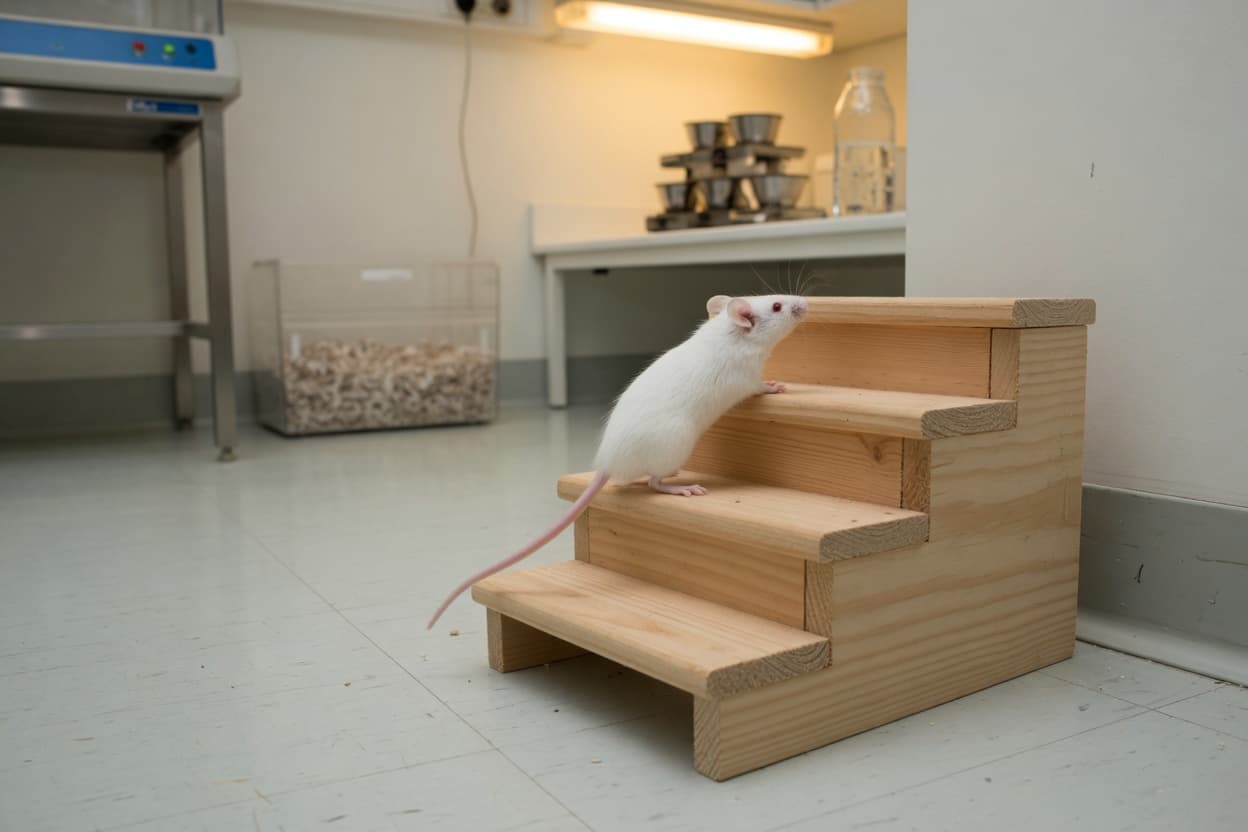
Study (animal). Leandro Moura and colleagues at UNICAMP report in Life Sciences (doi 10.1016/j.lfs.2026.124546; paper 23 June 2026; EurekAlert 22 September 2026). Male mice ate either a standard diet or a high-fat diet. Obese mice then either stayed sedentary or did seven strength-training sessions: 20 climbs of a 70 cm staircase at about 70% of the load they could carry, with 60 to 90 seconds of rest. The high-fat diet continued, so the training was the difference. Body weight did not fall. The trained mice still had less mesenteric fat, the fat around the intestines, and smaller fat cells. Training increased the pairing of ABHD5 with ATGL, a step in breaking down stored fat, and lowered Scd1, a gene tied to making fat. The authors describe the smaller fat cells as a shift toward metabolic health before any change on the scale. This is a one-week mouse experiment, not a human program. Educational notes.
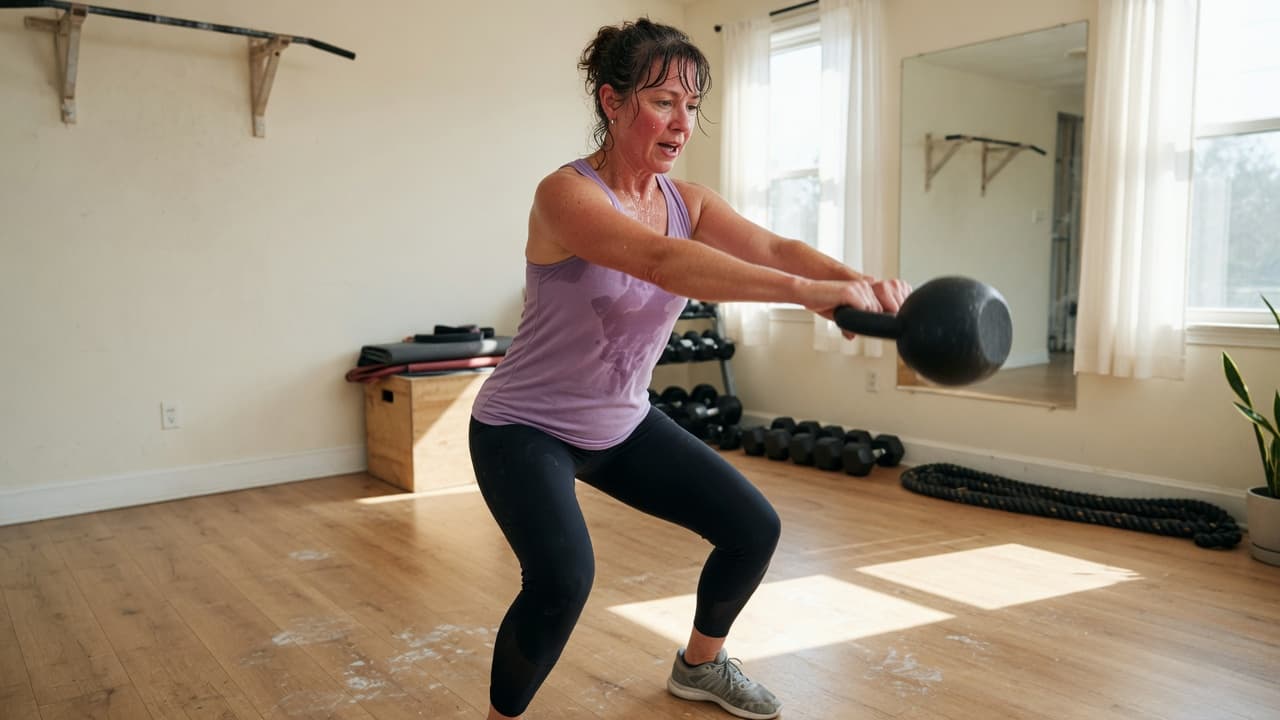
Study (small training trial, described in a 21 September 2026 UNC Nutrition Research Institute briefing). Abbie Smith-Ryan reported a six-week high-intensity resistance program in perimenopausal women: two ~30-minute sessions a week with significant strength gains plus signals for muscle quality and early bone changes. Briefing, not a large multicenter RCT; sample size not fully reported in the public note. Educational exercise notes for midlife women, not a menopause drug substitute.
Study (longitudinal, genetically informed). Anni Pitkänen and University of Jyväskylä colleagues report in the International Journal of Obesity (doi 10.1038/s41366-026-02194-0) on the Cardiovascular Risk in Young Finns Study. BMI was measured at ages 9–18, with ~40 years of follow-up and DNA-methylation clocks in adulthood. A polygenic BMI score plus Mendelian randomization suggested higher adolescent BMI may be causally linked to faster biological aging, partly via adult BMI. Observational genetics, not a diet trial. Educational aging notes, not a weight-loss prescription.
Study (mouse cells). Jeon Woong Kang, Peter So, Jian Shu and MIT/MGH colleagues report in Nature Aging (21 September 2026) combining Raman microscopy with single-cell gene expression to find biochemical barcodes of senescence. The method does not destroy the cell. Work is in mouse cells; human-tissue adaptation is next, not a clinic endoscope yet. Educational research notes, not a senolytic treatment.
Study (cross-sectional; JAMA Network Open 2024, recirculated 21 September 2026). Dorothy Chiu, Elissa Epel, Barbara Laraia and colleagues scored 342 Black and White women (mean age 39.2) on Mediterranean, AHEI, and an epigenetic-nutrient index plus added sugar. Better diet scores tracked younger GrimAge2; each extra gram of added sugar tracked older GrimAge2 even after diet quality. Cross-section, not a feeding trial. Educational nutrition notes, not a sugar-tax or supplement claim.
Commentary (review). An Aging (Albany NY) review (31 August 2026; press 21 September) terms the “guardian paradox”: tumor-suppressor DNA-damage responses that protect youth may, if chronically on (p53, p21, p16INK4a), push senescence and aging without new driver mutations. Framework, not a human intervention. Educational aging notes, not a senolytic pitch.
Study (target-trial emulation). Yan Xie, Taeyoung Choi, and Ziyad Al-Aly report in BMJ Medicine (2026; 5:e002150; doi 10.1136/bmjmed-2025-002150) on 333,687 U.S. veterans with type 2 diabetes followed for up to three years. Staying on a GLP-1 medicine (semaglutide or tirzepatide) continuously was linked to an 18% lower risk of heart attack, stroke, or death than sulfonylurea use. Stopping for one year without restarting tracked a 14% higher risk versus staying on the GLP-1; two years off tracked 22% higher. A six-month gap before restarting still weakened the benefit. About 26% stopped outright and about 23% had a gap of at least six months. Observational. These are prescribed medicines, not longevity supplements. Do not start or stop one because of a headline. Educational notes, not medical advice. Educational supplement parallel (not a replacement): When headlines discuss GLP-1 medicines and aging, people often research food-first fiber or bitter-botanical “pathway support” formulas. Those are not semaglutide, not compounded GLP-1, and not a substitute for a prescribed GLP-1 drug. Mouse or marketing claims are hype until human outcome data exist. Weakly evidenced. Store: /store/glp1-pathway-support. Not medical advice. Not a substitute for a prescribed medicine. Off-label prescription use is clinician-only. VitaLonga does not diagnose, treat, or cure disease. Never start, stop, or replace a prescription with a supplement on the basis of a headline.
Study (cross-sectional). Song and colleagues report in Science Advances on 86 non-obese adults aged 20 to 40 (mean age 28, mean BMI 21.3). Forty people who exercised at least three times a week, meeting about 150 minutes moderate or 75 minutes vigorous, were compared with 46 people who reported no planned exercise. Blood differences involved glucose and lipid metabolism, metabolites consistent with fatty acid oxidation, and antioxidant-related metabolites. Bilirubin, uric acid, and creatinine were higher in the exercise group. Models adjusted for sex and BMI. A women-only look showed similar gene-expression trends. Habit comparison, not a training trial, and muscle mass was not measured. Educational exercise notes.
VitaLonga is an educational longevity resource, not a pharmacy, clinic, or doctor. Content is not medical advice and is not intended to diagnose, treat, cure, or prevent any disease (DSHEA). Supplements can interact with medications and are not appropriate in every pregnancy or health condition. Consult a licensed clinician, especially if you take medications, are pregnant or nursing, or have a diagnosed condition.