VitaLonga

Desk

News archive

Every story stays here. Filter by topic, search older headlines, and save favorites to your member record. Educational notes only — not medical advice.

Saved (sign in)

93 stories in this category

DZNE / EurekAlert · 15 Sept 2026 · Nutrition

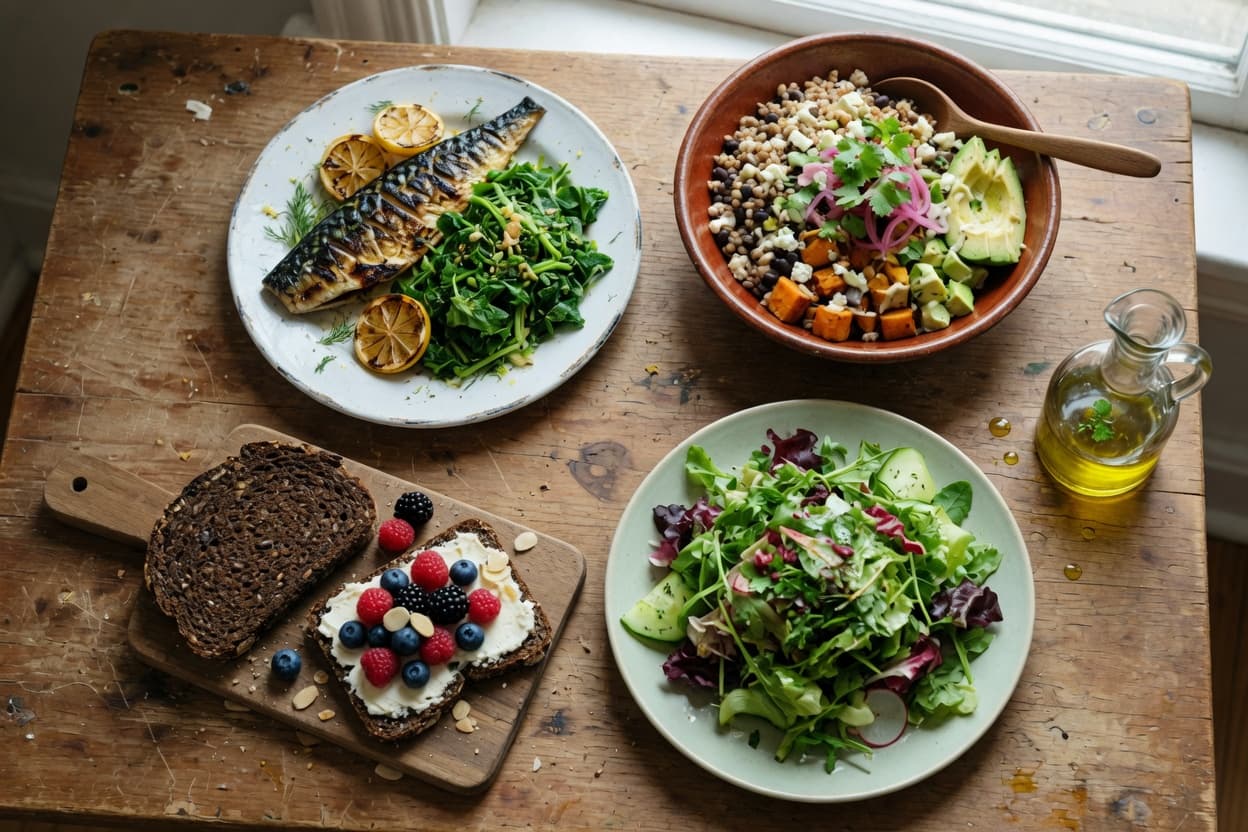
Ten different healthy eating patterns tracked slower biological aging

Study (observational). Juliana Tavares, Monique Breteler, and colleagues report in Nature Communications (doi 10.1038/s41467-026-77064-4; paper 29 August 2026; EurekAlert 15 September 2026). Blood and diet records came from about 7,500 women and men: 6,470 in the Rhineland Study in Bonn, where the pattern was first seen, and 1,034 in EPIC-Potsdam, where the main results were checked again. Three epigenetic clocks read DNA methylation at about 850,000 sites. Each person was scored against ten healthy patterns, including Mediterranean, Nordic, plant-based, DASH, and MIND. People who scored well on one pattern often scored poorly on another, and almost nobody looked like a healthy eater on every scale at once. Higher diet quality still lined up with slower biological aging on all ten patterns. Differences between patterns were modest. More than 70 percent of the affected biological pathways were shared, covering cell structure, cell signaling, and metabolism. Heart-related pathways were particular to DASH, and cognition and memory pathways were particular to MIND. The diet link was strongest in smokers, who were not eating better than non-smokers; one reading is that smokers had more ground to regain. This is an association in two cohorts, not a feeding trial and not proof that one named diet prevents dementia or cardiovascular disease. Educational nutrition notes.

Read at DZNE / EurekAlert →Our summary♡ Save

  • Cardiovascular / lipids
  • Metabolic / glucose
  • Cognitive / dementia research
  • Nutrition
  • Aging
  • study
  • cognition
  • aging

ScienceDirect · 14 Sept 2026 · Nutrition

A Longo review maps how fasting remakes the epigenome — Sinclair flagged it as “ITOA”

Commentary (review). Valter Longo and colleagues, in Mechanisms of Ageing and Development, synthesize how fasting activates AMPK and sirtuins, shifting histone marks, DNA methylation, and non-coding RNAs toward autophagy and cellular maintenance. David Sinclair posted the paper on 14 September 2026 (“Fasting meets ITOA”). Review of animal and cell work, not a human outcome trial. Educational aging notes, not a fast-for-lifespan protocol. Sinclair-adjacent; farmed from the underlying review.

Read at ScienceDirect →Our summary♡ Save

  • Nutrition
  • Aging
  • Longevity
  • commentary
  • aging
  • longevity
  • study

ScienceDaily · 14 Sept 2026 · Nutrition

Hidden brain wiring may help keep the mind sharp as gray matter shrinks

Study (cross-sectional imaging). Yingxu Liu, Leon Aksman and colleagues at USC’s Stevens INI report in Alzheimer’s & Dementia on 459 community-dwelling adults aged 60+ in India’s LASI-DAD cohort. Healthier superficial white-matter (short fibers under cortex) tracked better language scores and appeared to weaken the link between gray-matter loss and poorer cognition. Gray-matter atrophy remained the stronger overall predictor. One time-point cannot say which change comes first. Educational brain-aging notes, not a dementia diagnosis.

Read at ScienceDaily →Our summary♡ Save

  • 60+
  • Cognitive / dementia research
  • Nutrition
  • Aging
  • study
  • cognition
  • aging

ScienceDaily · 13 Sept 2026 · Nutrition

A hidden compound in healthy foods may worsen IBD

A natural compound found in foods such as spinach, almonds, and sweet potatoes may aggravate gut inflammation in people with Crohn’s disease and ulcerative colitis because their intestines appear to handle it differently. Researchers say the finding could open the door to lower-oxalate diets or microbiome treatments tailored specifically to people with IBD.

Read at ScienceDaily →Our summary♡ Save

  • Nutrition
  • news
  • gut
  • inflammation

ScienceDaily · 13 Sept 2026 · Nutrition

Sucralose byproduct DNA findings sit beside a 2026 safety review that kept authorized uses

Commentary wrapping prior lab work. A 2023 NC State in-vitro paper reported sucralose-6-acetate (an impurity up to about 0.67% in some samples) was genotoxic in cultured blood cells and impaired a gut-barrier model; EFSA’s 2026 re-evaluation kept sucralose’s ADI at 15 mg/kg/day and did not raise a genotoxicity concern for authorized uses, while flagging heating/baking uncertainties. Everyday drinks were not shown to damage DNA in people. Educational additive notes, not a detox protocol.

Read at ScienceDaily →Our summary♡ Save

  • Nutrition
  • commentary
  • gut

ScienceDaily · 10 Sept 2026 · Nutrition

Eating only 8 hours a day may help control Type 1 diabetes

Study (small RCT). UIC’s Krista Varady and colleagues randomised 32 Chicago adults with Type 1 diabetes and obesity to six months of noon–8 p.m. eating without calorie counting, a 25% calorie cut, or usual habits. Time-restricted eating lowered HbA1c by about 0.5% versus calorie reduction and did not raise reported severe hypo/hyperglycemia or ketoacidosis in this sample. First TRE trial in T1D; not a reason to change insulin or meal timing without an endocrinologist. Educational nutrition notes, not medical advice.

Read at ScienceDaily →Our summary♡ Save

  • Metabolic / glucose
  • Nutrition
  • study

Medscape · 8 Sept 2026 · Nutrition

Highest blood xylitol tracked more heart attacks and strokes in 17,710 adults

Study (observational; ESC 2026 presentation, not yet peer-reviewed). Marco Witkowski of Charité Berlin analyzed 17,710 people from CLSA and EPIC-Norfolk. Top-quartile blood xylitol vs bottom: 57% higher major CVD events over 6 years in CLSA and 18% higher over 30 years in Norfolk, after adjusting for age, sex, smoking, lipids, diabetes, and hypertension. Blood xylitol is not the same as a stick of gum; causality is unproven. Educational nutrition notes, not a ban on xylitol gum.

Read at Medscape →Our summary♡ Save

  • Cardiovascular / lipids
  • Metabolic / glucose
  • Nutrition
  • study

ScienceDaily · 6 Sept 2026 · Nutrition

Scientists discover a hidden problem with this popular sugar substitute

Study (zebrafish; ScienceDaily coverage 6 Sept 2026 of a Science Signaling paper). Washington University in St. Louis researchers report that sorbitol—used in sugar-free gum and candy, and made in the gut from glucose after meals—can reach the liver and convert toward a fructose derivative. Gut Aeromonas strains can chew some of it up; high loads can overwhelm that filter. This is animal and mechanistic work, not a human trial proving liver disease from gum. It is a caution that “sugar-free” is not metabolically free. Food choices belong with a clinician if you have diabetes or fatty-liver disease.

Read at ScienceDaily →Our summary♡ Save

  • Metabolic / glucose
  • Nutrition
  • study
  • research
  • gut

ScienceDaily · 4 Sept 2026 · Nutrition

Stanford scientists discover a seafood that can reverse signs of aging

Study (mice; ScienceDaily coverage dated 4 Sept 2026 of a 2022 Frontiers paper). Xi'an Jiaotong-Liverpool, Stanford and collaborators reported that plasmalogen lipids abundant in edible sea squirts improved Morris-water-maze learning in aged mice, with more synapses, less brain inflammation, and thicker darker fur. The underlying paper is in Frontiers in Molecular Biosciences (2022). This is laboratory animal work, not evidence that eating sea squirts or taking plasmalogen pills reverses human aging. Human trials would be required; supplements marketed on this headline are weakly evidenced.

Read at ScienceDaily →Our summary♡ Save

  • Cognitive / dementia research
  • Nutrition
  • Supplements
  • Aging
  • study
  • cognition
  • aging
  • inflammation

Harvard Health · 2 Sept 2026 · Nutrition

After prostate cancer, more plant fats tracked longer life — mostly via heart deaths, not the cancer

Study (observational). Health Professionals Follow-Up Study investigators report in JAMA Network Open (2 September 2026) on 4,884 men with nonmetastatic prostate cancer (mean age 69.5) followed a mean ~13 years. Highest post-diagnosis saturated-fat intake tracked 24% higher all-cause death versus lowest, driven by cardiovascular and other-cancer deaths (each ~42% higher); no fat type tracked prostate-cancer death. Swapping 10% of calories from animal fat to plant fat tracked 16% lower death; 5% of calories from saturated to monounsaturated fat tracked 20% lower death. Association, not a cancer diet. Educational nutrition notes, not a substitute for oncology care.

Read at Harvard Health →Our summary♡ Save

  • Men
  • 60+
  • Cardiovascular / lipids
  • Cancer
  • Nutrition
  • study
  • men

ScienceDaily · 2 Sept 2026 · Nutrition

Too much coffee may weaken bones, study finds

Study (observational). A 10-year follow-up of nearly 10,000 older women associated tea drinking with slightly higher hip bone density. Moderate coffee was not clearly harmful; more than five cups a day tracked with lower density. Associations are not prescriptions. Food and drink choices belong with a clinician if you have bone disease or take medications.

Read at ScienceDaily →Our summary♡ Save

  • Nutrition
  • Medicine
  • Aging
  • study
  • aging

VitaLonga is an educational longevity resource, not a pharmacy, clinic, or doctor. Content is not medical advice and is not intended to diagnose, treat, cure, or prevent any disease (DSHEA). Supplements can interact with medications and are not appropriate in every pregnancy or health condition. Consult a licensed clinician, especially if you take medications, are pregnant or nursing, or have a diagnosed condition.