VitaLonga

Desk

News archive

Every story stays here. Filter by topic, search older headlines, and save favorites to your member record. Educational notes only — not medical advice.

Saved (sign in)

93 stories in this category

SciTechDaily · 27 Oct 2026 · Nutrition

Daily peanuts changed an insulin-linked brain blood-flow signal in adults aged 60 to 75

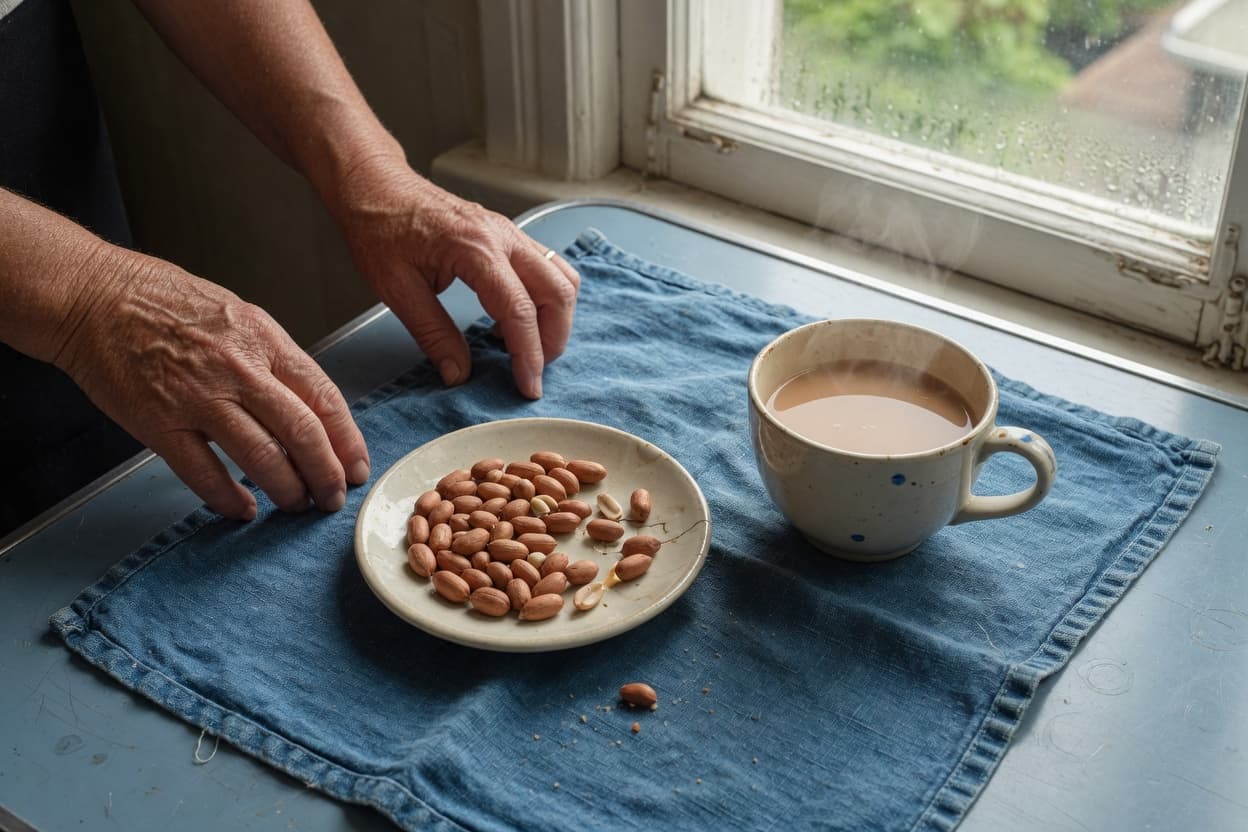
SciTechDaily reported this on 27 October 2026. Peter Joris and colleagues at Maastricht University's NUTRIM institute published in Food and Function on 30 September 2026 (DOI 10.1039/d6fo03208g). In a randomized crossover, 31 adults aged 60 to 75 spent 16 weeks on a daily food portion of peanuts and 16 weeks off. Sex was not stated. The portion was 60 g a day (about 2.1 ounces) of unsalted skin-roasted peanuts. They measured cerebral blood flow with arterial-spin-labeling MRI after intranasal insulin. One cluster in the right hemisphere (lingual gyrus, hippocampus, parahippocampal gyrus, thalamus, and posterior cingulate) showed a different blood-flow response to intranasal insulin versus the control period: -5.4 plus or minus 5.4 mL per 100 g of tissue per minute. An earlier 2025 Clinical Nutrition paper from the same intervention reported 3.6 percent higher global cerebral blood flow and 5.8 percent higher verbal memory. The Peanut Institute Foundation funded the work and had no role in design, implementation, analysis, interpretation, or writing. The sample is small. This is not a dementia treatment. It is a different study from the peanut lipid signature in younger adults. Not medical advice.

Read at SciTechDaily →Our summary♡ Save

  • 60+
  • Cardiovascular / lipids
  • Metabolic / glucose
  • Cognitive / dementia research
  • Nutrition
  • study
  • cognition

ScienceDaily · 27 Oct 2026 · Nutrition

Gut bacteria patterns lined up with about 15% of aging-pace differences

ScienceDaily reported on 27 October 2026 a University of Hawaiʻi at Mānoa study in Scientific Reports. Stool and blood from 123 adults across a wide age range were compared with DunedinPACE, a blood marker of the pace of biological aging. Differences in gut bacterial communities accounted for about 15 percent of the variation in that pace, including after accounting for chronological age. Bifidobacterium adolescentis was among the species most strongly tied to a slower pace, and Succinivibrio dextrinosolvens to a faster one. The sample included Native Hawaiian and Pacific Islander participants. Sex was not reported. The authors say this is an association, not proof that changing gut bacteria slows aging. Not medical advice.

Read at ScienceDaily →Our summary♡ Save

  • Cognitive / dementia research
  • Aging
  • study
  • aging
  • gut

ScienceDaily · 27 Oct 2026 · Nutrition

Low testosterone and fructose together raised liver fat in male mice

ScienceDaily reported on 27 October 2026 an Osaka Metropolitan University study in American Journal of Physiology-Endocrinology and Metabolism. Eight-week-old male mice were split into six groups: sham surgery or castration, with a control feed, a fructose feed, or fructose plus antibiotics. Low testosterone and fructose together increased liver triglycerides more than either factor alone, and antibiotics blunted the rise in liver weight. The group links the extra fat to gut-bacteria changes and higher pyruvate in the cecum; mouse liver cells in a dish stored more neutral lipid when pyruvate and fructose were combined. This is an animal and cell study, not a human diet trial and not a treatment for fatty liver. Not medical advice.

Read at ScienceDaily →Our summary♡ Save

  • Men
  • Cardiovascular / lipids
  • Metabolic / glucose
  • Nutrition
  • Medicine
  • study
  • gut

ScienceDaily · 25 Oct 2026 · Nutrition

Mediterranean diet may boost tiny proteins that protect the heart and brain

Scientists have uncovered a surprising new clue to why the Mediterranean diet is so good for the heart, brain, and healthy aging. Researchers at USC found that older adults who closely followed the diet had higher levels of two tiny proteins, humanin and SHMOOSE, produced by the mitochondria, the energy-producing structures inside cells. These proteins have been linked to protection against heart disease, Alzheimer&#

Read at ScienceDaily →Our summary♡ Save

  • 60+
  • Cardiovascular / lipids
  • Cognitive / dementia research
  • Nutrition
  • Aging
  • cognition
  • aging

ScienceDaily · 22 Oct 2026 · Nutrition

Millions take fish oil for brain health. A two-year study found no benefit

A surprising two-year clinical trial found that fish oil supplements successfully delivered omega-3s to the brain but failed to improve memory or protect against Alzheimer's-related brain shrinkage. Researchers suspect that getting these nutrients through a healthy diet may offer benefits that supplements alone cannot provide.

Read at ScienceDaily →Our summary♡ Save

  • Cognitive / dementia research
  • Nutrition
  • Supplements
  • cognition
  • study

International Journal of Obesity · 22 Oct 2026 · Nutrition

In an emulated trial of 3,789 postmenopausal women, a hypothetical higher protein intake lined up with less abdominal fat

Study (emulated target trial on existing cohort data, not a feeding experiment). Investigators report in the International Journal of Obesity (2026; 50(3): 609-617; DOI 10.1038/s41366-025-01978-0), published online 9 Jan 2026. They used DXA scans from 3,789 postmenopausal women ages 50 to 79 in the Women's Health Initiative and asked what body composition would have looked like if everyone had kept protein at or above set levels for three years. The women were not randomized to protein doses. The model estimates that holding intake at or above 1.5 grams per kilogram per day, versus no such target, lined up with lower visceral fat (minus 13.1 cm2, 95 percent CI minus 18.9 to minus 7.3), lower subcutaneous abdominal fat (minus 25.3 cm2, minus 39.7 to minus 11.0), lower body-fat percentage (minus 1.0, minus 1.7 to minus 0.3), lower weight (minus 2.5 kg, minus 3.7 to minus 1.2), and a higher lean-soft-tissue percentage (plus 0.9, 0.3 to 1.6). The authors say estimated benefits started around 1.2 grams per kilogram per day. A model of a hypothetical diet is not evidence that eating that much protein produced those changes in a trial. Not medical advice.

Read at International Journal of Obesity →Our summary♡ Save

  • Women
  • 40–59
  • 60+
  • Metabolic / glucose
  • Nutrition
  • study

ScienceDaily · 22 Oct 2026 · Nutrition

Natural compound could fight rheumatoid arthritis at its source

A natural compound extracted from a medicinal plant has shown surprising promise against rheumatoid arthritis. In rats, it reduced joint swelling, protected cartilage, and calmed the immune responses responsible for chronic inflammation. Scientists discovered that the compound works by targeting a specific protein and restoring balance to fatty acid metabolism, revealing a previously underexplored way to fight the di

Read at ScienceDaily →Our summary♡ Save

  • Metabolic / glucose
  • news
  • inflammation

EurekAlert · 22 Oct 2026 · Nutrition

A Cambridge review asks how much protein is enough

On 22 October 2026 Cambridge's Better Protein Institute summarized a Frontiers in Nutrition review. The author argues that many protein guidelines describe the least needed to avoid deficiency in sedentary adults, while people who are very active, older adults, and pregnant women may need more. This is a commentary on existing evidence, not a new feeding trial. Not medical advice.

Read at EurekAlert →Our summary♡ Save

  • Exercise
  • Nutrition
  • Aging
  • commentary
  • aging
  • study

ScienceDaily · 21 Oct 2026 · Nutrition

Massive study of 460,000 people challenges ultra-processed food cancer fears

A massive study of more than 460,000 Americans found that ultra-processed foods were not associated with increased colorectal cancer risk overall, challenging a widely held assumption. While processed meat was linked to higher cancer incidence, ultra-processed whole grains and dairy products were associated with lower incidence.

Read at ScienceDaily →Our summary♡ Save

  • Cancer
  • Nutrition
  • news
  • study

ScienceDaily · 21 Oct 2026 · Nutrition

Scientists find 10 different diets linked to slower aging

A study by DZNE finds that healthy eating is associated with slower biological aging—and that there is more than one way to eat healthily. The researchers examined ten dietary patterns considered healthy, including the Mediterranean, Nordic, and a plant-based diet, as well as the DASH diet, which is designed to help lower blood pressure. The findings are published in the journal Nature Communications.

Read at ScienceDaily →Our summary♡ Save

  • Cardiovascular / lipids
  • Nutrition
  • Aging
  • aging
  • study

University of Colorado Anschutz / Chemical Senses · 20 Oct 2026 · Nutrition

In 28 people with taste loss more than a year after COVID-19, sweet, bitter, and savory signals were weaker

Study (small human sample). Thomas Finger and colleagues, with a team organized by Göran Hellekant, report in Chemical Senses (2026; 51; DOI 10.1093/chemse/bjaf068). ScienceDaily carried it on 19 Oct 2026. They examined 28 people who had taste problems for more than a year after COVID-19 and who had not been hospitalized. Eight of the 28 had clearly abnormal taste scores. Eleven reported trouble with sweet, bitter, or umami. Salty and sour detection was largely intact. Taste-bud samples from 20 people showed less messenger RNA for PLCβ2, a protein that amplifies sweet, bitter, and umami signals. Salty and sour cells use a different route. Some buds also looked structurally disorganized. Taste cells normally turn over every two to four weeks, so the long duration is unexplained. The public summary does not give ages or the sex split. Not medical advice.

Read at University of Colorado Anschutz / Chemical Senses →Our summary♡ Save

  • taste
  • study

VitaLonga is an educational longevity resource, not a pharmacy, clinic, or doctor. Content is not medical advice and is not intended to diagnose, treat, cure, or prevent any disease (DSHEA). Supplements can interact with medications and are not appropriate in every pregnancy or health condition. Consult a licensed clinician, especially if you take medications, are pregnant or nursing, or have a diagnosed condition.