Every story stays here. Filter by topic, search older headlines, and save favorites to your member record. Educational notes only — not medical advice.
Study (observational records). Weizmann Institute researchers led by Uri Alon, with Glen Pridham and Yoav Hayut, report in Nature Medicine on 13 Oct 2026 that menopause is not only a slow drift. A method borrowed from astronomy corrected for different ages at the last period. Across more than 300 million laboratory tests from more than 1 million women in the US National Health and Nutrition Examination Survey and in Clalit records, 52 of 90 test types changed abruptly, including bone, liver, kidney, and cholesterol measures. Men of similar ages did not show that jump, and the shifts were smaller in women receiving menopausal hormone therapy. Sex-hormone changes sped up more than a decade before the final period. This is an association, not a reason to start or stop hormone therapy. Hormone decisions are clinician-only. Not medical advice.
Study (phase 2 meeting analysis of an experimental drug, plus separate animal work). ScienceDaily carried the European Association for the Study of Diabetes account on 11 October 2026 from the annual meeting in Milan. W. Timothy Garvey of the University of Alabama at Birmingham and Yu-Fang Ling of Caliway Biopharmaceuticals described CBL-514, an injection meant to make fat cells die rather than only empty them. In a subcutaneous-fat phase 2 result, 69.6 percent of people on CBL-514 had lost at least 150 mL of subcutaneous fat volume at eight weeks, and none on placebo reached that mark. A pooled look at MRI subsets from trials CBL-0204 and CBL-0205 included people with body mass index 22 to 30 who had injections in the lower abdomen every three weeks for up to 12 weeks, up to 600 mg (23 on the drug, 17 on placebo at the later scan). Average age across the groups ran from 36.4 to 42.4 years. Of the 23 on the drug, 17 were women and 6 were men. Starting visceral fat averaged 563.85 mL on the drug and 659.81 mL on placebo. Four weeks after the last injection, visceral fat was 12.01 percent below baseline on the drug and 5.68 percent above baseline on placebo. At the later scan it was still 10.45 percent below baseline on the drug and 11.76 percent above on placebo. Most side effects were mild or moderate pain, swelling, or redness at the injection site. No serious adverse events were reported in that account. Separate animal work, not the human MRI analysis, found less weight regain after tirzepatide was stopped when CBL-514 had been added. The release names Ozempic, Wegovy, Mounjaro, and Zepbound as the GLP-1 receptor agonist setting for that question and says the regain finding is not yet shown in people. Phase 3 recruitment was underway. Garvey said cosmetic flattening is not the health endpoint. Educational notes. CBL-514 is experimental. It is not a supplement, not a substitute for a prescribed medicine, and not something to start from a headline. Off-label or unapproved use is clinician-only and, here, still a trial question. Educational supplement parallel (not a replacement): When headlines discuss GLP-1 medicines and aging, people often research food-first fiber or bitter-botanical “pathway support” formulas. Those are not semaglutide, not compounded GLP-1, and not a substitute for a prescribed GLP-1 drug. Mouse or marketing claims are hype until human outcome data exist. Weakly evidenced. Store: /store/glp1-pathway-support. Not medical advice. Not a substitute for a prescribed medicine. Off-label prescription use is clinician-only. VitaLonga does not diagnose, treat, or cure disease. Never start, stop, or replace a prescription with a supplement on the basis of a headline.
Study (mathematical model checked against lab images, not a treatment trial). ScienceDaily carried the Mississippi State University account on 11 October 2026. Shantia Yarahmadian, Yasser Alzahrani, and Vaghawan Prasad Ojha report in the Bulletin of Mathematical Biology (2026; 88(9); doi 10.1007/s11538-026-01732-1). The model simulates how copper and zinc ions may change aggregation of amyloid-beta, a protein that can form plaques studied in Alzheimer's disease. It also explores two hypothetical ways of interfering with that clumping. The authors compared the simulations with atomic force microscopy of protein clusters. Yarahmadian said the equations matched patterns seen in those images and that mathematics does not replace laboratory or clinical research. The release does not report a patient group, a sex split, or an age band, and it does not show that blocking these metals treats Alzheimer's disease. Educational notes. This is not a test and not a supplement instruction.
Study (mouse experiments, not a human diet trial). ScienceDaily carried the Kyoto University account on 11 October 2026. Yanyan Liu, Daisuke Yabe, and colleagues report in Diabetes (2026; doi 10.2337/db26-0531). After an overnight fast, mice got water then glucose, olive oil then glucose 15 minutes later, or glucose then olive oil 15 minutes later. Olive oil before glucose produced a smaller early blood-sugar rise, slower stomach emptying, and an early rise in glucagon and two incretin hormones. The same pattern appeared in mice with type 2 diabetes and severe insulin deficiency. Blocking glucagon signaling alone, or incretin signaling alone, did not remove the effect. Blocking both at once reduced it. Cutting the vagus nerves below the diaphragm also changed the response, which the authors read as a nerve contribution. Yabe said the order nutrients reach the gut can change how fast the stomach delivers glucose. The release says earlier human observations of eating vegetables, protein, or fat before carbohydrates exist, but this paper does not itself establish the mouse mechanism in people. Educational notes. This is not medical advice and not a meal prescription.
Study (observational wearable records, not a trial). ScienceDaily carried the University of Texas at Austin account on 11 October 2026. Christian J. Corral, Melissa Miller, Frances A. Champagne, David M. Schnyer, and Benjamin Baird report in the Journal of Physical Activity and Health (2025; 22(8):1042; doi 10.1123/jpah.2024-0844). The news date is later than the journal year. University of Texas students wore Fitbit devices over several months. The question was whether the number of days with exercise, not only the weekly total, lined up with sleep. Students who were active on more days spent more time in non-REM sleep, including the deep sleep early in the night that the release ties to recovery. Baird said frequency seemed to matter for sleep, as against saving movement for the weekend. The release says about 10 minutes of moderate to vigorous activity a day, effort around 6 on a scale of 1 to 10 and still able to talk, lined up with better sleep in these young adults. Walking and standing breaks also lined up with healthier sleep and a better mood the next day. More non-REM sleep lined up with more energy and less stress the next day. The design does not show that exercise caused the sleep change. Sex is not reported. The team said the next step is a larger cohort beyond college students. Current public guidance of about 150 minutes a week does not require that time to be spread across every day. Educational notes. This is not a training prescription.
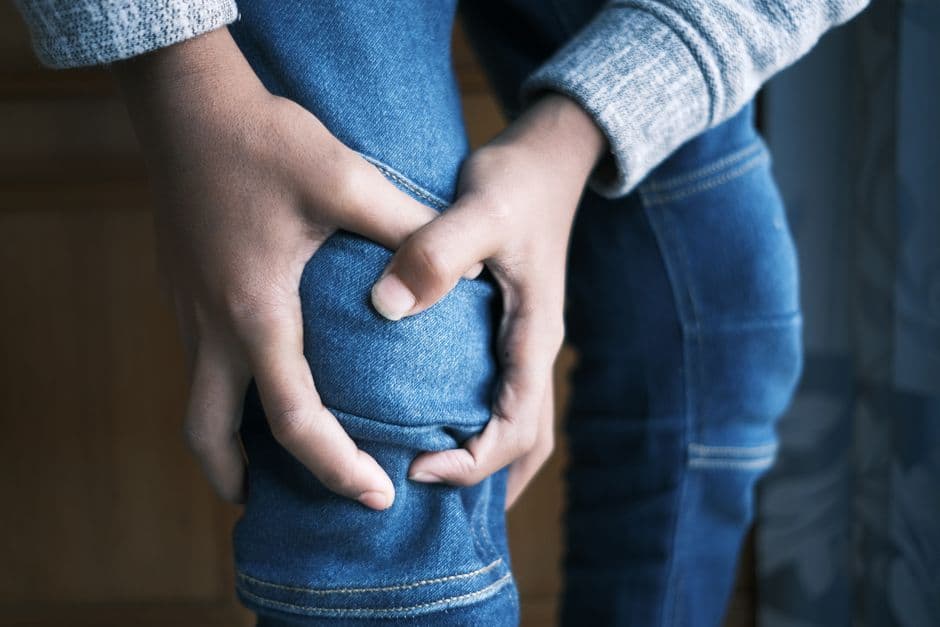
Study (randomized trial; the journal year is earlier than the news date). ScienceDaily carried the University of Utah account on 10 October 2026. Scott D. Uhlrich and colleagues report in The Lancet Rheumatology (2025; 7(10):e708; doi 10.1016/S2665-9913(25)00151-1). The U.S. Department of Veterans Affairs is listed as the funder. People with mild to moderate osteoarthritis of the inner knee were scanned and walked on a force-sensing treadmill. Each person tried toe-in or toe-out of 5 or 10 degrees. People for whom no angle reduced inner-knee load were excluded. Sixty-eight participants were split into two groups of 34. One group trained a personal foot angle. The other walked with the same sessions but kept their usual angle. Both did six weekly treadmill sessions with a shin device that vibrated when the foot left the assigned angle, then were asked to practice at least 20 minutes a day. A year later, pain on a 0 to 10 scale fell by 2.5 points with the personal angle and 1.3 points with the sham. An exploratory count found a clinically meaningful pain drop in about 91 percent versus 66 percent. One MRI measure of inner-knee cartilage (T1rho) worsened more slowly in the trained group. A second MRI measure did not differ. Two people in the trained group and one in the sham group stopped because pain increased. No severe adverse events were reported. The release does not give the participants' ages or sex. Uhlrich said the same toe angle is wrong for some people and that this is not a home tweak to invent without a measurement. A separate University of Bath trial in Clinical Biomechanics (2026; 134:106776) of 50 people over six weeks found pain improved in every group, including the control, while only one feedback method cut a knee-load measure by 7.6 percent at one month. That trial did not track cartilage for a year. Educational notes. This is not a prescription to turn the toes in or out.
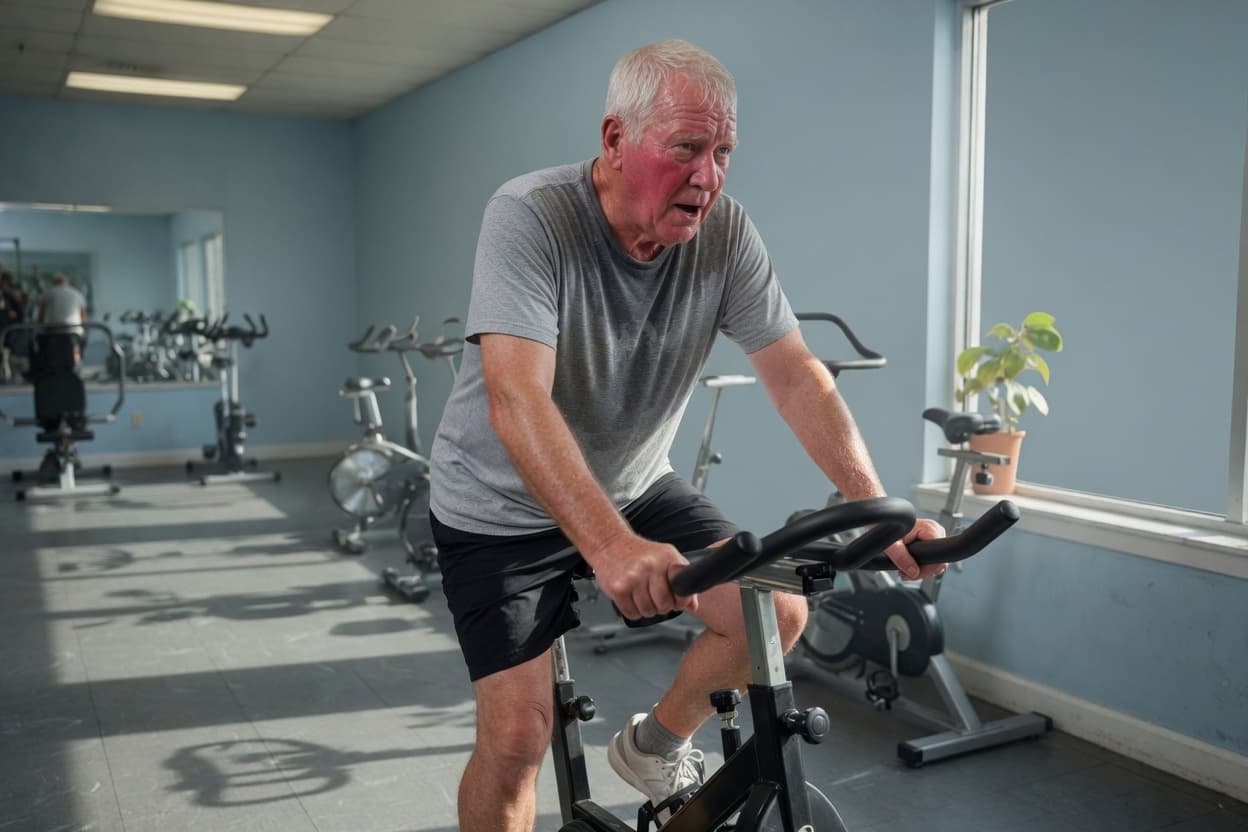
Study (six-month exercise comparison). ScienceDaily carried the University of the Sunshine Coast account on 9 October 2026. Grace Rose, Mia Schaumberg, and colleagues report in Maturitas (2025; 203:108763; doi 10.1016/j.maturitas.2025.108763). The news date is later than the journal year. 123 healthy adults from Greater Brisbane, average age 72 and average body mass index about 26, did three supervised 45-minute gym sessions a week for six months, assigned to high-intensity intervals, moderate intensity, or low intensity. Body composition was scanned at the start, at three months, and at six months. High and moderate training reduced fat mass more than low intensity. Moderate training also came with a small drop in lean mass. Interval training reduced fat without that lean-mass drop. High and moderate training improved fat carried around the middle, including visceral fat. The release says the changes were small and not clearly meaningful in the clinic once measurement uncertainty was counted. Scans measured lean tissue, not strength. The release does not split results by sex. A later home-interval paper and an HIV exercise trial are cited as separate studies, not as this trial. People who are inactive or who have a medical condition were pointed toward building up slowly and getting guidance before hard intervals. Educational notes. This is not a training prescription.
Study (preclinical; the release does not report a human osteoarthritis trial). ScienceDaily carried the Yale School of Medicine account on 8 October 2026. Chaopeng He, Chuan-Ju Liu, and colleagues report in Bioactive Materials (2026; 61:640; doi 10.1016/j.bioactmat.2026.02.045). Lacosamide is an approved epilepsy drug. The group tested it against Nav1.7, a sodium-channel protein they say is quiet in healthy joints and more active in osteoarthritis, both in pain nerves and in cartilage cells. In the preclinical work, a low concentration pushed cartilage cells toward building-matrix proteins and away from breakdown. Higher and lower concentrations weakened that pattern. The drug also raised HSP70 and midkine, which the authors tie to stress response and inflammation control. An oral dose worked in the same preclinical tests, but the knee clears injected liquid within hours. They put lacosamide in a collagen II gel that is liquid in a cool syringe and sets at body temperature. One gel injection every four weeks prevented cartilage loss more than a daily oral dose in those tests. Liu said no medicine approved for both stopping osteoarthritis pain and stopping cartilage breakdown exists yet, and that this joint use is not an approved osteoarthritis indication. People with certain Nav1.7 nerve-pain conditions have taken lacosamide. That is not this joint study. Educational notes. Not medical advice. Not a substitute for a prescribed medicine. Using an epilepsy drug for joints would be off-label and is clinician-only. Do not start, stop, or replace a prescription from this headline.
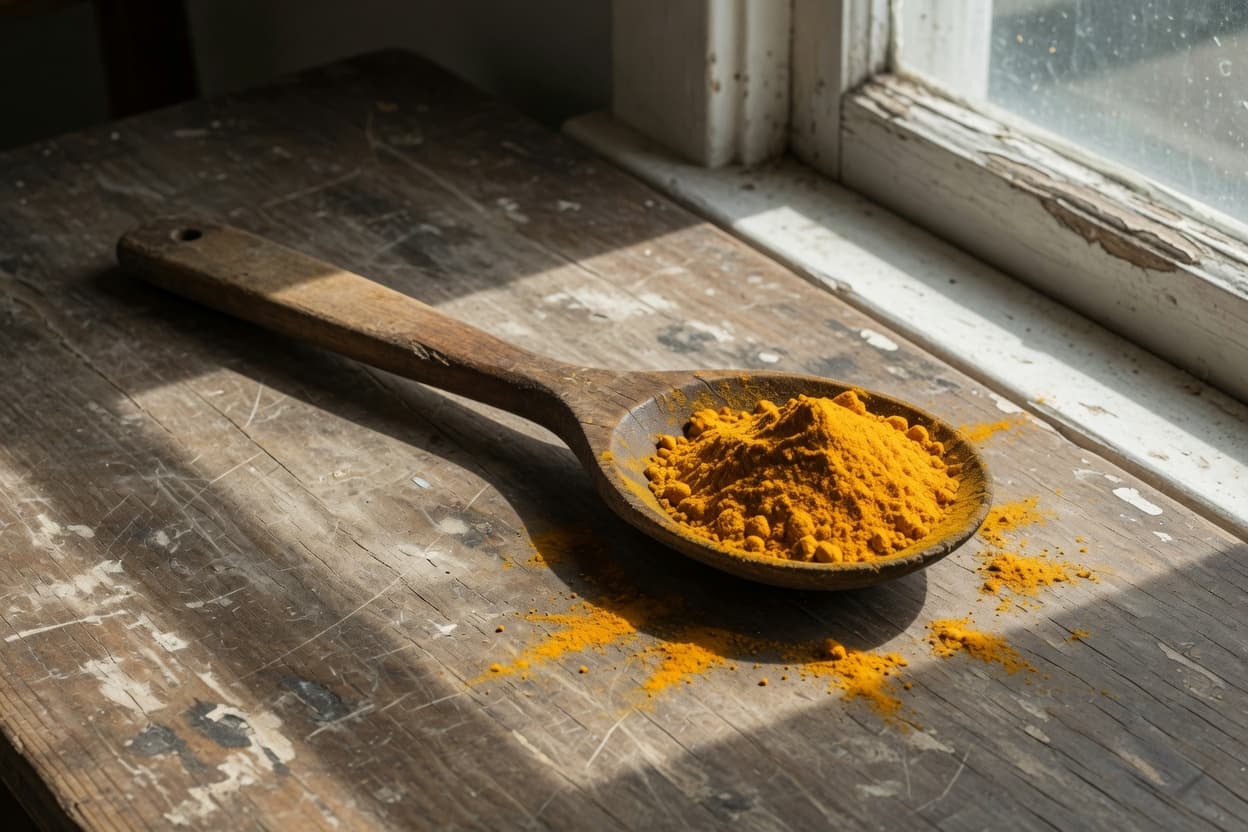
Study (cell lines and wax-moth larvae, not a human cancer trial). ScienceDaily carried the Wroclaw Medical University account on 8 October 2026. Julita Kulbacka and colleagues tested curcumin, berberine, biochanin A, cucurbitacin E, and CAPE from propolis on fibrosarcoma cells and on healthy muscle cells. All five cut cancer-cell ATP by about 83 to 92 percent, against about 23 to 73 percent in the healthy muscle cells. Curcumin raised the share of senescent, non-dividing fibrosarcoma cells from about 16.5 percent to more than 75 percent. The other four each pushed that share above 66 percent. Berberine, cucurbitacin E, and CAPE increased a mitophagy marker in the cancer cells, which the authors read as an overwhelmed cleanup response rather than protection. In greater wax moth larvae, curcumin and berberine were the best tolerated. CAPE and cucurbitacin E were tied to higher mortality, and biochanin A was the most toxic of the five. Kulbacka said the work does not show these compounds can treat sarcomas, and that dosing and delivery are untested in people. Sarcomas are described as under 1 percent of adult cancers and as more than 100 subtypes. Educational notes. This is not medical advice, not a cancer treatment, and not a reason to take curcumin or berberine instead of oncology care. Laboratory activity is weakly evidenced as a human therapy.
Study (meta-analysis of randomized trials). ScienceDaily carried the University of Surrey account on 8 October 2026. Emily I. G. Brown and colleagues report in Nutrition Reviews (2025; doi 10.1093/nutrit/nuaf166), with the John Innes Centre and the Quadram Institute. The news date is later than that paper. The review covered 20 trials, with 11 in the main meta-analysis. People taking vitamin D2 (ergocalciferol) had lower 25-hydroxyvitamin D3 than people not given D2, by roughly 9 to 18 nanomoles per liter depending on the analysis. D2 still raises 25-hydroxyvitamin D2 and can add to total vitamin D. The release says this is not evidence that D2 removes vitamin D from the body. A separate 2026 review of 26 trials (Nutrition Reviews 2026; 84(3):571; doi 10.1093/nutrit/nuaf102) found D2 lowered parathyroid hormone and slightly raised blood calcium. An earlier gene-activity study from the same university is described as suggesting D3, not D2, lined up with type I interferon signaling. That is not proof that D3 prevents infection. The release does not give one age band or a sex split. Researchers said it is still unknown whether the D3 drop changes long-term health. This is not a reason to start, stop, or switch a supplement from a headline. Educational notes. This is not medical advice.
Study (human cells and surgical brain tissue, not a patient trial). ScienceDaily carried the University of Birmingham account on 7 October 2026. Jamie Cowley, Nicholas M. Barnes, and colleagues report in Brain (2026; 149(10):3614; doi 10.1093/brain/awag068). They studied the P2X7 receptor in live human brain-cell cultures and in slices taken during neurosurgery. The receptor promoted release of cytokines, including IL-1 beta. A specific blocker cut that inflammatory response in the tissue. They also turned blood monocytes into microglia-like cells, because microglia taken out of the brain lose their usual character. The same block interfered with signals from those cells as they were damaged. Barnes said existing drugs that hit this receptor might be studied again for brain inflammation, and that the next step would be trials in neurodegenerative disease or traumatic brain injury, where no drug is established for this purpose. The release names Alzheimer's, Parkinson's, multiple sclerosis, depression, and schizophrenia as conditions where inflammation is discussed. It does not report a human treatment result, a dose, or a sex or age split. Educational notes. This is not a medicine to start.
Records study presented at a meeting (the release does not cite a journal paper). The Menopause Society posted this on 7 October 2026. The dateline reads 20 October 2026; the meeting is 20-24 October 2026 in San Diego. Xuezhi Daniel Jiang and colleagues used the TriNetX US Collaborative Network. More than 6,300 postmenopausal women ages 45 and older were propensity-matched. Women starting testosterone were compared with women without testosterone exposure, after a 12-month washout and after excluding prior cardiovascular disease. Mean follow-up was nearly 3 years. A composite of coronary disease, ischemic stroke or arterial occlusion, and heart failure, from 30 days to 5 years, occurred in 3.8 percent with testosterone and 0.5 percent without (hazard ratio 8.08; 95 percent confidence interval 4.72 to 13.82). The association held when testosterone plus hormone therapy was compared with hormone therapy alone. Absolute counts were low. The release says there is no FDA-approved testosterone product for women in the United States, and that prescriptions for low sexual desire use low doses of products made for men, off label. It also says evidence is insufficient for fatigue, memory, weight, or bone density. Not medical advice. Not a substitute for a prescribed medicine. Off-label prescription use is clinician-only. VitaLonga does not diagnose, treat, or cure disease. Never start, stop, or replace a prescription on the basis of a headline.
VitaLonga is an educational longevity resource, not a pharmacy, clinic, or doctor. Content is not medical advice and is not intended to diagnose, treat, cure, or prevent any disease (DSHEA). Supplements can interact with medications and are not appropriate in every pregnancy or health condition. Consult a licensed clinician, especially if you take medications, are pregnant or nursing, or have a diagnosed condition.