Every story stays here. Filter by topic, search older headlines, and save favorites to your member record. Educational notes only — not medical advice.
Study (survey). Burridge, Zhang, Boolani and colleagues report in Nutrients a SuppCo platform survey of 2,094 current or recent creatine users (1,055 women, 1,039 men; mean age about 53). Women clustered in shorter-duration groups, were less likely than men to name athletic performance as a goal (about 38% vs 50%) and more likely to name healthy aging. Knowledge scores rose with longer reported use; confidence still lagged men at high knowledge. This is a convenience sample (~2% response), not a trial of creatine for aging. Weakly evidenced as an anti-aging product. Educational supplement notes, not a recommendation to start creatine.
Commentary (evidence review). Sanjukta Mondal, writing for Medical Xpress on a JAMA Otolaryngology–Head & Neck Surgery review (Alexandria Harris and colleagues), summarizes GLP-1 receptor agonists—especially tirzepatide—for obstructive sleep apnea in adults with obesity. Across meta-analyses, breathing interruptions fell by about 5.7–21.9 events per hour; Phase III tirzepatide cut AHI about 50–63% (roughly 20–24 fewer events/hour) with 42–50% remission versus 14–16% on placebo. Much of the effect is weight-loss mediated; CPAP still reduced events more (~31/hour). Weight often returns after stopping. This is not a reason to start, stop, or replace a prescribed GLP-1 drug or CPAP. Off-label longevity use is clinician-only. Not medical advice. Educational supplement parallel (not a replacement): When headlines discuss GLP-1 medicines and aging, people often research food-first fiber or bitter-botanical “pathway support” formulas. Those are not semaglutide, not compounded GLP-1, and not a substitute for a prescribed GLP-1 drug. Mouse or marketing claims are hype until human outcome data exist. Weakly evidenced. Store: /store/glp1-pathway-support. Not medical advice. Not a substitute for a prescribed medicine. Off-label prescription use is clinician-only. VitaLonga does not diagnose, treat, or cure disease. Never start, stop, or replace a prescription with a supplement on the basis of a headline.
Study (meta-analysis). Kow, Thiruchelvam and colleagues, writing in Endocrinology, Diabetes & Metabolism, used a Bayesian longitudinal model of reconstructed aggregate data after people stopped the GLP-1 medicines semaglutide or tirzepatide. Patients were estimated to regain about half of treatment-associated weight loss within roughly 7.5 months. Unadjusted regain looked slightly faster for tirzepatide than semaglutide; after adjustment there was no clear drug-specific difference. This is not a reason to start, stop, or replace a prescribed GLP-1 drug. Off-label longevity use is clinician-only. Not medical advice. Educational supplement parallel (not a replacement): When headlines discuss GLP-1 medicines and aging, people often research food-first fiber or bitter-botanical “pathway support” formulas. Those are not semaglutide, not compounded GLP-1, and not a substitute for a prescribed GLP-1 drug. Mouse or marketing claims are hype until human outcome data exist. Weakly evidenced. Store: /store/glp1-pathway-support. Not medical advice. Not a substitute for a prescribed medicine. Off-label prescription use is clinician-only. VitaLonga does not diagnose, treat, or cure disease. Never start, stop, or replace a prescription with a supplement on the basis of a headline.
Study (hierarchical network meta-analysis of randomized trials). The BMJ (9 September 2026) pooled 124 trials and 18,429 adults aged 40 and older. Low to moderate certainty evidence showed that brisk walking or jogging, and combined aerobic plus resistance exercise, probably raise lumbar-spine bone mineral density versus control by about 0.013 g/cm2. In fracture analyses (26 trials, 11,132 people), mixed aerobic exercise (odds ratio 0.29) and mind-body exercise (0.58) may lower fracture risk, both low certainty; other modalities looked neutral. The bone-density signal clustered near 600 MET-minutes a week, about 2 to 3 hours of brisk walking or jogging. Educational exercise notes, not a training prescription.
Study (mouse). Gilad Evrony and NYU Langone colleagues report in Cell (9 September 2026) that mice fed 30% fewer calories than free-fed controls accumulated fewer DNA mutations across multiple tissues, using high-accuracy sequencing. Authors note calorie restriction of this depth is not a practical human diet and that mutation rate is one aging-linked process, not a human longevity outcome. Educational aging-biology notes, not a fasting prescription.
Study (observational, real-world records). Imperial College London’s Chloe Bloom and Bohee Lee, presented at the European Respiratory Society Congress, compared UK electronic records of about 20,000–22,000 people starting a GLP-1 medicine versus a sulfonylurea. Semaglutide use was associated with nearly 40% fewer asthma attacks and about 20% fewer COPD flare-ups. This is not a trial of GLP-1 drugs as asthma therapy and not a reason to start, stop, or replace a prescribed medicine. Off-label longevity use is clinician-only. Not medical advice. Educational supplement parallel (not a replacement): When headlines discuss GLP-1 medicines and aging, people often research food-first fiber or bitter-botanical “pathway support” formulas. Those are not semaglutide, not compounded GLP-1, and not a substitute for a prescribed GLP-1 drug. Mouse or marketing claims are hype until human outcome data exist. Weakly evidenced. Store: /store/glp1-pathway-support. Not medical advice. Not a substitute for a prescribed medicine. Off-label prescription use is clinician-only. VitaLonga does not diagnose, treat, or cure disease. Never start, stop, or replace a prescription with a supplement on the basis of a headline.
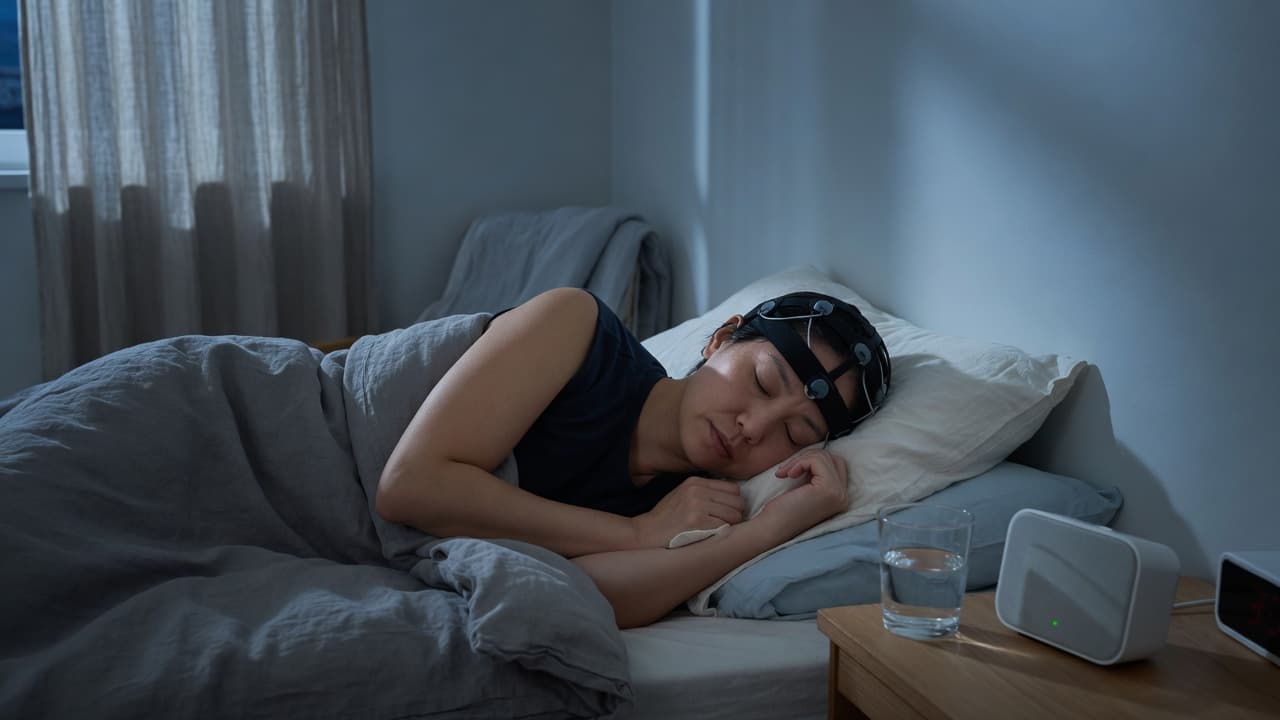
Study. MIT’s Laura Lewis and Joshua Levitt report in Science Translational Medicine that 50-millisecond pink-noise bursts timed to slow-wave peaks during sleep increased slow-wave and cerebrospinal-fluid flow amplitude in 14 healthy volunteers, using EEG plus fMRI. Slow waves also tracked blood-vessel pumping of CSF. The work does not show that a consumer sound machine clears amyloid or treats Alzheimer’s. Educational sleep-physiology notes, not a device recommendation and not medical advice.
Study (observational). A Menopause Society report on a retrospective clinic cohort of 260 women, published in Menopause, found that systemic hormone therapy started for FDA-approved indications was followed by fewer psychological and sleep symptoms. The share with severe mood symptoms fell from 62.3% to 24.6%, with the largest change among those who started with more severe symptoms; response did not differ by psychiatric history, age, menopause stage, or antidepressant use. Association is not a prescription. Hormone therapy is clinician-only. Not medical advice and not a substitute for mental-health care.
Commentary. Curtin University researchers (Jennifer Dunne and colleagues) write in The Lancet Public Health that dementia prevention still maps mostly to individual behavior. They placed 61 published modifiable risk and protective factors on a socioecological grid: 49 of 61 (80%) sat at the individual level, with few at interpersonal, community, or societal levels (education, housing, neighborhood safety, health-care access, clean air, social connection). Exercise and diet still matter, but only if the surroundings make them possible. This is a framework paper, not a trial of a supplement or a diagnosis. Educational public-health notes, not medical advice.
Study (observational). Eriksen, Brix and colleagues report in Nature Communications on paired stool and blood from 1,199 adults in a Danish cohort. Gut microbiota composition explained more variance than chronological age for 97% of 30 plasma cytokines and 84% of 19 physiological measures. People with a Bacteroides 2 enterotype showed an inflammaging-like profile modeled up to 37 years earlier than other enterotypes and higher later hospital diagnoses over about eight years of follow-up. A high-diversity richness enterotype tracked with lower inflammation. Association is not causation. A commercial probiotic for this claim is weakly evidenced. Food-first fiber is educational, not a treatment.
Commentary. A Journal of Medical Internet Research viewpoint (Cook) argues that GLP-1 medicines such as semaglutide (Ozempic, Wegovy) change appetite biology but do not automatically install long-term eating and movement habits. High dropout and weight regain after stopping remain problems. The piece discusses digital companions—reminders, gastrointestinal-symptom support, and skill-building while the “habit window” is open—and notes planned trials. This is not a randomized outcome study and not a reason to start, stop, or replace a prescribed GLP-1 drug. Off-label longevity use is clinician-only. Not medical advice. Educational supplement parallel (not a replacement): When headlines discuss GLP-1 medicines and aging, people often research food-first fiber or bitter-botanical “pathway support” formulas. Those are not semaglutide, not compounded GLP-1, and not a substitute for a prescribed GLP-1 drug. Mouse or marketing claims are hype until human outcome data exist. Weakly evidenced. Store: /store/glp1-pathway-support. Not medical advice. Not a substitute for a prescribed medicine. Off-label prescription use is clinician-only. VitaLonga does not diagnose, treat, or cure disease. Never start, stop, or replace a prescription with a supplement on the basis of a headline.
Study. University of Tsukuba researchers (Damrongthai, Kuwamizu, Soya and colleagues) report in Imaging Neuroscience that 24 healthy young adults completed a 10-minute very slow treadmill run at about 3–6 km/h (~35% of peak oxygen uptake) versus a seated control. After the slow run, Stroop interference time shortened (a marker of executive function), self-reported mood improved, and fNIRS showed more activity in left dorsolateral prefrontal and left frontopolar cortex. Greater vertical bounce tracked with a larger mood gain. This is an acute lab session in young volunteers, not a dementia trial and not a running-as-medicine claim. Educational movement notes.
VitaLonga is an educational longevity resource, not a pharmacy, clinic, or doctor. Content is not medical advice and is not intended to diagnose, treat, cure, or prevent any disease (DSHEA). Supplements can interact with medications and are not appropriate in every pregnancy or health condition. Consult a licensed clinician, especially if you take medications, are pregnant or nursing, or have a diagnosed condition.