VitaLonga

Desk

News archive

Every story stays here. Filter by topic, search older headlines, and save favorites to your member record. Educational notes only — not medical advice.

Saved (sign in)

101 stories in this category

Circulation · 22 Oct 2026 · Exercise

In 13 astronauts back from about six months in orbit, hearts matched their preflight standing test under a Mars tilt

Study (small longitudinal observation). Vinesh Appadurai, Benjamin D. Levine, James D. Thomas, and colleagues report in Circulation (2026; 154(15): 1444; DOI 10.1161/CIRCULATIONAHA.125.078665). ScienceDaily carried it on 21 Oct 2026. Thirteen astronauts spent about six months on the International Space Station. In the first two weeks, cardiac filling and stroke volume fell, then moved back toward preflight values. Crews exercised up to about two hours a day, including 30 to 45 minutes of endurance work and 60 to 75 minutes of resistance work. After landing, a 22-degree head-up tilt stood in for Martian gravity, about 38 percent of Earth's. Under that tilt, heart performance matched the preflight upright test. This is 13 people and a tilt table, not a landing on Mars. Ages were not reported in the write-up, so the audience tag stays broad. Not medical advice.

Read at Circulation →♡ Save

  • Cardiovascular / lipids
  • Exercise
  • fitness
  • study

PLOS One · 22 Oct 2026 · Exercise

In 97 adults with walking difficulty, mean age 74, four minutes of daily strength work improved chair stands and balance

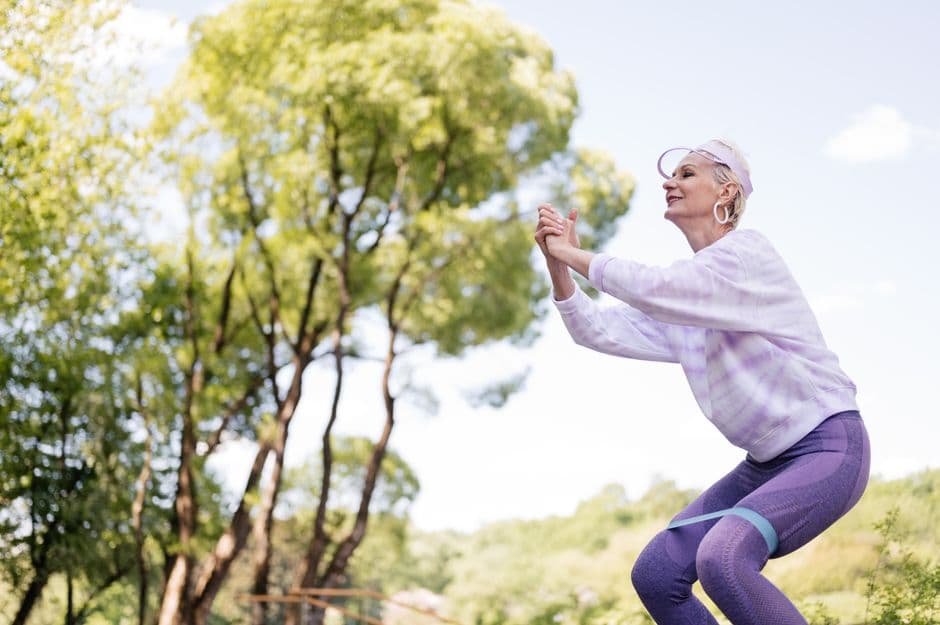
Study (randomized trial). Smita Dandekar, Christopher Sciamanna, and colleagues report in PLOS One (2026; 21(3): e0336748; DOI 10.1371/journal.pone.0336748), published 12 March 2026. ScienceDaily carried it on 21 Oct 2026. Ninety-seven inactive adults age 65 and older who already had trouble walking were randomized to a 12-week home program or a delayed-treatment control. FAST-2 was four exercises of 30 seconds each — push-ups, chair stands, band rows, and stair stepping — with 30 seconds of rest. People on the program completed it on 81 percent of days. Forty-four were assigned to the program and 53 to control. Mean age was 74, and 68 percent were women. Versus control, the program group added 4.2 chair stands in 30 seconds (95 percent CI 2.8 to 5.7), held a one-leg stance 3.6 seconds longer (0.6 to 6.5), and finished five sit-to-stands 2.3 seconds faster (0.5 to 4.1). The trial ran from May 2021 to January 2022. It did not count falls. Sciamanna disclosed part-ownership of two companies formed to test business models for exercise findings. The sex mix is why the audience tag stays broad. Not medical advice.

Read at PLOS One →♡ Save

  • 60+
  • Exercise
  • fitness
  • study

EurekAlert · 21 Oct 2026 · Exercise

A fitness program tracked with lower wait-list deaths in liver transplant candidates

On 21 October 2026 Northwestern University described a Clinical Gastroenterology and Hepatology study of liver transplant candidates seen at the University of Pittsburgh from 2018 to 2022. Of nearly 1,300 adults evaluated, 355 came back for at least two follow-up visits and were counted in a personalized prehabilitation program of home exercise and nutrition, adjusted every 4 to 12 weeks. Among those patients, 64 percent improved their Liver Frailty Index, by an average of nearly 0.4 points. After accounting for age, disease severity, and starting frailty, a gain of at least 0.4 points lined up with about a 50 percent lower risk of dying while waiting. This is not a trial that randomly assigned the program, and it is not a home plan for advanced liver disease. The program was clinician-led. Not medical advice.

Read at EurekAlert →♡ Save

  • Metabolic / glucose
  • Exercise
  • Nutrition
  • Aging
  • study
  • fitness
  • nutrition

ScienceDaily · 21 Oct 2026 · Exercise

Astronauts’ hearts just passed a surprising test for Mars

A new study tracking 13 astronauts suggests that the human heart may be surprisingly well equipped for a journey to Mars, especially with regular exercise during spaceflight. Researchers found that astronauts' hearts adapted to months of weightlessness and handled simulated Martian gravity without major problems, offering new hope for future missions to the Red Planet.

Read at ScienceDaily →♡ Save

  • Exercise
  • news
  • fitness
  • study

ScienceDaily · 21 Oct 2026 · Exercise

Just 4 minutes a day can dramatically improve strength after 65

A new Penn State study suggests that just four minutes of daily strength training can significantly improve mobility and physical function in older adults. After 12 weeks, participants showed meaningful gains in balance, leg strength, and their ability to stand up from a chair, all important factors for maintaining independence and reducing fall risk.

Read at ScienceDaily →♡ Save

  • 60+
  • Exercise
  • Aging
  • muscle
  • aging
  • fitness
  • study

ACSM · 21 Oct 2026 · Exercise

Science Spotlight | Deadline Approaching for ACSM Foundation Research Grants

ACSM Foundation Research Grants – Deadline Quickly Approaching  Now is the time to apply for the numerous ACSM Foundation awards available to doctoral students and early career professionals. This year, there are eight ACSM Foundation grants available:  AMSSM/ACSM Breaking Barriers Research Grant I Clinician Research Grant  Carl V. Gisolfi Memorial Fund I Doctoral Student Grant  […] Th

Read at ACSM →♡ Save

  • Exercise
  • member exclusive
  • science spotlight
  • physical activity
  • physical activity guidelines
  • physical education

ScienceDaily · 20 Oct 2026 · Exercise

Scientists finally uncover why statins can cause muscle pain

Scientists have uncovered a surprising reason why statins, the widely prescribed cholesterol-lowering drugs that help prevent heart attacks and strokes, can sometimes cause muscle pain, weakness, and even severe muscle damage. Using advanced imaging technology, researchers discovered that statins can attach to a crucial protein in muscle cells and force open a channel that normally controls calcium flow. This causes

Read at ScienceDaily →♡ Save

  • Cardiovascular / lipids
  • Exercise
  • Medicine
  • muscle

Journal of Global Health · 20 Oct 2026 · Exercise

Across 13 reviews and more than 32,000 people, exercise lined up with better fertility measures in women and in men

Study (umbrella review of meta-analyses). Lai Kwan Lam, Bekalu Kassie Alemu, Margie H. Davenport, and colleagues report in the Journal of Global Health (2026; 16:04282; DOI 10.7189/jogh-16-04282), published 28 Aug 2026. They included 13 meta-analyses of randomized trials, covering 24,470 females and 8,068 males. In females, exercise lined up with favorable shifts in sex hormone-binding globulin and anti-Müllerian hormone, and with higher ovulation, pregnancy, and clinical pregnancy rates. In males, exercise lined up with better sperm concentration, morphology, count, and semen volume, and with a higher pregnancy rate in female partners. The public abstract does not give the age range or the size of each effect. This is not a fertility plan. Not medical advice.

Read at Journal of Global Health →♡ Save

  • Women
  • Men
  • Exercise
  • fertility
  • review
  • fitness
  • study

The Conversation / Loughborough University · 20 Oct 2026 · Exercise

In older adults followed up to 11 years, about 3,000 daily steps lined up with slower Alzheimer's-related decline

Commentary, not a new trial paper. Eef Hogervorst of Loughborough University wrote in The Conversation, republished by ScienceDaily on 19 Oct 2026, about a study also described in a Nature news article (Mariana Lenharo, Nature, 2025; DOI 10.1038/d41586-025-03596-2). The write-up says researchers followed almost 300 older adults who already had early brain signs of Alzheimer's for nine to 11 years with pedometers. Activity did not reduce amyloid plaques. In people who already had plaques, more activity lined up with less buildup of misfolded tau in specific brain areas, and cognitive and functional decline was almost half that of less active participants. A benefit showed up around 3,000 steps a day, about half an hour of moderate walking. The reported range where the association leveled off was 5,000 to 7,500 steps. The sample was fairly small and mostly white and well-educated in the United States, and other lifestyle factors were not fully separated. People may also walk less because early symptoms have already started. This is not a step target to hit. Not medical advice.

Read at The Conversation / Loughborough University →♡ Save

  • 60+
  • Cognitive / dementia research
  • Exercise
  • Aging
  • walking
  • commentary
  • cognition
  • aging
  • study

News-Medical · 20 Oct 2026 · Exercise

Women who moved more often reported a lighter perimenopause symptom score

News-Medical reported on 20 October 2026 a Menopause Society meeting analysis of 1,808 women in 87 countries who use a cycle-tracking app. Mean symptom scores fell from 17.46 with no activity to 13.77 among those active at least five days a week, and the pattern held after adjustment for age, body size, smoking, and other factors. This cross-sectional survey does not show that physical activity caused the difference. Not medical advice.

Read at News-Medical →♡ Save

  • Women
  • 40–59
  • Exercise
  • Aging
  • study
  • fitness

Frontiers in Aging · 20 Oct 2026 · Exercise

Impact of habitual physical activity and age on T cell metabolism and activation via β2-adrenergic receptor modulation

BackgroundAgeing impairs T cell function and responses to vaccines and infections. Effective T cell function requires rapid metabolic switching towards glycolysis, which becomes dysregulated with age. We have shown that physically active older adults have T cells that are more functional and metabolically fit. As exercise acutely elevates adrenaline and mobilises T cells via β2-adrenergic receptors (β2-AR), we hypoth

Read at Frontiers in Aging →♡ Save

  • 60+
  • Metabolic / glucose
  • Exercise
  • Medicine
  • Aging
  • original research
  • metabolic
  • aging
  • fitness

VitaLonga is an educational longevity resource, not a pharmacy, clinic, or doctor. Content is not medical advice and is not intended to diagnose, treat, cure, or prevent any disease (DSHEA). Supplements can interact with medications and are not appropriate in every pregnancy or health condition. Consult a licensed clinician, especially if you take medications, are pregnant or nursing, or have a diagnosed condition.