VitaLonga

Desk

News archive

Every story stays here. Filter by topic, search older headlines, and save favorites to your member record. Educational notes only — not medical advice.

Saved (sign in)

86 stories in this category

Frontiers in Aging · Added 25 Sept 2026 · Aging

Structured lifestyle modification and biological aging: effects on PhenoAge, sclerostin, and GDF-15 in arab adults with prediabetes

BackgroundLifestyle modification programs (LMP) such as diabetes prevention programs may influence phenotypic aging trajectories, but evidence in Middle Eastern populations remains limited. This study examined the effects of a structured LMP on phenotypic age (PhenoAge) as the primary endpoint and circulating sclerostin (SOST) and growth differentiation factor-15 (GDF-15) as secondary endpoints in a cohort of Arab ad

Read at Frontiers in Aging →Our summary♡ Save

  • Metabolic / glucose
  • Aging
  • original research
  • study

Frontiers in Aging · Added 25 Sept 2026 · Aging

Rumo zhentong Yin for blood-stasis-type osteoporotic pain: protocol of a randomized, single-blind, controlled trial

BackgroundOsteoporosis (OP) is a metabolic skeletal disease characterized by reduced bone mass and micro-architectural deterioration, with Osteoporotic pain (OPP) as its most common clinical symptom, which markedly impairs quality of life. Modern pharmacologic treatments’ limitations are obvious with population aging, so the cost-effective interventions for OPP are urgently needed. As an empirical formula, Rumo zhent

Read at Frontiers in Aging →Our summary♡ Save

  • Metabolic / glucose
  • Medicine
  • Aging
  • original research
  • study

Frontiers in Aging · Added 25 Sept 2026 · Aging

Explanatory limitations of CSF, plasma, and MRI biomarkers for inflammation and blood–brain barrier disruption in dementia

Inflammation and blood–brain barrier (BBB) disruption are increasingly implicated in cognitive decline, but it remains unclear which fluid and imaging measures best capture these processes. Participants were drawn from two overlapping research programs, MarkVCID and UNM ADRC. We studied 149 participants with Alzheimer’s disease, leukoaraiosis, mixed dementia, subcortical ischemic vascular dementia, or memory impairme

Read at Frontiers in Aging →Our summary♡ Save

  • Cognitive / dementia research
  • Aging
  • original research
  • cognition
  • inflammation

Frontiers in Aging · Added 25 Sept 2026 · Aging

Role of essential and trace elements in chronic myeloid leukemia: associations with serum trace element profiles and hematological parameters

BackgroundChronic myeloid leukemia is a myeloproliferative malignancy characterized by the Philadelphia chromosome with uncontrolled expansion of myeloid cells. Trace elements are essential for cellular metabolism, DNA repair, antioxidant defence, and immune regulation, and their imbalance may influence leukemogenesis and contribute to oxidative stress, immune dysregulation, and hematological alterations. Profiling t

Read at Frontiers in Aging →Our summary♡ Save

  • Metabolic / glucose
  • Cancer
  • Aging
  • original research

Frontiers in Aging · Added 25 Sept 2026 · Aging

Association of smoking cessation with late-life frailty risk: the Singapore Chinese health study

ObjectiveTo examine whether smoking cessation, in terms of duration and age at quitting, was associated with late-life physical frailty.DesignProspective population-based cohort study.SettingChinese living in Singapore.ParticipantsWe analyzed data from 4,574 men (mean baseline age 52.7 years, range 45–65 years) enrolled in the Singapore Chinese Health Study.MeasurementsParticipants self-reported smoking behaviors at

Read at Frontiers in Aging →Our summary♡ Save

  • Aging
  • original research
  • study

University of Colorado Anschutz / GeroScience · 24 Sept 2026 · Aging

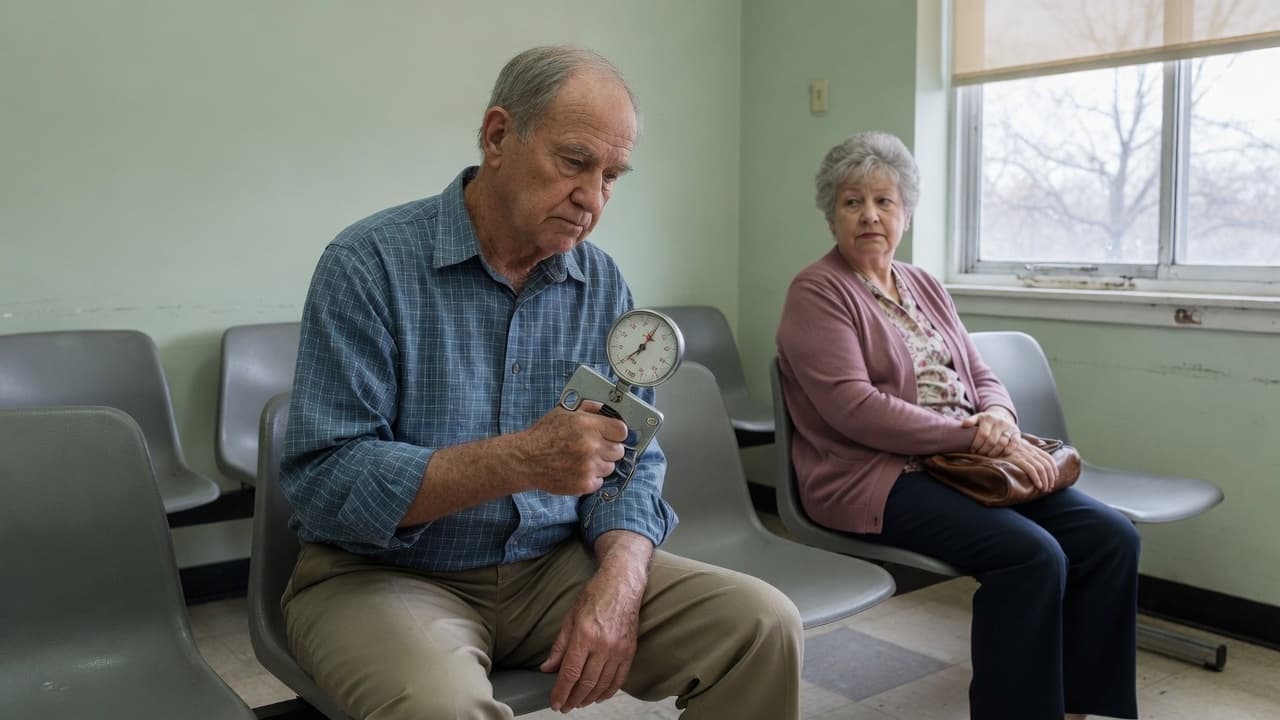
In nearly 1,400 adults with earlier kidney disease, frailty doubled later cognitive-test decline in men, not in women

Study (observational cohort). Stephanie Lapierre-Nguyen, Ester Oh, and colleagues in the Division of Renal Diseases and Hypertension at the University of Colorado Anschutz report in GeroScience (doi 10.1007/s11357-026-02395-5; Medical Xpress 24 September 2026) on the Chronic Renal Insufficiency Cohort. Nearly 1,400 adults with mild to moderate chronic kidney disease who were not on dialysis were scored for frailty (including hand-grip) and followed with the Modified Mini-Mental State Examination (3MS). Across the whole group, frailty did not line up with later cognitive impairment. Split by sex, women were more often frail (16% versus 9% of men), but men were more likely to develop cognitive impairment. Frail men had more than twice the risk of later 3MS decline versus non-frail men. Frail women did not show that pattern. The authors suggest social support and daily habits may differ by sex; they did not prove a cause. Educational notes. This is not a diagnosis tool.

Read at University of Colorado Anschutz / GeroScience →Our summary♡ Save

  • Women
  • Men
  • 40–59
  • 60+
  • Cardiovascular / lipids
  • Cognitive / dementia research
  • Aging
  • study
  • cognition

Washington University / EurekAlert · 24 Sept 2026 · Aging

In nearly 200 people with early Alzheimer symptoms, 34 blood proteins shifted during lecanemab therapy

Study (clinical cohort). Rui Mu, Suzanne Schindler, Carlos Cruchaga, and colleagues at Washington University report in Lancet Neurol. (doi 10.1016/S1474-4422(26)00284-X; EurekAlert 24 September 2026). Nearly 200 people with early Alzheimer symptoms and amyloid buildup received lecanemab infusions every two weeks for up to two years at one high-volume clinic. Blood was drawn about every six months. The team measured 130 plasma proteins. Thirty-four changed during therapy. Several Alzheimer-related markers, including phosphorylated tau, moved back toward levels seen in 458 people with no cognitive impairment and no amyloid buildup. Inflammatory proteins rose, which the authors read as microglia clearing amyloid, and those rises did not track faster cognitive decline. A comparison group of 1,312 people with cognitive impairment who were not on this therapy was also included. The authors say a blood panel, if later validated, might help judge how long therapy should continue. It does not restore memory, and brain scans are still the check used now. Age and sex were not given in the release. Educational notes. Not a suggestion to start or stop therapy.

Read at Washington University / EurekAlert →Our summary♡ Save

  • Cognitive / dementia research
  • study
  • cognition
  • inflammation

Hefei Institutes of Physical Science / ScienceDaily · 24 Sept 2026 · Aging

In worms, a magnet-making bacterium extended average lifespan by about 43 percent

Study (animal, C. elegans only). An Xu and colleagues report in Free Radical Biol. Med. (doi 10.1016/j.freeradbiomed.2026.06.050; epub 26 June 2026; ScienceDaily 24 September 2026). Feeding the magnetotactic bacterium Magnetospirillum magneticum AMB-1 raised mean worm lifespan by 43.39 percent, from 17.17 plus or minus 1.25 days to 24.62 plus or minus 1.44 days, and the treated worms kept better neurological function and intestinal integrity at older ages. Wild-type AMB-1, which makes magnetosomes, outperformed a reversibly non-magnetotactic strain. A non-magnetotactic strain did not extend lifespan. Versus the usual E. coli OP50 feeding, AMB-1 lowered ferrous iron by 34.11 percent and lipid peroxides by 52.19 percent, consistent with less aging-related ferroptosis. The bacterium raised ftn-1 (ferritin) and lowered bli-3, the worm NADPH oxidase homolog tied to ferroptosis. RNA interference of ads-1 indicated that gene was required for the lifespan effect. This is a roundworm experiment. It is not a product for people, and it is not evidence that magnetic bacteria lengthen human life. Educational aging notes.

Read at Hefei Institutes of Physical Science / ScienceDaily →Our summary♡ Save

  • Aging
  • Longevity
  • study
  • longevity

News-Medical / Osaka Metropolitan University · 24 Sept 2026 · Aging

For adults 75 and older with mild decline, community rooms tracked lower care costs

Study (observational follow-up). Kazuki Uemura and colleagues report in the Journal of the American Medical Directors Association (doi 10.1016/j.jamda.2026.106229; Osaka Metropolitan University 24 September 2026). Using Toyonaka City Kokuho records, they followed 9,489 adults aged 75 or older for two years: 428 people who used community gathering places and 9,061 who did not. Among older adults who already needed support or had mild functional decline, estimated average monthly long-term care cost was US$98.1 lower for participants, about US$1,177 a year. Among functionally independent older adults, the difference was not statistically significant. The release presents this as a pattern of service use, not proof that the rooms caused the savings, and calls for larger and longer follow-up. Educational aging notes.

Read at News-Medical / Osaka Metropolitan University →Our summary♡ Save

  • 60+
  • Aging
  • study

PLOS Medicine / ScienceDaily · 23 Sept 2026 · Aging

In 95,559 people, more REM sleep tracked a lower risk of 83 later diseases

Study (observational cohort). Jingsong Luo, Shengzhi Sun, Rui Chen, and colleagues report in PLOS Med. (17 September 2026; doi 10.1371/journal.pmed.1005213; ScienceDaily 23 September 2026). Wrist accelerometers worn for seven nights by 95,559 UK Biobank participants were scored with a deep-learning model for REM, deep, and light sleep, total duration, wakefulness after sleep onset, and night-to-night irregularity. Follow-up lasted a median of 8.9 years, against more than 1,000 disease outcomes. Per interquartile range of REM (47.6 minutes), more REM sleep lined up with lower risk of 83 diseases, including heart failure (hazard ratio 0.74), dementia (0.54), and Parkinson disease (0.20). More deep sleep lined up with lower risk of 7 conditions, including type 2 diabetes and major depressive disorder. More irregular sleep and more wakefulness after sleep onset lined up with higher risk of several conditions, including anxiety and substance use disorders. Total sleep showed a U-shaped pattern for many diseases, with the lowest risk mostly inside 6 to 8 hours; sleeping under 5 hours lined up with higher risk of 37 conditions. After Bonferroni correction, 156 sleep-pattern associations remained. The authors describe the 6-to-8-hour window as a safeguard pattern for middle-aged and older adults. This cannot show that changing sleep stages causes fewer diseases. Educational research notes.

Read at PLOS Medicine / ScienceDaily →Our summary♡ Save

  • 40–59
  • 60+
  • Cardiovascular / lipids
  • Metabolic / glucose
  • Cognitive / dementia research
  • Aging
  • study
  • sleep
  • cognition

News-Medical / Nature journal · 23 Sept 2026 · Aging

Menopause blood markers tracked brain aging and later dementia risk in women

Study (observational). Alexander and colleagues report in a Nature journal (doi 10.1038/s41591-026-04648-4; News-Medical 23 September 2026) that a menopause score built from 16 circulating markers rose from premenopause to postmenopause in 80 women aged 43–58 (30 pre, 26 peri, 24 post), more tightly with menopause stage and FSH than with age. Thirty-six age-matched men did not show that age link. In 2,814 UK Biobank women aged 45–60, nine of 13 compared markers replicated. Postmenopausal women of the same age had less favorable proteomic organ-aging estimates, including brain and artery. In 89 women averaging about 69, higher scores tracked a history of hot flashes, sleep problems, and more menopause symptoms. In later-life cohorts with mean ages about 61 to 72, higher scores tracked less favorable cognitive change in ADNI and BrANCH, lower cross-sectional cognition in WRAP, and a higher risk of incident Alzheimer dementia in UK Biobank, not all-cause, vascular, or frontotemporal dementia. Small discovery sample, cross-sectional start, self-reported symptoms. Association, not proof that menopause markers cause dementia. Educational aging notes.

Read at News-Medical / Nature journal →Our summary♡ Save

  • Women
  • 40–59
  • 60+
  • Cardiovascular / lipids
  • Cognitive / dementia research
  • Aging
  • study
  • cognition
  • sleep

VitaLonga is an educational longevity resource, not a pharmacy, clinic, or doctor. Content is not medical advice and is not intended to diagnose, treat, cure, or prevent any disease (DSHEA). Supplements can interact with medications and are not appropriate in every pregnancy or health condition. Consult a licensed clinician, especially if you take medications, are pregnant or nursing, or have a diagnosed condition.