VitaLonga

Desk

News archive

Every story stays here. Filter by topic, search older headlines, and save favorites to your member record. Educational notes only — not medical advice.

Saved (sign in)

86 stories in this category

Lifespan.io · 3 Nov 2026 · Aging

In middle-aged male mice, an earlier loss of new tumor-fighting immune cells lined up with weaker melanoma control

Massachusetts General Hospital researchers reported in Nature Aging that middle-aged male mice controlled implanted melanoma less well than middle-aged female mice, and that the gap depended on CD8 immune cells. Males lost naive CD8 cells earlier. Some of those cells shifted into a lookalike of experienced immune cells without ever meeting their target, and that shift lined up with a weaker response to the tumor. Human blood data the authors checked also suggested an age-related drop in naive CD8 cells that was larger in males. Taking the thymus out early erased the female advantage. In male mice, lowering testicular hormone signals rebuilt naive CD8 counts and improved tumor control. This is a mouse study. It does not show that hormone suppression treats cancer in people. That kind of care is clinician-only. Not medical advice.

Read at Lifespan.io →Our summary♡ Save

  • Men
  • 40–59
  • Cancer
  • Aging
  • study

Frontiers in Aging · 3 Nov 2026 · Aging

A commentary says telomere RNA loops can stall DNA copying and, in some tumors, get used to keep chromosome ends going

A commentary published 3 November 2026 describes how telomeric repeat-containing RNA can form RNA-DNA hybrids at chromosome ends. Those hybrids can stall the copy machinery, leave fragile ends, and promote break-induced repair. The authors write that ordinary cells tend to stop dividing under that stress, a form of cellular aging, while some tumor cells, especially ones that lengthen telomeres without telomerase, may use the conflict to keep telomeres going. This is a mechanism commentary, not a new experiment, and not a treatment. Not medical advice.

Read at Frontiers in Aging →Our summary♡ Save

  • Cancer
  • Aging
  • commentary

EurekAlert · 2 Nov 2026 · Aging

After a long decline, heart-valve death rates in U.S. older adults rose from 2018 to 2023

EurekAlert and the American Heart Association, 2 November 2026, described preliminary Scientific Sessions abstract 17023. CDC WONDER records counted 1,204,490 valvular heart disease deaths among U.S. adults ages 65 and older from 1999 to 2023 (42.9 percent men, 57.1 percent women). The age-adjusted rate fell from 123.2 deaths per 100,000 in 1999, then rose to 109.2 in 2023. The release highlights a rise of nearly 5 percent from 2018 to 2023, from 104 to more than 109 per 100,000. Men had a higher rate than women (124.7 versus 103.1). Nonmetropolitan areas were higher than metropolitan areas (120.5 versus 110.1). The forecast holds the rate near 109.2 per 100,000 through 2040. Hritvik Jain said the long decline has stopped. This is a preliminary records study. Death certificates cannot show cause, severity, or care, and the pandemic years may have affected the late trend. The deaths are in the older adult population. Not medical advice.

Read at EurekAlert →Our summary♡ Save

  • 60+
  • Cardiovascular / lipids
  • Aging
  • study

ScienceDaily · 2 Nov 2026 · Aging

In adults over 50 followed for 24 years, a higher body mass index lined up with a faster drop in memory and thinking

University of Georgia researchers followed more than 8,200 adults over age 50 for 24 years and reported that each one-point rise in body mass index lined up with a faster decline in memory, overall thinking, and executive function. The association was strongest at year eight, and adults older than 65 showed the most pronounced pattern. Lead author Suhang Song said that people who managed body weight had a slower rate of cognitive decline within two years. The cohort study does not show that body weight causes cognitive impairment. The news report says excess weight may promote inflammation, impair blood circulation, and worsen metabolic health via insulin, which could raise the chance of cognitive impairment, Alzheimer's disease, and other dementia. Published in the Journal of Neurology (2026; 273 (2); DOI 10.1007/s00415-026-13696-2). ScienceDaily dated the story 2 November 2026. Not medical advice.

Read at ScienceDaily →Our summary♡ Save

  • 40–59
  • 60+
  • Metabolic / glucose
  • Cognitive / dementia research
  • Aging
  • cognition
  • study
  • inflammation

Cell Metabolism · 30 Oct 2026 · Aging

A lab force on bone extended lifespan in older mice through a signal called PEDF

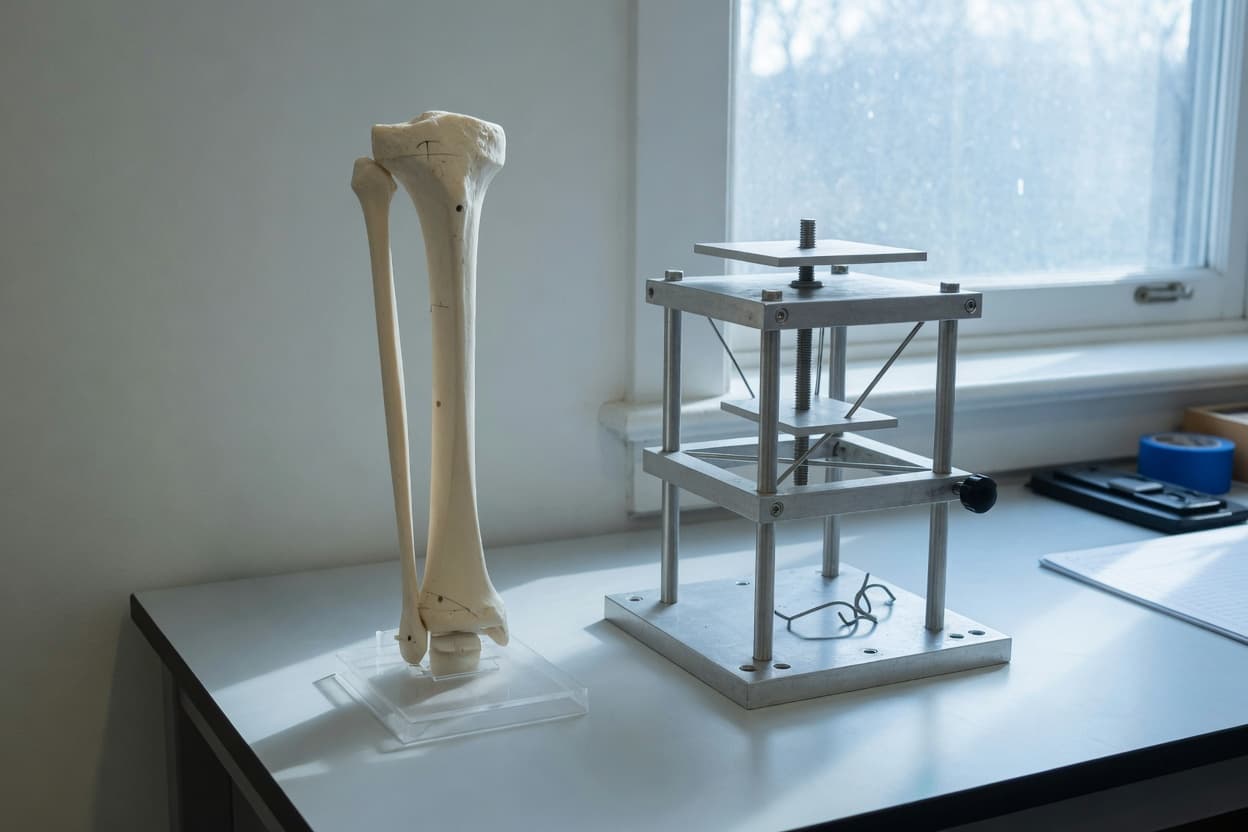
News coverage of this experiment circulated on 30 October 2026, including a Science magazine news item. The paper itself is Cell Metabolism, online 23 October 2026, DOI 10.1016/j.cmet.2026.09.020. Zhimin Zhang and Xiaochun Bai at Southern Medical University, with Lu Di (Kunming Medical University) and Lu Sheng (Kunming University of Science and Technology), studied how bone senses force. The paper text says deleting the force sensor Piezo1 in osteocytes shortened median survival by 13.2 percent in male mice and 10.7 percent in female mice. A laboratory loading device, applied in mice aged 20 to 24 months for four months, extended healthspan and lifespan by 9.4 percent, or 79.5 days, in the abstract. A Southern Medical University account of the same work, dated 27 October 2026, reported average lifespan gains of 11.9 percent in females and 7.7 percent in males. Those percentages are the university figures, and they cover both sexes. PEDF is described as a force-responsive signal from bone that, in people, is associated with healthy aging. That human link is an association, not a treatment. The device is a lab tool. It is not a result about human lifespan. Not medical advice.

Read at Cell Metabolism →Our summary♡ Save

  • Metabolic / glucose
  • Aging
  • Longevity
  • study
  • longevity

Simon Fraser University · 29 Oct 2026 · Aging

After a three-hour night, brain-network patterns moved in opposite directions at ages 20–30 and 65–75

Simon Fraser University posted this on 29 October 2026. Josh Neudorf and colleagues report in Imaging Neuroscience that one night limited to about three hours of sleep moved brain-network patterns in opposite directions in adults aged 20 to 30 and adults aged 65 to 75. Some connections rose after the sleep restriction in the younger group and fell in the older group. The authors read the older pattern as more efficient modular connectivity. This study measured brain activity. It did not report cognitive test scores, and the university release did not state a sample size or a DOI, so those figures are not given here. The result is not a reason for older adults to sleep less. The same story includes separate commentary that chronic sleep loss is harmful and mentions heart disease, high blood pressure, diabetes, weight, and colorectal cancer. Those points are not results of this scan. Comments in the story about amyloid and dementia are also commentary, not findings from this experiment. Sex was not stated. Not medical advice.

Read at Simon Fraser University →Our summary♡ Save

  • Under 40
  • 60+
  • Cardiovascular / lipids
  • Metabolic / glucose
  • Cognitive / dementia research
  • Cancer
  • Aging
  • study
  • sleep
  • cognition
  • commentary

Lifespan.io · 29 Oct 2026 · Aging

An astrocyte factor, FGF13, tracked with aging changes beyond the brain in mice

A 29 October 2026 write-up by Josh Conway describes an Aging Cell paper (DOI 10.1111/acel.70784). FGF13 fell with age in mouse astrocytes, and also in oligodendrocytes and microglia, but not in neurons. The hippocampus declined smoothly. The cortex rose at 6 months and then fell. Macaque tissue looked similar, with the strongest change in astrocytes. Removing the factor from astrocytes of aging mice worsened a water-maze memory test against aged controls, and it raised senescence in heart, skin, liver, spleen, and kidney plus circulating inflammatory cytokines, even though the change was aimed at the brain. Extra FGF13 in older mice left water-maze performance similar to young mice. Elevated-plus and open-field scores beat untreated older mice but did not fully match young mice. Blood IFN-gamma and IL-6 fell substantially. Senescence markers fell in skin, liver, spleen, and kidney, and not in the heart. Age-related weight gain was lower as well. The stated mechanism is that FGF13 binds Phafin2 and increases autophagy, read out with P62, LC3, and autophagosomes. The sex of the mice was not stated. This is not something a person can go and obtain. Not medical advice.

Read at Lifespan.io →Our summary♡ Save

  • Cognitive / dementia research
  • Aging
  • study
  • cognition
  • inflammation

EurekAlert · 29 Oct 2026 · Aging

A mouse egg factor, OMC1, helped hold chromosome cohesion through adult life

Nature Aging published this mouse paper on 29 October 2026 (DOI 10.1038/s43587-026-01245-5). The authors include Sakie Iisaka, Shuhei Yoshida, Ryuki Shimada, Tomoya S. Kitajima, and Kei-ichiro Ishiguro, at Chiba University and RIKEN. OMC1 sits with REC8 cohesin in mouse oocytes from fetal life through adulthood. Eggs lacking Omc1 lost REC8 earlier and showed chromosome errors like those in aged eggs. Putting OMC1 back into adult oocytes partly restored REC8 and cut those errors. Ishiguro called OMC1 a maintenance factor that extends the chromosomal lifespan of eggs, not a factor that stops aging. Variants in the human counterpart CCDC201 have been associated with early menopause, and a shortened mouse version matching one human variant failed to localize and could not restore cohesion. This is animal research. It is not a fertility treatment people can use. Not medical advice.

Read at EurekAlert →Our summary♡ Save

  • Women
  • Aging
  • Longevity
  • study
  • longevity

ScienceDaily · 29 Oct 2026 · Aging

More bright daytime light tracked with a lower dementia risk

Zheng and colleagues, in General Psychiatry (2026; 39(3), DOI 10.1002/gps3.70039), measured daytime and nighttime light with wrist devices in 87,577 adults. Over a median of 8.1 years, 741 people developed dementia. Average daytime light above 1,000 lux was associated with a 16 percent lower dementia risk, and more time at 5,000 lux or above was associated with further reductions. Less than 0.7 hours of bright daytime light predicted dementia more strongly, in this analysis, than six established risk factors. Nighttime light had no statistically significant association. Corresponding author Hongliang Feng is at Guangzhou Medical University. This is an association. It does not show that daylight prevents dementia. Not medical advice.

Read at ScienceDaily →Our summary♡ Save

  • Cognitive / dementia research
  • Aging
  • study
  • cognition

EurekAlert · 28 Oct 2026 · Aging

Seven health systems reported modest gains in older-adult vaccination

EurekAlert carried an American Geriatrics Society release on 28 October 2026 for a Journal of the American Geriatrics Society paper (DOI 10.1111/jgs.70770). Seven health systems in the Older Adults Vaccine Initiative reported modest gains in influenza and COVID-19 vaccination while national rates were falling. The release describes layered, locally tailored strategies. It does not give the size of the change, and it does not split the result by sex. This is a health-system report, not a personal vaccine schedule. A vaccine decision stays with a clinician. Not medical advice.

Read at EurekAlert →Our summary♡ Save

  • 60+
  • Medicine
  • Aging
  • study

SciTechDaily · 27 Oct 2026 · Aging

Both low and high hemoglobin tracked with later dementia diagnoses

SciTechDaily reported on 27 October 2026 a Journal of Alzheimer's Disease analysis, also presented at the 39th ECNP Congress, led by Hyun Soo Kim at Dong-A University. Screening records for 316,542 Korean adults aged 40 and older in 2004 and 2005 were followed for dementia diagnoses through 2019. Versus the hemoglobin group with the lowest dementia rate, the lowest fifth had a 16 percent higher risk of any dementia and the highest fifth had a 7 percent higher risk. Alzheimer's risk was mainly higher in the lowest fifth (14 percent). Vascular dementia was higher at both extremes (19 percent and 18 percent). The pattern was clearer in women than in men, and the sample was not women-only. The authors say this does not show that hemoglobin itself causes dementia. It is not a personal prediction and not a reason to chase a number without a clinician. Not medical advice.

Read at SciTechDaily →Our summary♡ Save

  • 40–59
  • 60+
  • Cardiovascular / lipids
  • Cognitive / dementia research
  • Aging
  • study
  • cognition

Lifespan.io · 27 Oct 2026 · Aging

An eye-injection safety check in three people with glaucoma

Lifespan.io carried a Life Biosciences press release on 27 October 2026. In an open-label phase 1 study (NCT07290244), three adults with open-angle glaucoma received one eye injection of investigational ER-100 at 2 x 10^11 vector genomes, plus daily oral doxycycline to turn on three transcription factors, and a steroid taper. Through day 56 the company reported no dose-limiting toxicities, no adverse events of special interest, and no serious adverse events. Reported adverse events were tied to the procedure, the steroid, or conditions people already had. A safety board recommended a higher dose. In 2 of the 3 people, at least 28 percent of visual-field points improved by more than 4 decibels. Ages were not stated. This is a company safety note, not a peer-reviewed outcome paper. Three people is not a new treatment. Not medical advice.

Read at Lifespan.io →Our summary♡ Save

  • Medicine
  • Longevity
  • study
  • commentary
  • longevity

VitaLonga is an educational longevity resource, not a pharmacy, clinic, or doctor. Content is not medical advice and is not intended to diagnose, treat, cure, or prevent any disease (DSHEA). Supplements can interact with medications and are not appropriate in every pregnancy or health condition. Consult a licensed clinician, especially if you take medications, are pregnant or nursing, or have a diagnosed condition.