FAPESP / UNICAMP / Life Sciences · 8 Oct 2026 · Exercise
Seven strength sessions shrank visceral fat cells in obese male mice before body weight changed
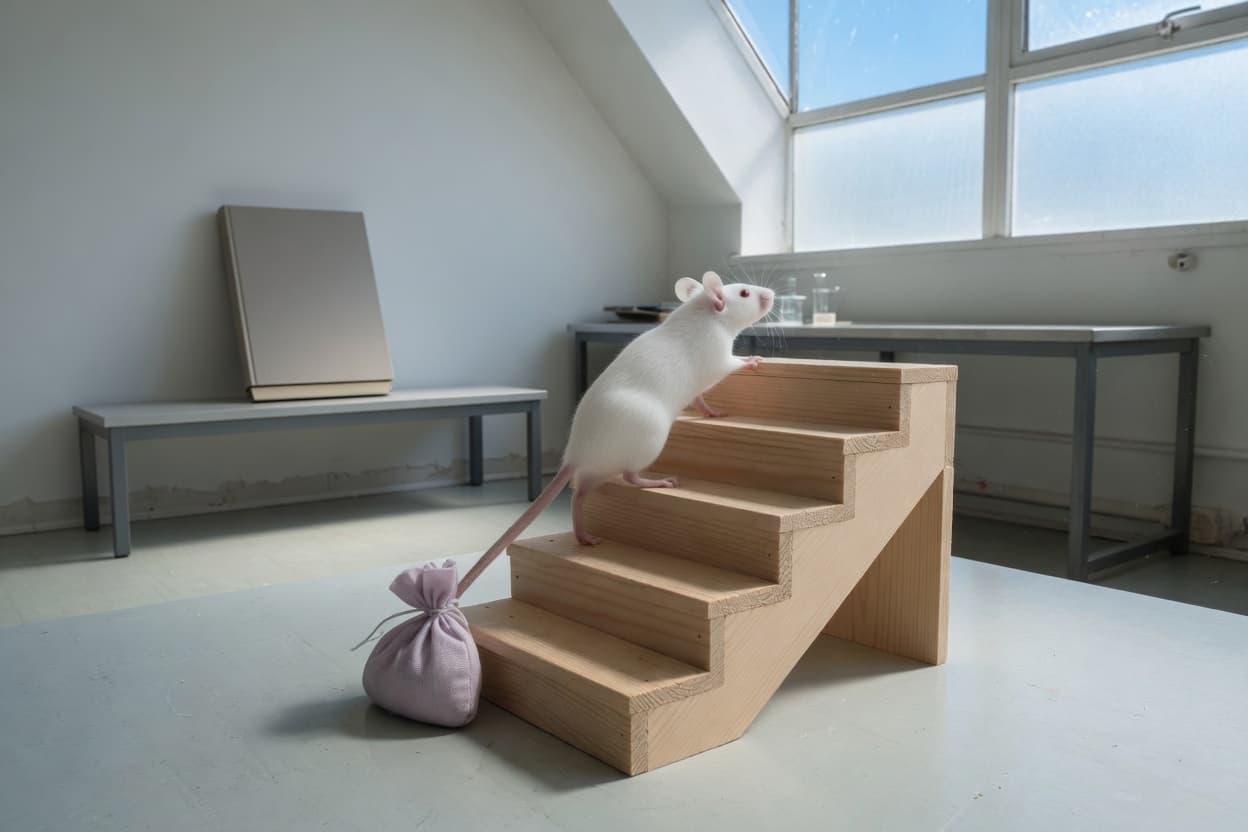
Study (male mice only). ScienceDaily carried the FAPESP account on 8 October 2026. Diego Gomes de Melo, Leandro Pereira de Moura, and colleagues at the State University of Campinas report in Life Sciences (2026; 401:124546; doi 10.1016/j.lfs.2026.124546). Obese mice made that way with a high-fat diet either stayed sedentary or climbed a 70-centimeter staircase carrying a tail weight, 20 climbs at about 70 percent of maximum, with 60 to 90 seconds of rest, for seven sessions. Both obese groups kept eating the high-fat diet. Body weight did not fall. Trained mice had less mesenteric fat, the fat around the intestines, and smaller fat cells. Obesity had lowered proteins used to break down stored fat. After the seven sessions, PLIN1, ABHD5, and ATGL were more engaged, and Scd1, a gene involved in making fat, was lower. The release says the animals were male, only one fat depot was studied, and seven days in a mouse is not a human program. Moura said aerobic and strength work turn on overlapping and different paths, and that the scale can lag the cell changes. Educational notes. This is not a workout plan.
Read at FAPESP / UNICAMP / Life Sciences →♡ Save
- Metabolic / glucose
- study
- animal
- fitness
- nutrition