
VitaLonga

Desk

News archive

Every story stays here. Filter by topic, search older headlines, and save favorites to your member record. Educational notes only — not medical advice.

Saved (sign in)

465 stories

Science Translational Medicine · 14 Oct 2026 · Nutrition

In 18,476 people ages 1 to 96, a plasma metabolomic age gap lined up with later disease and death

Study (multi-center cohort). Cao and colleagues at Renji Hospital profiled plasma from 18,476 people ages 1 to 96 at six centers in China, published 14 Oct 2026. From 56 age-linked metabolites they built a stacked model of metabolomic age. People whose metabolomic age ran ahead of their birthday had more incident fatty liver disease, hypertension, and diabetes, and higher all-cause mortality, in follow-up from 2019 to 2025. A separate mortality-linked score rose as more organ systems were involved. The paper presents these as risk markers associated with health status, not as a diagnosis and not as a diet to copy. Sex-specific results are not given in the abstract. Not medical advice.

Read at Science Translational Medicine →♡ Save

  • Cardiovascular / lipids
  • Metabolic / glucose
  • metabolomics
  • mortality
  • study

PLOS One · 14 Oct 2026 · Nutrition

In 1,020 adults in Chennai, a higher genetic risk score lined up with higher cholesterol only when diet quality was low

Study (cross-sectional). In 1,020 adults from the Chennai Urban Rural Epidemiology Study (452 men and 568 women, ages 25 to 80), a score of three variants in TCF7L2 and FTO was tied to higher fasting glucose and HbA1c. The same score lined up with higher total cholesterol and LDL cholesterol only among people with a low Indian Diet Quality Score, based on eight food groups (interaction p = 0.003 and 0.005). At low diet quality, the high-score group had higher cholesterol than the low-score group. This is one city at one time. It does not show that changing diet will change a given person's cholesterol. Not medical advice.

Read at PLOS One →♡ Save

  • Cardiovascular / lipids
  • Metabolic / glucose
  • diet-quality
  • cholesterol
  • gene-diet
  • study

Aging & Mental Health · 14 Oct 2026 · Supplements / medicine

In 9,476 Chinese adults ages 45 and older, sleeping under 6 hours lined up with higher odds of psychological frailty

Study (observational cohort). In 9,476 adults ages 45 and older in the China Health and Retirement Longitudinal Study, nighttime sleep reported in 2011 was compared with a psychological frailty index in 2018. Sleep under 6 hours lined up with higher odds than 6 to 8 hours (odds ratio 1.27, 95% CI 1.08 to 1.51). Persistent short sleep had an odds ratio of 1.44 (95% CI 1.15 to 1.81). The fitted curve bent near 7.6 hours of night sleep and 8.6 hours of total sleep. The authors say the link is not proof that changing sleep prevents frailty. This is not a reason to start a sleep drug or a supplement. Not medical advice.

Read at Aging & Mental Health →♡ Save

  • 40–59
  • 60+
  • sleep
  • frailty
  • study

Sports Medicine · 14 Oct 2026 · Exercise

Across 27 trials and 1,177 people, chronic exercise training made walking cost less energy in healthy adults

Study (systematic review and meta-analysis). Hortobágyi and colleagues pooled 27 studies, 36 training arms, and 1,177 people, published online 14 Oct 2026. Chronic exercise improved the energy cost of walking (effect size g = 0.40). The gain was clearer in 703 healthy adults (g = 0.49) than in people with stroke (g = 0.24, p = 0.065). The patient set also included one multiple-sclerosis study and one Parkinson's study. Higher average body mass index went with smaller effects. Training type, duration, intensity, and session length did not clearly change the result, and the model may have been too small to see those differences. People with neurological disease should plan training with a clinician. Not medical advice.

Read at Sports Medicine →♡ Save

  • walking
  • meta-analysis
  • fitness
  • study

Journal of Dietary Supplements · 14 Oct 2026 · Supplements / medicine

A review of 12 placebo-controlled trials found the evidence that magnesium helps sleep is inconsistent and low certainty

Study (systematic review). Adrian Lopresti and colleagues reviewed 12 placebo-controlled trials of magnesium for sleep in adults. Certainty was low or very low for the sleep outcomes. Forms included L-threonate, oxide, chloride, gluconate, citrate, bisglycinate, and one food-grown product, and no trial compared forms head to head. Some trials in older adults with insomnia and in people with self-reported poor sleep looked favorable. Trials in polycystic ovary syndrome, fibromyalgia, and cognitive impairment did not show a clear magnesium-specific sleep benefit. Most trials had a medium-to-high risk of bias, and some people reported mild stomach upset. The authors say this does not prove magnesium never helps, and it also does not support selling it as an established insomnia treatment. Not medical advice.

Read at Journal of Dietary Supplements →♡ Save

  • magnesium
  • sleep
  • cognition
  • aging
  • study

The BMJ · 14 Oct 2026 · Supplements / medicine

A BMJ editorial says commercial testosterone prescribing is widening beyond men with a clear deficiency

Commentary (editorial, not a new trial). Stephen Atkin and Eric Kilpatrick write in The BMJ on 14 Oct 2026 that commercial testosterone prescribing may be reaching people with nonspecific symptoms and borderline tests, not only men with well characterized hypogonadism. NHS community dispensing rose 52 percent from 2020–21 to 2024–25. They cite a UK market near $205 million in 2024, projected near $365 million by 2032, and private subscriptions of about £100 to £375 a month. Up to a fifth of men over 50 may report deficiency symptoms, while under 1 percent are treated in the NHS. Private prescriptions are not counted nationally. The same editorial notes NHS testosterone gel for women aged 50 and older rose from 429 recipients in November 2015 to 4,675 in November 2022, counting people rather than items. Testosterone replacement can help carefully selected patients. Starting, stopping, or buying it outside a clinician is not supported here. Not medical advice. Not a substitute for a prescribed medicine. Off-label use is clinician-only.

Read at The BMJ →♡ Save

  • Men
  • 40–59
  • 60+
  • testosterone
  • prescribing
  • study
  • commentary
  • off-label-context

PLOS One · 14 Oct 2026 · Aging

In 20 aging male rats with hypertension, eight weeks of intervals lowered blood pressure without changing four endothelial genes

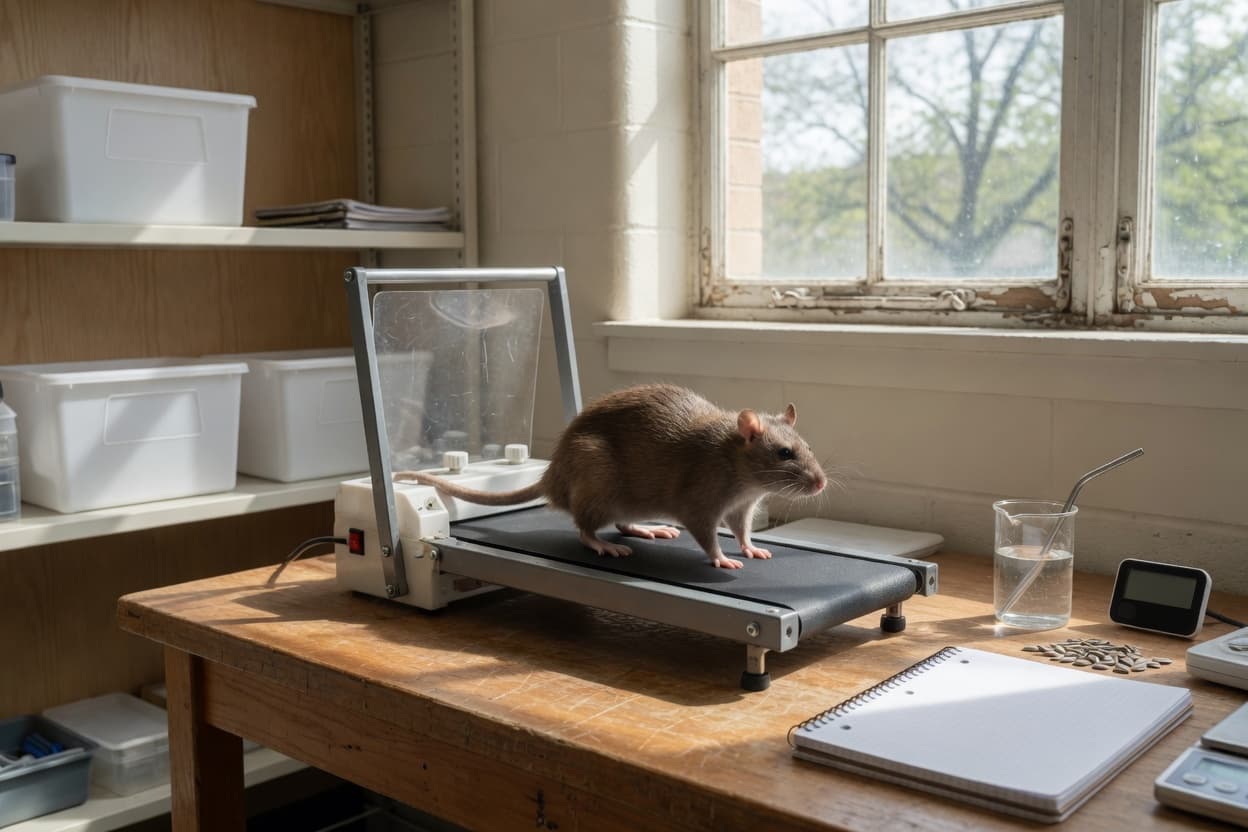
Study (male rats, plus a comparison with published human biopsies). Twenty 12-month-old male spontaneously hypertensive rats were split evenly into sedentary and trained groups. Eight weeks of treadmill intervals, 50 minutes a day and five days a week, lowered blood pressure and improved physical performance. Expression of NOS3, VEGF, EDN1, and PIK3R2 did not change in the soleus or diaphragm. A separate public dataset of vastus lateralis biopsies from healthy people showed a similar lack of change after intervals four times a week for six weeks, while a shorter three-week protocol did change NOS3, VEGF, and PIK3R2. Rat data are not a blood-pressure plan for people. Not medical advice.

Read at PLOS One →♡ Save

  • Cardiovascular / lipids
  • hiit
  • hypertension
  • rats
  • study

Nature Medicine · 13 Oct 2026 · Supplements / medicine

In more than 1 million women, 52 of 90 lab measures shifted abruptly around the final menstrual period

Study (observational records). Weizmann Institute researchers led by Uri Alon, with Glen Pridham and Yoav Hayut, report in Nature Medicine on 13 Oct 2026 that menopause is not only a slow drift. A method borrowed from astronomy corrected for different ages at the last period. Across more than 300 million laboratory tests from more than 1 million women in the US National Health and Nutrition Examination Survey and in Clalit records, 52 of 90 test types changed abruptly, including bone, liver, kidney, and cholesterol measures. Men of similar ages did not show that jump, and the shifts were smaller in women receiving menopausal hormone therapy. Sex-hormone changes sped up more than a decade before the final period. This is an association, not a reason to start or stop hormone therapy. Hormone decisions are clinician-only. Not medical advice.

Read at Nature Medicine →♡ Save

  • Women
  • 40–59
  • 60+
  • Cardiovascular / lipids
  • menopause
  • cholesterol
  • records
  • nutrition
  • study

Mechanisms of Ageing and Development · 13 Oct 2026 · Aging

Across 29 studies and 550,550 women, earlier menopause lined up with a slightly faster DNA-methylation age

Study (systematic review and meta-analysis). Matthew Simonson, Andrea Maier, and colleagues at the National University of Singapore pooled 29 earlier studies covering 550,550 women. In an analysis of 5,920 women, each year earlier at menopause lined up with about 0.08 years, roughly one month, of greater GrimAge acceleration, with similar patterns on the Horvath and PhenoAge clocks. Extra pregnancies lined up with about 0.13 years higher PhenoAge acceleration, but that figure was not consistent across clocks. Age at first menstruation showed no consistent link. Most included studies were cross-sectional, and smoking, body weight, and socioeconomic factors could still explain part of the pattern. The authors say this does not mean menopause itself makes every organ age faster. Not medical advice.

Read at Mechanisms of Ageing and Development →♡ Save

  • Women
  • 40–59
  • 60+
  • menopause
  • epigenetic-age
  • study

UCL / Menopause · 13 Oct 2026 · Research

In 12 trials of more than 1,000 women, aerobic activity had the clearest link to mood during menopause

Study (systematic review of randomized trials). Simone Saidel and Aimee Spector at UCL reviewed 12 trials in more than 1,000 women in perimenopause or early postmenopause, from seven countries, published in Menopause (DOI 10.1097/GME.0000000000002827). Aerobic activity such as walking, dance, Zumba, and taekwondo had the strongest signal for depressive symptoms and overall quality of life. Yoga, tai chi, Pilates, and stretching lined up more clearly with psychological quality of life. Mood and quality-of-life gains were especially evident in early postmenopause, and depressive symptoms also improved in perimenopause. Many trials were judged at high risk of bias, and the programs differed. This is not a substitute for hormone therapy or clinical care. Not medical advice.

Read at UCL / Menopause →♡ Save

  • Women
  • 40–59
  • 60+
  • menopause
  • mood
  • walking
  • study

University of Texas at Austin / Journal of Physical Activity and Health · 11 Oct 2026 · Supplements / medicine

In university students tracked for months, exercising on more days lined up with more deep sleep, including at about 10 minutes a day

Study (observational wearable records, not a trial). ScienceDaily carried the University of Texas at Austin account on 11 October 2026. Christian J. Corral, Melissa Miller, Frances A. Champagne, David M. Schnyer, and Benjamin Baird report in the Journal of Physical Activity and Health (2025; 22(8):1042; doi 10.1123/jpah.2024-0844). The news date is later than the journal year. University of Texas students wore Fitbit devices over several months. The question was whether the number of days with exercise, not only the weekly total, lined up with sleep. Students who were active on more days spent more time in non-REM sleep, including the deep sleep early in the night that the release ties to recovery. Baird said frequency seemed to matter for sleep, as against saving movement for the weekend. The release says about 10 minutes of moderate to vigorous activity a day, effort around 6 on a scale of 1 to 10 and still able to talk, lined up with better sleep in these young adults. Walking and standing breaks also lined up with healthier sleep and a better mood the next day. More non-REM sleep lined up with more energy and less stress the next day. The design does not show that exercise caused the sleep change. Sex is not reported. The team said the next step is a larger cohort beyond college students. Current public guidance of about 150 minutes a week does not require that time to be spread across every day. Educational notes. This is not a training prescription.

Read at University of Texas at Austin / Journal of Physical Activity and Health →♡ Save

  • Under 40
  • study
  • sleep
  • fitness
  • off-label-context

Kyoto University / Diabetes · 11 Oct 2026 · Supplements / medicine

In mice, olive oil given before glucose slowed the first blood-sugar rise, including in mice with type 2 diabetes

Study (mouse experiments, not a human diet trial). ScienceDaily carried the Kyoto University account on 11 October 2026. Yanyan Liu, Daisuke Yabe, and colleagues report in Diabetes (2026; doi 10.2337/db26-0531). After an overnight fast, mice got water then glucose, olive oil then glucose 15 minutes later, or glucose then olive oil 15 minutes later. Olive oil before glucose produced a smaller early blood-sugar rise, slower stomach emptying, and an early rise in glucagon and two incretin hormones. The same pattern appeared in mice with type 2 diabetes and severe insulin deficiency. Blocking glucagon signaling alone, or incretin signaling alone, did not remove the effect. Blocking both at once reduced it. Cutting the vagus nerves below the diaphragm also changed the response, which the authors read as a nerve contribution. Yabe said the order nutrients reach the gut can change how fast the stomach delivers glucose. The release says earlier human observations of eating vegetables, protein, or fat before carbohydrates exist, but this paper does not itself establish the mouse mechanism in people. Educational notes. This is not medical advice and not a meal prescription.

Read at Kyoto University / Diabetes →♡ Save

  • Metabolic / glucose
  • study
  • gut
  • nutrition
  • off-label-context

VitaLonga is an educational longevity resource, not a pharmacy, clinic, or doctor. Content is not medical advice and is not intended to diagnose, treat, cure, or prevent any disease (DSHEA). Supplements can interact with medications and are not appropriate in every pregnancy or health condition. Consult a licensed clinician, especially if you take medications, are pregnant or nursing, or have a diagnosed condition.