VitaLonga

Desk

News archive

Every story stays here. Filter by topic, search older headlines, and save favorites to your member record. Educational notes only — not medical advice.

Saved (sign in)

245 stories in this category

NIH/NLM PubMed · 28 Sept 2026 · Supplements / medicine

Introducing Linked Discoveries!

Linked Discoveries is an experimental pilot resource developed by the National Library of Medicine (NLM) that helps users explore how articles with PubMed abstracts connect to the surrounding literature. Linked Discoveries creates neighborhoods of related articles, highlights shared conditions, genes, and chemicals across the neighborhood, and surfaces context like NIH funding, citation relationships, retractions, an

Read at NIH/NLM PubMed →Our summary♡ Save

  • Medicine
  • news

Weill Cornell Medicine / Hospital for Special Surgery / Cell · 28 Sept 2026 · Supplements / medicine

A tendon-and-ligament stem cell was overactive in lumbar spinal stenosis; turning down calcium signaling stopped extra growth in mice

Study (mouse and human surgical tissue). Lingling Hu, Matthew B. Greenblatt, Sravisht Iyer, and colleagues at Weill Cornell Medicine and Hospital for Special Surgery report in Cell (doi 10.1016/j.cell.2026.08.018; ScienceDaily 28 September 2026; paper dated 7 September). They identified a stem-cell population that self-renews and can make tendon and ligament cells, found in mouse connective tissue and in human samples from kneecap ligament, Achilles tendon, and spine. Ligaments from people with lumbar spinal stenosis held more of these cells than ligaments from people with disc herniation without stenosis. Transplanting stenosis-associated cells into mice made more tendon cells. The cells showed higher calcium signaling; raising that signaling in healthy cells triggered extra tissue growth, and lowering it in a mouse stenosis model blocked abnormal growth. The authors say calcium-channel products already used for blood pressure could be studied, and that trials in people have not been done. Educational notes. This is not a reason to change a blood-pressure plan.

Read at Weill Cornell Medicine / Hospital for Special Surgery / Cell →Our summary♡ Save

  • 60+
  • Cardiovascular / lipids
  • Medicine
  • Aging
  • study
  • aging

Yonsei University / European Society of Cardiology / New England Journal of Medicine · 27 Sept 2026 · Supplements / medicine

In 1,803 people with atrial fibrillation at intermediate stroke risk, a direct oral anticoagulant cut the combined event rate by 69% at 24 months

Study (open-label randomized trial). Boyoung Joung of Yonsei University and colleagues presented SINGLE-AF at ESC Congress 2026 and in the New England Journal of Medicine (2026; 395(12):1155; doi 10.1056/NEJMoa2607978; ScienceDaily 27 September 2026). At 18 centers in South Korea, 1,803 people with atrial fibrillation and an intermediate stroke score (CHA2DS2-VASc of 1 in men or 2 in women) were assigned to a direct oral anticoagulant (apixaban 5 mg twice daily or rivaroxaban 20 mg once daily) or to no anticoagulation. At 24 months the combined endpoint of stroke, systemic embolism, major bleeding, and cardiovascular death occurred in 0.5% on anticoagulation versus 1.5% without it (hazard ratio 0.31; 95% CI 0.10 to 0.94; p=0.028). Ischemic stroke was 0.1% versus 1.1%. Major bleeding was 0.3% versus 0.5%. Absolute event counts are small. The trial was open-label. Educational notes. Starting or stopping anticoagulation is a clinician decision. This is not a reason to begin a prescription from a headline.

Read at Yonsei University / European Society of Cardiology / New England Journal of Medicine →Our summary♡ Save

  • Women
  • Men
  • Cardiovascular / lipids
  • Medicine
  • study
  • off-label-context

Cleveland Clinic / New England Journal of Medicine · 27 Sept 2026 · Supplements / medicine

In 15 people, one CRISPR infusion aimed at ANGPTL3 cut LDL 52.5% and triglycerides 47.8% at one year

Study (phase 1, small). Luke J. Laffin, Steven E. Nissen, and colleagues at Cleveland Clinic report one-year follow-up of CTX310 in the New England Journal of Medicine (doi 10.1056/NEJMc2609825; presented at the 2026 European Society of Cardiology meeting; ScienceDaily 27 September 2026). Fifteen people with lipid disorders that had not responded adequately to usual care received a single infusion of a CRISPR-Cas9 editor delivered to the liver to switch off ANGPTL3, a gene that helps keep fats in the blood. Doses ranged from 0.1 to 0.8 mg/kg. At the highest dose, LDL cholesterol was 52.5% lower and triglycerides 47.8% lower at 12 months versus baseline. No serious events related to CTX310 were reported in that year. The product remains experimental. Researchers plan 15 years of safety follow-up. The work was funded by CRISPR Therapeutics. Educational notes. This is not available care and is not a reason to stop a lipid plan.

Read at Cleveland Clinic / New England Journal of Medicine →Our summary♡ Save

  • 40–59
  • Cardiovascular / lipids
  • Medicine
  • study

UF Health / Nature Metabolism · 27 Sept 2026 · Supplements / medicine

In UF health records, glucosamine use lined up with a 25% higher chance that mild cognitive impairment later became dementia

Study (observational records plus lab). Ramon C. Sun, Matthew S. Gentry, and colleagues at the University of Florida report in Nature Metabolism (2026; 8(6):1410; doi 10.1038/s42255-026-01538-4; ScienceDaily 27 September 2026). In deidentified UF Health records from 2012 to 2024, 8% of people with Alzheimer-related dementia (1,896) and 8% with mild cognitive impairment (2,750) reported the joint supplement glucosamine. After age, sex, and demographics, glucosamine use lined up with a 25% higher chance that mild cognitive impairment progressed to dementia, and with a 25% higher mortality risk among people who already had dementia (not in the mild-impairment group). Records show association, not cause. In Alzheimer mouse models, glucosamine raised sugar tags on proteins and worsened social-memory tests; blocking that tagging improved memory. Human Alzheimer brain tissue also showed more of those sugar tags than control tissue. The authors say a controlled trial is needed before anyone changes glucosamine use. Educational notes. This is not medical advice and is not a reason to start or stop a joint product without a clinician.

Read at UF Health / Nature Metabolism →Our summary♡ Save

  • 60+
  • Metabolic / glucose
  • Cognitive / dementia research
  • Nutrition
  • Supplements
  • Aging
  • Longevity
  • study
  • cognition
  • aging

University Hospital of Freiburg / EASD via Medical Xpress · 27 Sept 2026 · Supplements / medicine

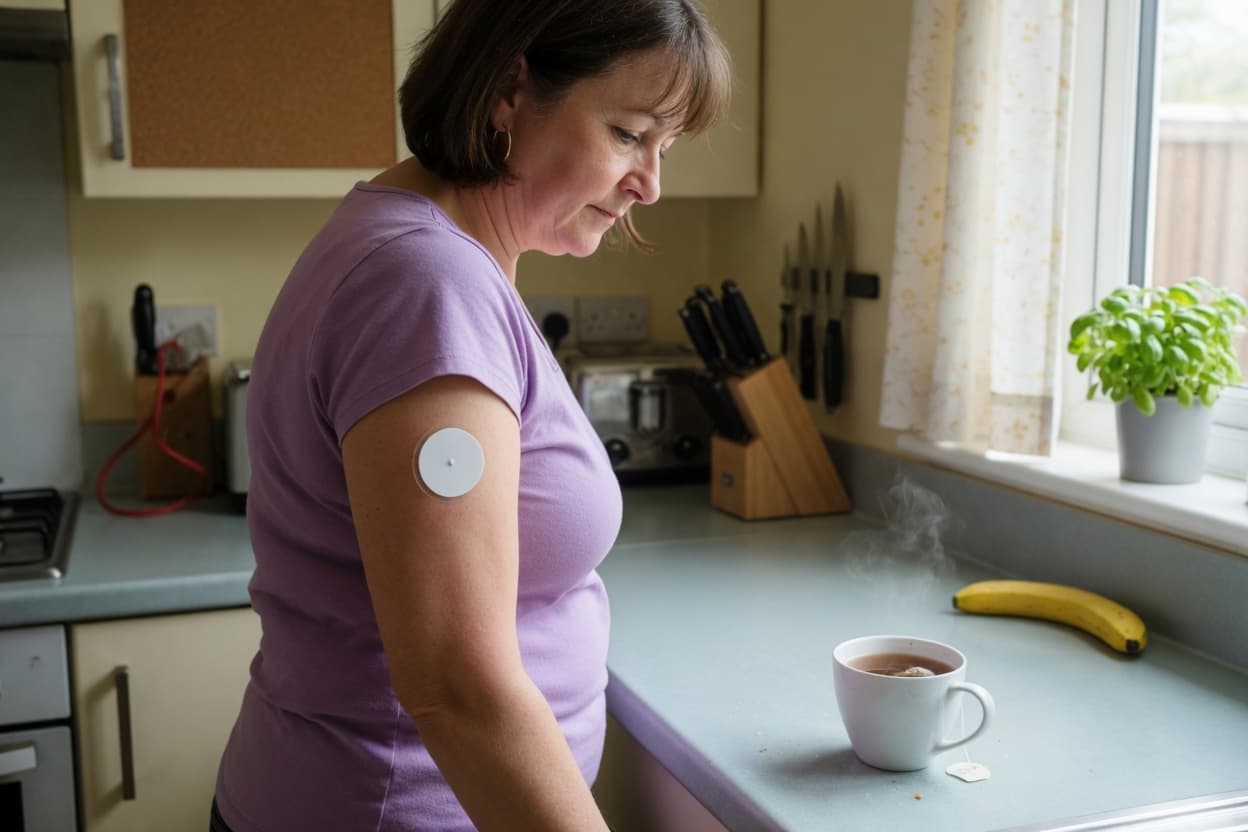
In 27,870 adults on basal insulin, a glucose sensor tracked a 44% lower risk of death at one year

Study (observational). Jochen Seufert of the University Hospital of Freiburg and colleagues, using the Truveta records platform, compared adults with type 2 diabetes on basal insulin who filled a first continuous glucose monitor prescription with matched adults who did not (EASD, Milan; Medical Xpress 27 September 2026). Each group had 13,935 people, matched on 29 characteristics including age, sex, diabetes duration, complications, HbA1c, other illnesses, medicines, and how often they used care. Average age was 58, and 47% were women. Records ran from 1 January 2017 to 18 March 2024. At 12 months, death from any cause occurred in 1.16% of sensor users and 2.09% of non-users, a 44% lower risk. At 24 months the risk was 35% lower (2.12% versus 3.26%). A new macrovascular event — heart attack, heart failure, stroke, transient ischemic attack, or peripheral artery disease — was 26% less common at 12 months (1.03% versus 1.39%) and 24% less common at 24 months. Recurrent events were 35% and 36% lower at those two points. Heart-failure hospitalizations were 54% lower at 12 months and 47% lower at 24 months. The authors say this cannot prove the sensor caused the difference, because unmeasured differences can remain, and later medicine changes were not tracked. It is not advice to start or change insulin. Educational notes.

Read at University Hospital of Freiburg / EASD via Medical Xpress →Our summary♡ Save

  • 40–59
  • Cardiovascular / lipids
  • Metabolic / glucose
  • Medicine
  • study
  • off-label-context

Copenhagen University Hospital / EASD via Medical Xpress · 27 Sept 2026 · Supplements / medicine

In two large cohorts, about half of adults with a BMI of 25 to 26.9 had a heart-disease risk like people already eligible for GLP-1 drugs

Study (observational). Karen Hvid of Copenhagen University Hospital and colleagues compared coronary heart disease risk in the UK Biobank and the Copenhagen General Population Study for the EASD meeting in Milan (Medical Xpress 27 September 2026). The cohorts included 313,145 adults with a BMI of 25 or higher, free of coronary disease and diabetes at the start (median age 58; about half women). Over more than 10 years, 23,134 developed coronary heart disease. About two-thirds (204,850) already met a current weight-loss indication for a GLP-1 receptor agonist such as semaglutide or tirzepatide. Of those with a BMI of 25 to 26.9, who are outside that indication, about half (44% in Copenhagen and 48% in the UK Biobank) had high remnant cholesterol, low-grade inflammation, or both. That subgroup's extra risk of coronary disease was similar to the extra risk in people who already qualified: 41% higher in Copenhagen and 47% higher in the UK Biobank versus people in the same BMI band with healthier cholesterol and inflammation. People who already qualified had a 41% and 35% higher risk in the two cohorts. The authors say trials are needed before any change in who is prescribed these drugs. This analysis did not give anyone a GLP-1 medicine. Not medical advice. Not a substitute for a prescribed medicine. Off-label prescription use is clinician-only. Educational notes. Educational supplement parallel (not a replacement): When headlines discuss GLP-1 medicines and aging, people often research food-first fiber or bitter-botanical “pathway support” formulas. Those are not semaglutide, not compounded GLP-1, and not a substitute for a prescribed GLP-1 drug. Mouse or marketing claims are hype until human outcome data exist. Weakly evidenced. Store: /store/glp1-pathway-support. Not medical advice. Not a substitute for a prescribed medicine. Off-label prescription use is clinician-only. VitaLonga does not diagnose, treat, or cure disease. Never start, stop, or replace a prescription with a supplement on the basis of a headline.

Read at Copenhagen University Hospital / EASD via Medical Xpress →Our summary♡ Save

  • 40–59
  • Cardiovascular / lipids
  • Metabolic / glucose
  • Medicine
  • study
  • inflammation
  • glp1
  • off-label-context

European Academy of Neurology / Sleep Medicine Reviews · 27 Sept 2026 · Supplements / medicine

An umbrella review linked insomnia with a 26% higher stroke risk and a 28% higher chance of hospital admission

Study (umbrella review). Luca Vignatelli of the IRCCS Istituto delle Scienze Neurologiche di Bologna and Stefan Seidel report in Sleep Medicine Reviews (doi 10.1016/j.smrv.2026.102372; Medical Xpress 27 September 2026). They combined existing reviews with new reviews of stroke, occupational injury, and hospitalization, searching MEDLINE and EMBASE through August 2025. For stroke, six of nine eligible studies entered the meta-analysis, covering more than 1.3 million people. Insomnia was associated with a 26% higher stroke risk (hazard ratio 1.26; 95% CI 1.05 to 1.53), with wide differences between studies. Across hospitalization studies, the odds of admission for any reason were 28% higher (odds ratio 1.28; 95% CI 1.14 to 1.43). The wider evidence also linked insomnia with depression and suicidal behavior, and most reviews linked it with all-cause dementia, more consistently with Alzheimer's disease than with vascular dementia. A prior meta-analysis estimated that insomnia meeting diagnostic criteria affects about 22% of people. Definitions of insomnia differed, and sleep-medicine use was rarely considered. The review does not show that treating insomnia prevents stroke. Educational notes.

Read at European Academy of Neurology / Sleep Medicine Reviews →Our summary♡ Save

  • Cardiovascular / lipids
  • Cognitive / dementia research
  • Medicine
  • study
  • sleep
  • cognition

Karolinska Institutet / BMC Medicine · 27 Sept 2026 · Supplements / medicine

In 1,769 adults over 60, three healthy eating patterns tracked higher folate and lower GDF-15

Study (cross-sectional). Rachel Ann Da Costa, Adrián Carballo-Casla, and colleagues at Karolinska Institutet report in BMC Medicine (doi 10.1186/s12916-026-05202-2; Medical Xpress 27 September 2026) on 1,769 people aged 60 and older in the Swedish National Study on Aging and Care in Kungsholmen. Participants described their diet over the past year. Researchers compared three patterns — an alternative Mediterranean score, the Alternative Healthy Eating Index, and a reverse Empirical Dietary Inflammatory Index — with 54 blood biomarkers. Greater adherence lined up with higher folate and lower growth differentiation factor 15 on all three patterns. The lower-inflammatory pattern lined up with the largest number of biomarkers, especially those tied to inflammation and metabolism. Other links differed by pattern. The snapshot cannot show that changing diet changes the markers. Participants were mostly older adults from Stockholm with relatively high education. Educational notes.

Read at Karolinska Institutet / BMC Medicine →Our summary♡ Save

  • 60+
  • Metabolic / glucose
  • Nutrition
  • Supplements
  • Medicine
  • Aging
  • study
  • nutrition
  • aging
  • inflammation

Stanford Medicine / Public Health Nutrition · 27 Sept 2026 · Supplements / medicine

Food-service directors in 20 California districts named budget, staff, and kitchens as the barriers to dropping ultra-processed school meals

Commentary (interview study). Anisha Patel, Andrea Pedroza-Tobias, and colleagues at Stanford Medicine report in Public Health Nutrition (doi 10.1017/S1368980026103139; Medical Xpress 27 September 2026) on interviews with food-service directors in 20 school districts in California's San Joaquin Valley. California's AB 1264, the Real Food, Healthy Kids Act, requires schools to remove certain ultra-processed foods from menus by 1 July 2035, with a phase-in from July 2029. Directors named budget, staffing, procurement, and kitchen equipment as the largest barriers. Districts are reimbursed about $4.60 per lunch. Heat-and-serve items are cheap. Scratch cooking needs time, full-time staff, and permitted kitchens. In Fresno, adding sinks, drains, and hoods at about 50 elementary schools was described as a cost in the millions, so sandwiches were made in a central kitchen instead. One-year grants were not enough for lasting changes. One district that cooks mostly from scratch had a director who was both a chef and trained in nutrition, and it invited students to submit recipes. Patel said the upfront cost is an investment against later obesity, type 2 diabetes, and cardiovascular disease. This is a study of implementation barriers, not a trial that assigned a menu. Educational notes.

Read at Stanford Medicine / Public Health Nutrition →Our summary♡ Save

  • Under 40
  • Cardiovascular / lipids
  • Metabolic / glucose
  • Nutrition
  • Medicine
  • commentary
  • nutrition
  • study

University of Trento / EASD via Medical Xpress · 27 Sept 2026 · Supplements / medicine

In 229,025 adults, hundreds of gut bacteria lined up with type 2 diabetes before standard glucose tests changed

Study (observational). Gabriel Baldanzi, Nicola Segata, and colleagues, including Tim Spector, analysed gut DNA and health records from 229,025 adults in the United Kingdom and the United States (73.8% women; average age 50) for the EASD meeting in Milan (Medical Xpress 27 September 2026). Of them, 3,627 had type 2 diabetes, 14,022 had prediabetes, and 211,376 had normal glucose measures. After accounting for age, sex, and BMI, 789 bacterial species were associated with type 2 diabetes: 168 more abundant and 621 less abundant. Enterocloster bolteae was more abundant. Romboutsia timonensis was less abundant. Some of the species have never been grown in a lab. The pattern was stronger in people on diabetes medication and was also present in unmedicated diabetes. Of the 789 species, 587 were also associated with unmedicated prediabetes. Among 135,093 people with normal standard glucose tests, those whose blood sugar stayed high longer after a meal were more likely to carry the diabetes-linked pattern. The authors say a microbiome readout should not replace HbA1c or a glucose tolerance test. This is not a diet that was assigned, and it does not show that changing bacteria prevents diabetes. Educational notes.

Read at University of Trento / EASD via Medical Xpress →Our summary♡ Save

  • 40–59
  • Metabolic / glucose
  • Nutrition
  • Medicine
  • study
  • gut
  • nutrition

The Conversation / Canadian Journal of Cardiology · 26 Sept 2026 · Supplements / medicine

Walking pain in the leg can be peripheral artery disease, and a Canadian plan says it is still found too late

Commentary (clinical action plan). Matthew Ades, Anthony Sandre, Sonia S. Anand, and colleagues, writing in the Canadian Journal of Cardiology (doi 10.1016/j.cjca.2026.03.010; Medical Xpress 26 September 2026), describe peripheral artery disease as plaque that narrows arteries, most often those to the legs. It is the same process behind many heart attacks and strokes. A common symptom is aching, cramping, or fatigue in the leg muscles while walking that eases with rest, called claudication. Symptoms are not always typical, and some people have few or none, so they may simply walk less and treat it as aging or arthritis. The Canadian National Action Plan for Peripheral Artery Disease, from the Canadian Society of Vascular Medicine and the Canadian Society of Vascular Surgery, names six areas: awareness, earlier diagnosis, treatment pathways, Indigenous-led care, research, and advocacy. It cites an estimate that Canadian medical students may get about 15 minutes of teaching specific to this disease. A simple check is the ankle-brachial index, blood pressure at the ankle compared with the arm. The authors say much of the harm is preventable once the disease is recognized: stopping smoking, managing blood pressure, cholesterol, and diabetes, appropriate medicines, and regular walking exercise. Procedures to restore flow are for more advanced disease. Smoking and diabetes carry the highest risk, and the burden is heavier where preventive care is harder to reach. This is a care plan, not a trial of a walking program. Educational notes. Leg pain with walking belongs with a clinician.

Read at The Conversation / Canadian Journal of Cardiology →Our summary♡ Save

  • Cardiovascular / lipids
  • Metabolic / glucose
  • Exercise
  • Medicine
  • Aging
  • commentary
  • fitness
  • aging
  • study

VitaLonga is an educational longevity resource, not a pharmacy, clinic, or doctor. Content is not medical advice and is not intended to diagnose, treat, cure, or prevent any disease (DSHEA). Supplements can interact with medications and are not appropriate in every pregnancy or health condition. Consult a licensed clinician, especially if you take medications, are pregnant or nursing, or have a diagnosed condition.