VitaLonga

Desk

News archive

Every story stays here. Filter by topic, search older headlines, and save favorites to your member record. Educational notes only — not medical advice.

Saved (sign in)

229 stories in this category

MD Anderson / Cancer Immunology Research · 20 Oct 2026 · Research

In joint fluid from six patients, the same T cells returned, more inflamed, when immunotherapy arthritis flared again

Study (small patient series). Roza Nurieva, Sang T. Kim, and colleagues at MD Anderson and Yale report in Cancer Immunology Research (DOI 10.1158/2326-6066.CIR-25-1639; accepted 29 Jul 2026). A public abstract and an 11 Aug 2026 briefing say joint fluid from six patients was sampled at a first immune-checkpoint-inhibitor arthritis flare and again at a recurrence. Effector CD8 T cells and PD-1-high, CXCL13-high CD4 T cells were enriched versus joint fluid from six people with osteoarthritis who did not have cancer. Of the top 10 expanded clones, 93 percent of the effector CD8 clones and 50 percent of the PD-1-high CD4 clones were shared between the first and second flare. Those cells made more inflammatory signals on the later flare. Six people cannot show who will flare or what to change. Do not stop a cancer immunotherapy because of this headline. Not medical advice.

Read at MD Anderson / Cancer Immunology Research →Our summary♡ Save

  • Cancer
  • inflammation
  • study

Mount Sinai / American Journal of Psychiatry · 20 Oct 2026 · Research

Across several deep-brain-stimulation cohorts, lasting depression relief lined up with three white-matter pathways

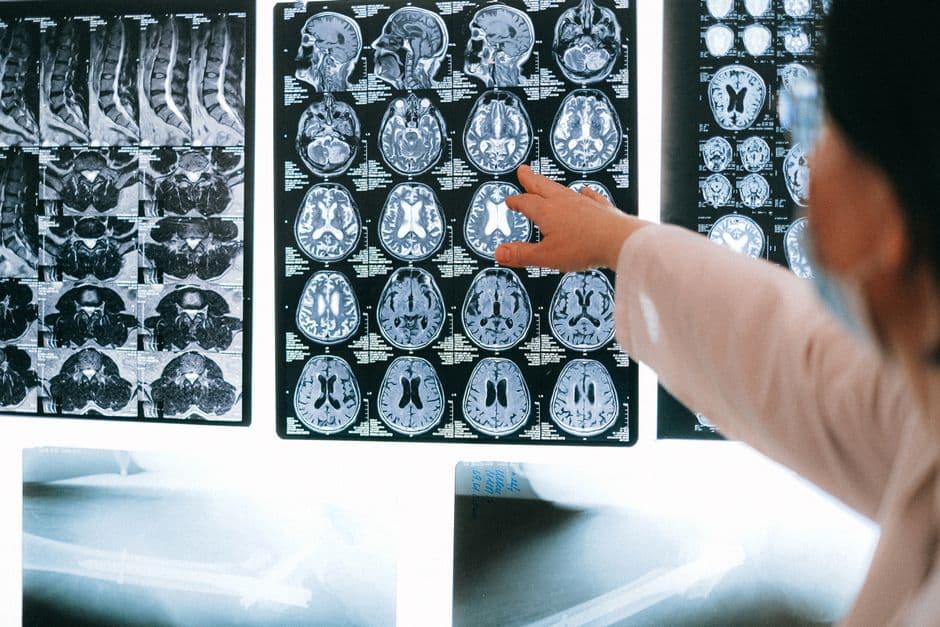
Study (reanalysis of clinical cohorts). Ki Sueng Choi, Helen Mayberg, and colleagues at Mount Sinai report in the American Journal of Psychiatry (2026; 183(10):764; DOI 10.1176/appi.ajp.20250449), first published 1 Oct 2026 and summarized by ScienceDaily on 18 Oct 2026. They pooled the largest multi-cohort set so far of people who received subcallosal cingulate deep brain stimulation for severe depression that had not responded to usual care, including the BROADEN trial and a University of Toronto cohort. Lasting improvement lined up with stimulation reaching three white-matter paths: the cingulum bundle, forceps minor, and the medial uncinate fasciculus / ventral amygdalofugal pathway. People who had not improved after two years shared a lack of stimulation of the left cingulum bundle. The team did not test whether moving those electrodes would help. Many scans used an average brain map rather than each person's own diffusion MRI. Electrode placement is not the whole story. Several authors consult for Abbott, which makes the device and supplied BROADEN data but did not design this analysis. This is not a recommendation to seek surgery. Not medical advice.

Read at Mount Sinai / American Journal of Psychiatry →Our summary♡ Save

  • Cognitive / dementia research
  • Medicine
  • study
  • cognition

Chiba University / Science Advances · 20 Oct 2026 · Research

In mice whose arthritis had quieted, restraint stress brought joint inflammation back through a fat-and-IL-6 signal

Study (mice, plus a small human observation). Hiroshi Nakajima, Shigeru Tanaka, and colleagues at Chiba University report in Science Advances (DOI 10.1126/sciadv.aec9257). Genetic Engineering & Biotechnology News covered it on 19 Oct 2026. In an antigen-induced arthritis model, joints were allowed to enter a remission-like state, then the mice were put under restraint stress. Stress reactivated joint inflammation. The path they traced ran from the sympathetic nervous system to brown fat, which released interleukin-6. That IL-6 stimulated fibroblast-like synoviocytes in the joint to make CXCL1, which drew in neutrophils. Blocking the CXCR2 receptor, which responds to CXCL1, cut the stress-triggered arthritis. A β3-adrenergic blocker lowered plasma IL-6, joint swelling, CXCL1, and neutrophils. In people with rheumatoid arthritis, those who carry Trp64Arg in ADRB3, a variant that makes cells less responsive to stress-related hormones, showed a weaker link between perceived stress and disease activity. That human piece is observational and does not prove stress caused the flares. Do not change a clinician-directed arthritis regimen because of this mouse study. Not medical advice.

Read at Chiba University / Science Advances →Our summary♡ Save

  • inflammation
  • animal
  • study

Mayo Clinic / Nature Communications · 20 Oct 2026 · Research

In more than 4,600 patients, fatty liver disease split into five subtypes with different complication risks

Study (genomic and records analysis). Shulan Tian, Eric Klee, and colleagues at Mayo Clinic, with Virginia Tech, report in Nature Communications (2026; 17; DOI 10.1038/s41467-026-77410-6). ScienceDaily ran it on 18 Oct 2026. Metabolic dysfunction-associated steatotic liver disease, or MASLD, is described as affecting nearly 30 percent of adults worldwide. Using genetic sequencing and medical records from more than 4,600 people with MASLD, the team found five biological subtypes. Some track with obesity and diabetes. Others look genetic and were tied to a higher chance of advanced liver damage even without the usual metabolic risks. The records also linked some subtypes with depression, sleep apnea, and migraine, and the broader disease is tied to heart disease, liver failure, and cancer risk. Those links are associations, not proof of cause. The authors say the genetic forms may need different follow-up. The public summary does not give the age or sex split. Not medical advice.

Read at Mayo Clinic / Nature Communications →Our summary♡ Save

  • Cardiovascular / lipids
  • Metabolic / glucose
  • Cancer
  • liver
  • genetics
  • study
  • sleep

Yale University / Science Advances · 19 Oct 2026 · Research

In a crossover scan study, a cortisol pill made emotional pictures easier to remember the next day

Study (human crossover, brain scans). Yuye Huang, Elizabeth V. Goldfarb, and colleagues at Yale report in Science Advances (2025; 11(50); DOI 10.1126/sciadv.adz4143). ScienceDaily recirculated it on 16 Oct 2026. Each participant took hydrocortisone or a placebo, looked at pictures in an MRI scanner, rated how emotional each picture felt, and was tested the next day. The public summary does not give the number of volunteers or their ages. Cortisol improved memory for emotionally significant pictures. In short, about five-second windows of scan data, emotion networks became more consistent and more engaged, memory networks became more specialized for emotional content, and the two networks coordinated more. The same person was scanned under both conditions, double-blind. This is not a reason to take a cortisol product to study. Not medical advice.

Read at Yale University / Science Advances →Our summary♡ Save
  • Cognitive / dementia research
  • memory
  • cortisol
  • scans
  • cognition
  • study

Université libre de Bruxelles / Nature · 19 Oct 2026 · Research

In living mice filmed for five months, female skin stem cells stayed in step and closed wounds faster

Study (mice, plus human skin grown in the lab). Dan Engelman, Cédric Blanpain, Benjamin D. Simons, and colleagues at the Université libre de Bruxelles and the University of Cambridge report in Nature (published 14 Oct 2026; DOI 10.1038/s41586-026-11159-2). They followed individual epidermal stem cells through the skin of living mice for five months. In females, sister cells often made the same next choice together. In males, sister cells were less synchronized. Castration made male skin behave more like female skin; dihydrotestosterone restored the male pattern. Removing the ovaries slowed stem-cell multiplication and nearly erased the synchrony; estradiol restored proliferation. On back wounds, females closed the injury faster in the first days. Testosterone also sped differentiation in human skin reconstructed in the laboratory. This does not show that a hormone product will change human healing. Not medical advice.

Read at Université libre de Bruxelles / Nature →Our summary♡ Save

  • skin
  • hormones
  • mice
  • study

ScienceDaily · 19 Oct 2026 · Research

Fatty liver disease is actually five different conditions, scientists discover

A common liver disease affecting nearly 30% of adults worldwide may be far more complicated than scientists previously realized. Mayo Clinic researchers have discovered that fatty liver disease actually consists of five distinct biological subtypes, each carrying different risks for liver failure, cancer, heart disease, and other serious complications.

Read at ScienceDaily →Our summary♡ Save

  • Cardiovascular / lipids
  • Metabolic / glucose
  • Cancer
  • news

ScienceDaily · 19 Oct 2026 · Research

Modern neuroscience is rediscovering a surprising idea freud had 130 years ago

Researchers have identified striking parallels between Sigmund Freud’s century-old theories and modern neuroscience, suggesting that the brain’s constant predictions shape how we experience reality. The findings could help explain why harmful thought patterns are so difficult to break and offer new insights into treating mental disorders.

Read at ScienceDaily →Our summary♡ Save

  • Cognitive / dementia research
  • news
  • cognition

ScienceDaily · 18 Oct 2026 · Research

Magic mushroom ingredient takes the fight out of aggressive fish

A psychedelic compound found in magic mushrooms appears to have an unexpected effect: calming highly aggressive fish. Researchers discovered that low doses of psilocybin significantly reduced aggressive attacks in mangrove rivulus fish without disrupting their normal social interactions. The findings suggest psilocybin may selectively calm escalating aggression rather than simply suppressing all behavior.

Read at ScienceDaily →Our summary♡ Save

  • news

VitaLonga is an educational longevity resource, not a pharmacy, clinic, or doctor. Content is not medical advice and is not intended to diagnose, treat, cure, or prevent any disease (DSHEA). Supplements can interact with medications and are not appropriate in every pregnancy or health condition. Consult a licensed clinician, especially if you take medications, are pregnant or nursing, or have a diagnosed condition.